Yadav Flags 53x Solar Growth, 100 Ramsar Sites on World Environment Day
Synopsis
On World Environment Day 2026, Union Environment Minister Bhupender Yadav cited India's 53-fold solar capacity expansion and the designation of 100 Ramsar wetland sites, presenting both as benchmarks of India's accelerating climate commitments under the Paris Agreement and updated NDCs.
Key Takeaways
Union Environment Minister Bhupender Yadav posted on 5 June 2026 — World Environment Day — claiming India has expanded its solar energy capacity 53 times .
The post also highlighted India reaching 100 Ramsar wetland site designations, a significant jump from 49 sites in early 2022 .
India's National Solar Mission , launched in 2010, underpins the solar scale-up, with targets revised upward under the 2015 Paris Agreement commitments.
India acceded to the Ramsar Convention in 1982; recent years have seen an accelerated pace of site notifications.
Both milestones feed into India's National Determined Contributions (NDCs) and will be reported at COP31 .
Renewable energy developers and wetland-dependent communities are among the key stakeholders affected by these policy tracks.
Union Environment Minister Bhupender Yadav on Friday, 5 June 2026 — World Environment Day — highlighted two landmark environmental milestones claimed by India: a 53-fold expansion in solar energy capacity and the designation of 100 Ramsar wetland sites, framing both as evidence of the country's accelerating climate commitments.
Context
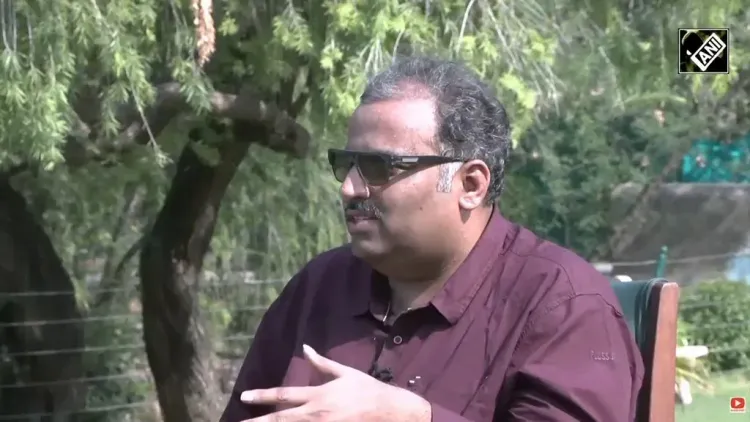
Posting under the hashtags #100RamsarSites and #NowForClimate, Yadav wrote: 'Solar energy mein Bharat ne 53 times apni kshamata ko badhaya hai' — 'India has expanded its solar energy capacity 53 times.' The post, accompanied by a video, was published on the global observance day dedicated to environmental action, amplifying the government's messaging on India's twin-track approach to climate: renewable scale-up and ecological conservation.
World Environment Day, observed every 5 June, is the United Nations' principal vehicle for raising awareness and political momentum on environmental issues. India has consistently used the occasion to announce or highlight policy milestones at home and in multilateral forums.
Policy Backdrop
India's solar journey traces back to the National Solar Mission, launched in 2010 under the National Action Plan on Climate Change, which set staged capacity targets. The country subsequently revised its ambition to 100 GW of solar capacity by 2022 as part of its commitments under the 2015 Paris Agreement, and has continued to push targets upward through successive National Determined Contributions (NDCs).
The Ramsar Convention, the 1971 international treaty on wetlands of international importance, has seen India sharply accelerate its site designations in recent years. India acceded to the convention in 1982, and the country's tally of protected wetland sites climbed from 49 in early 2022 to over 80 by 2024, with the 100-site milestone now being claimed by the ministry. Ramsar designations require sites to meet criteria of ecological, botanical, zoological, limnological, or hydrological significance.
Stakeholders and Impact
The solar capacity expansion directly affects renewable energy developers, state electricity distribution companies, and industrial consumers who have benefited from falling tariffs driven by large-scale auctions. India's solar buildout has also reshaped the country's energy mix, reducing dependence on coal-based generation at the margin and contributing to energy security goals.
For wetland conservation groups and local communities dependent on wetland ecosystems, the 100-Ramsar-site milestone carries significance beyond diplomacy: Ramsar designation typically triggers enhanced monitoring, conservation planning, and access to international technical support. Critics within the conservation community, however, have historically noted that designation alone does not guarantee on-ground protection without enforcement and funding.
The dual messaging — solar growth alongside wetland protection — reflects the government's broader narrative that economic development and ecological stewardship are complementary, a framing India has advanced at successive COP negotiations and in its updated NDC submissions.
What's Next
India's renewable and conservation record will face scrutiny at COP31, where updated progress reports on NDC implementation are expected. Fresh solar capacity auction outcomes and any additional Ramsar notifications in 2026–27 will be watched as indicators of whether the momentum highlighted by the minister translates into verified, on-ground additions. The government's ability to sustain both tracks — grid-scale solar deployment and wetland site management — will shape India's credibility in multilateral climate negotiations ahead of the next NDC revision cycle.
Point of View
Countering narratives that developing nations prioritise growth over ecology. For the BJP, these milestones also serve as governance proof-points, converting abstract climate targets into headline numbers. The 53-times solar multiplier, if verified, would be one of the most striking renewable growth stories globally, making independent corroboration critical before the figure enters multilateral discourse.
NationPress
20 Oct 2026
Frequently Asked Questions
How many times has India increased its solar energy capacity?
Union Environment Minister Bhupender Yadav claimed on World Environment Day 2026 that India has expanded its solar energy capacity 53 times, though independent verification of this specific multiplier is pending.
How many Ramsar wetland sites does India have in 2026?
The Indian government has claimed reaching 100 Ramsar-designated wetland sites, up from 49 in early 2022, marking a significant acceleration in wetland protection notifications.
What is the Ramsar Convention and why does it matter for India?
The Ramsar Convention is a 1971 international treaty protecting wetlands of international importance. India acceded in 1982, and Ramsar designation triggers enhanced conservation planning and international technical support for listed sites.
What is India's solar energy target under the Paris Agreement?
India committed to 100 GW of solar capacity by 2022 under its Paris Agreement NDCs, with subsequent revisions pushing targets higher as part of updated NDC submissions.
What is World Environment Day and when is it observed?
World Environment Day is the United Nations' main platform for environmental awareness and action, observed every year on 5 June globally.