Bhupender Yadav: India's solar capacity hits 160 GW

Synopsis
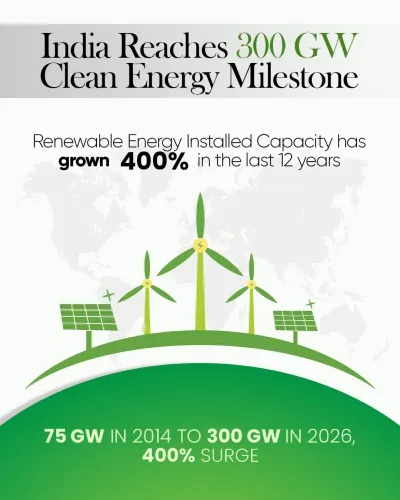
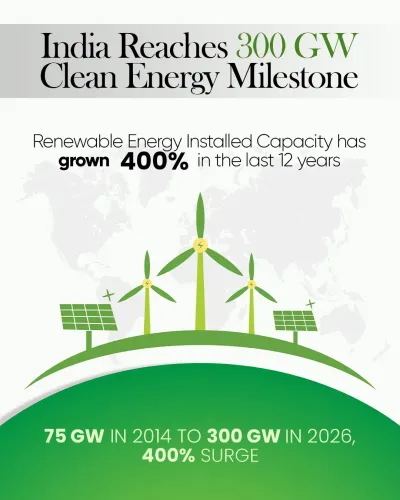
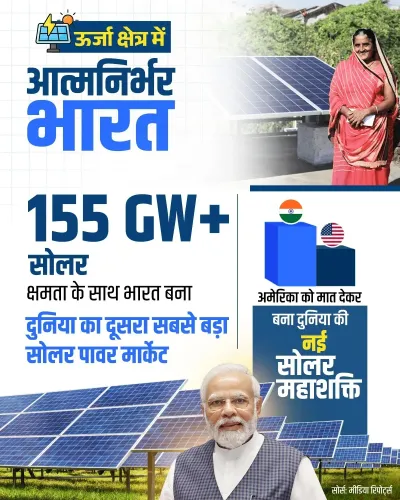
On Independence Day 2026, Union Environment Minister Bhupender Yadav highlighted India's solar capacity surge from 2 GW twelve years ago to 160 GW today, framing the 80-fold growth as a marker of the nation's clean energy ambition ahead of its 500 GW non-fossil target by 2030.
Key Takeaways
Union Environment Minister Bhupender Yadav posted on Independence Day, August 15, 2026 that India's solar capacity has grown from 2 GW to 160 GW in 12 years .
The growth represents an 80-fold increase , with 2014 used as the implicit baseline by the minister.
The Jawaharlal Nehru National Solar Mission , launched in 2010 , originally targeted only 20 GW by 2022 — a figure India has far surpassed.
India has pledged 500 GW of non-fossil fuel capacity by 2030 , a commitment made at COP26 in 2021 .
The International Solar Alliance , co-founded by India in 2015 , underpins India's role as a global clean energy leader.
Progress toward the 2030 non-fossil fuel target will face scrutiny at upcoming parliamentary sessions and international climate meetings.
Twelve years ago, India ran its entire solar grid on just 2 gigawatts. On Independence Day, August 15, 2026, Union Environment Minister Bhupender Yadav marked a number that tells a different story entirely — 160 gigawatts of solar capacity, an 80-fold leap in a single generation.
From 2 GW to 160 GW: the scale of the shift
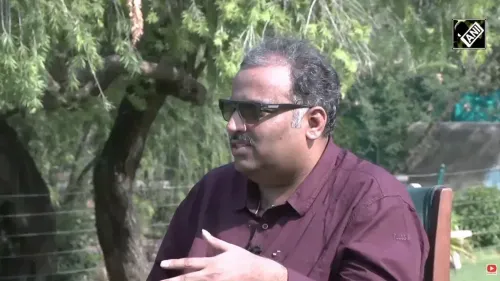
Yadav's post, shared on Independence Day, stated plainly in Hindi: '12 varsh pehle desh mein solar energy ki capacity sirf 2 gigawatt thi. Aaj 160 gigawatt.' ('Twelve years ago, the country's solar energy capacity was just 2 gigawatts. Today, 160 gigawatts.') The framing is deliberate — 2014 as the baseline, 2026 as the proof point, with the BJP-led government's tenure as the arc connecting them.
The foundation for this push was laid even earlier. The Jawaharlal Nehru National Solar Mission, launched in 2010, had originally targeted 20 GW by 2022 — a ceiling India has since blown past by a factor of eight. What changed was the pace: aggressive capacity auctions, falling panel prices, and a policy environment that made solar the path of least resistance for new power generation.
Where 160 GW sits on India's 2030 map
The number matters most when placed against India's COP26 pledge — 500 GW of non-fossil fuel capacity by 2030. Solar is the engine of that target. The International Solar Alliance, co-founded by India in 2015, positioned the country as a global convenor on clean energy; the domestic buildout is the credential behind that diplomatic role.
With four years left to the 2030 deadline, the gap between 160 GW today and the 500 GW goal across all non-fossil sources remains substantial — but the trajectory, at least on solar, is one the government is pointing to with confidence on its biggest symbolic day.
Independence Day as the chosen stage
Posting this figure on August 15 is not incidental. Independence Day has become the BJP's preferred canvas for development scorecards, and energy sovereignty — freedom from fossil fuel import dependence — maps neatly onto the nationalist register of the occasion. Yadav, as the minister who sits at the intersection of environment and climate diplomacy, is making a case that clean energy growth is itself a form of national self-reliance.
The next hard test of that case arrives at international climate negotiations and in Parliament, where progress toward the 500 GW non-fossil target will face scrutiny beyond the headline number.
Point of View
Using a single statistic to anchor the BJP government's clean energy narrative to a patriotic occasion. The 2014 baseline is politically loaded — it marks the start of the Modi era — making the 80-fold growth figure as much an electoral asset as an environmental one. Yet the underlying trajectory is real: India's solar buildout has outpaced its own early targets by a wide margin. The sharper question, one that will define Yadav's legacy at COP negotiations, is whether the pace can be sustained across all non-fossil sources to meet the 500 GW pledge by 2030.
NationPress
29 Sept 2026
Frequently Asked Questions
What is India's current solar energy capacity in 2026?
Union Environment Minister Bhupender Yadav stated on Independence Day 2026 that India's solar energy capacity stands at 160 gigawatts, up from just 2 GW twelve years ago.
What is India's renewable energy target for 2030?
India has pledged to achieve 500 GW of non-fossil fuel energy capacity by 2030, a commitment made at the COP26 climate summit in 2021.
When was the National Solar Mission launched in India?
The Jawaharlal Nehru National Solar Mission was launched in 2010, with an initial target of 20 GW of solar capacity by 2022 — a figure India has since exceeded by a large margin.
What is the International Solar Alliance and India's role in it?
The International Solar Alliance is a treaty-based intergovernmental organisation co-founded by India in 2015 to promote solar energy adoption globally. India's rapid domestic solar expansion gives it credibility as the alliance's lead advocate.
Why did Bhupender Yadav post about solar energy on Independence Day?
Yadav used Independence Day 2026 to highlight India's clean energy progress, framing the 80-fold growth in solar capacity as a marker of national self-reliance and development under the current government.