Yadav Links Energy Access to Ecology on World Environment Day
Synopsis
On World Environment Day 2026, Union Environment Minister Bhupender Yadav declared that energy access must reach every Indian and that India is advancing by holding ecology and economy together — invoking the #100RamsarSites milestone and the Viksit Bharat vision in the same breath.
Key Takeaways
Union Environment Minister Bhupender Yadav posted on World Environment Day, 5 June 2026 , asserting that energy access must reach every person.
The post used hashtags #100RamsarSites and #NowForClimate , signalling progress toward India's wetland conservation milestone.
India acceded to the Ramsar Convention in 1982 with Chilika Lake as its first designated wetland site.
The Amrit Dharohar scheme, announced in the 2023 Union Budget , supports conservation and sustainable use of wetlands over three years.
The minister framed ecology and economy as complementary under the Viksit Bharat goal of making India a developed nation by 2047 .
Rural households and wetland communities are key stakeholders as India aligns renewable energy rollout with ecological protection mandates.
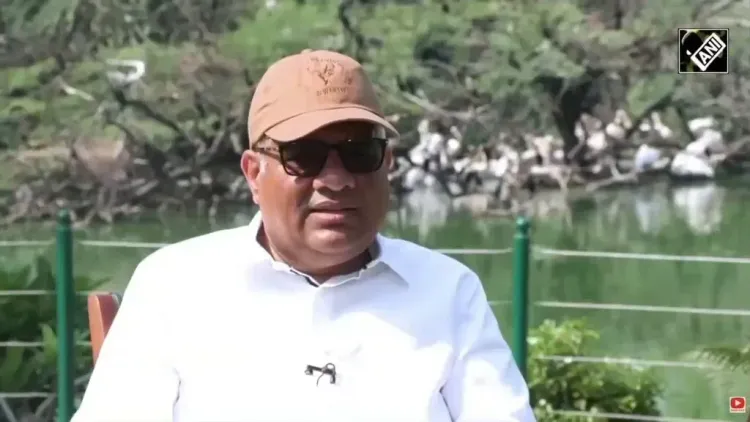
Union Environment Minister Bhupender Yadav on Friday, 5 June 2026 — World Environment Day — reaffirmed the government's dual commitment to universal energy access and ecological preservation, framing both as central pillars of the Viksit Bharat vision. The post, shared under the hashtags #100RamsarSites and #NowForClimate, signals India's intent to advance wetland conservation milestones alongside its clean-energy agenda.
Context
Yadav wrote, 'Energy का access हर व्यक्ति तक होना चाहिए' ('Every person must have access to energy'), adding that India is moving forward by taking ecology and economy together in the journey toward a developed nation. The post was timed to coincide with World Environment Day, the annual global observance on 5 June anchored by the United Nations Environment Programme, this year carrying the theme 'NowForClimate'.
The twin hashtags place the statement at the intersection of two ongoing policy tracks: India's push to expand energy access to its last-mile populations, and its effort to grow the number of wetlands designated under the Ramsar Convention — the 1971 international treaty for wetland conservation to which India acceded in 1982 with Chilika Lake as its first designated site.
Policy Backdrop
India's approach to balancing development with environmental protection has a long institutional lineage. The National Action Plan on Climate Change, launched in 2008, outlined eight national missions covering solar energy, energy efficiency, sustainable habitats, and water conservation. The Amrit Dharohar scheme, announced in the 2023 Union Budget, specifically targets the conservation and wise use of wetlands, linking ecological security to local livelihoods.
The #100RamsarSites hashtag points to a landmark the government has been working toward — expanding India's tally of internationally recognised wetlands to 100 sites. Ramsar designations carry obligations for sustainable management and open avenues for international technical and financial cooperation. Successive administrations have presented such designations not as constraints on growth but as frameworks that can attract conservation investment into rural and coastal economies.
On the energy side, India has scaled its renewable capacity significantly over the past decade, with solar installations forming the backbone of its universal electrification drive. The minister's invocation of energy access alongside ecology reflects a consistent government position in multilateral climate negotiations: that development priorities and emission-reduction pledges are mutually reinforcing rather than competing.
Stakeholders and Impact
Rural households, particularly those in and around notified wetland zones, sit at the centre of both policy tracks. Off-grid and solar energy rollouts in ecologically sensitive areas require careful coordination with state forest departments and wetland management authorities to avoid habitat disruption. Wetland communities — fisherfolk, farmers, and indigenous groups — stand to benefit from schemes that tie conservation mandates to livelihood support.
State forest departments bear the primary implementation responsibility for Ramsar site management plans, while the Ministry of New and Renewable Energy drives the energy-access programmes. The minister's framing suggests an expectation of inter-ministerial alignment as India pursues both targets simultaneously.
What's Next
Attention will now turn to whether India formally announces new Ramsar designations in the near term, which would bring the country closer to the 100-site milestone signalled by the hashtag. Observers will also watch for integration of wetland-protection norms into central schemes for solar and off-grid energy deployment in notified areas — a convergence that would give operational weight to the ecology-economy balance the minister articulated on World Environment Day.
Point of View
The minister reinforces the BJP government's long-standing narrative that environmental stewardship and development are not in tension. The Viksit Bharat framing elevates this beyond routine ministerial communication, embedding it in the government's flagship 2047 vision. The dual-hashtag strategy also positions India ahead of upcoming multilateral climate conversations, projecting a developing-nation government that is proactive rather than defensive on climate commitments.
NationPress
20 Oct 2026
Frequently Asked Questions
What did Bhupender Yadav say on World Environment Day 2026?
Union Environment Minister Bhupender Yadav stated that energy access must reach every person and that India is advancing by balancing ecology and economy together as part of the Viksit Bharat vision.
What is the #100RamsarSites hashtag about?
The hashtag refers to India's effort to have 100 internationally recognised Ramsar wetland sites, a milestone the government has been working toward under its wetland conservation agenda.
What is the Ramsar Convention and when did India join?
The Ramsar Convention is a 1971 international treaty for the conservation and sustainable use of wetlands. India acceded to it in 1982, with Chilika Lake in Odisha as its first designated site.
What is the Amrit Dharohar scheme?
Amrit Dharohar is a government scheme announced in the 2023 Union Budget to promote the conservation and wise use of wetlands over three years, linking ecological security to local livelihoods.
How does India balance energy access with environmental protection?
India has pursued renewable energy expansion — especially solar — alongside wetland and forest conservation programmes, framing both as complementary under its National Action Plan on Climate Change and the Viksit Bharat development vision.