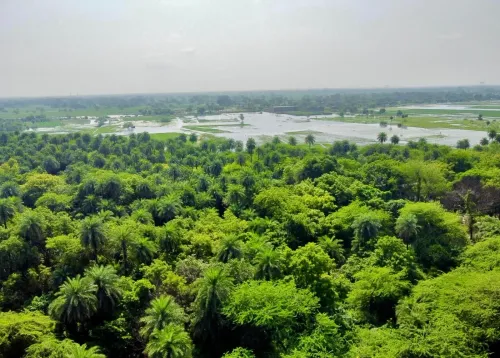
PM Modi Hails India's 100th Ramsar Site at Ballia Wetland
Synopsis
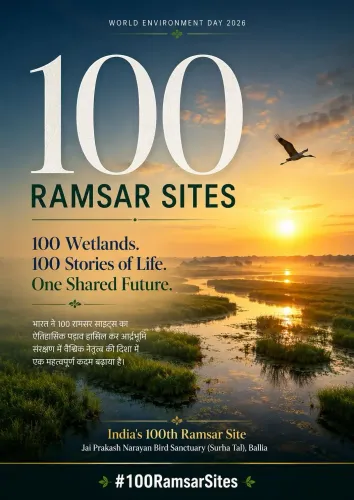
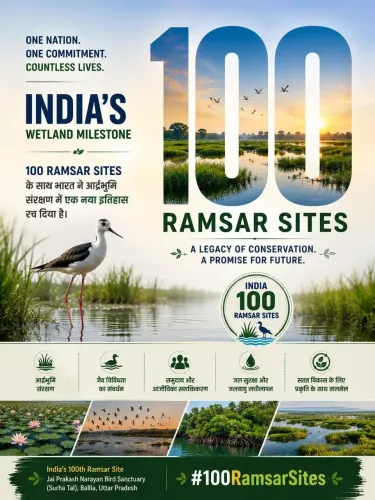
Prime Minister Narendra Modi on World Environment Day 2026 hailed the designation of Jai Prakash Narayan Bird Sanctuary (Surha Tal) in Ballia, Uttar Pradesh as India's 100th Ramsar site, citing the country's commitment to wetland conservation, community participation and biodiversity protection.
Key Takeaways
India's 100th Ramsar site is Jai Prakash Narayan Bird Sanctuary (Surha Tal) in Ballia, Uttar Pradesh .
The announcement was made on World Environment Day, June 5, 2026 , by Prime Minister Narendra Modi .
India first joined the Ramsar Convention in 1982 , designating Chilika Lake as its inaugural site.
The country had 49 Ramsar sites as of 2019 and has more than doubled that count since.
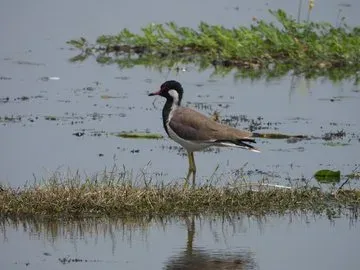
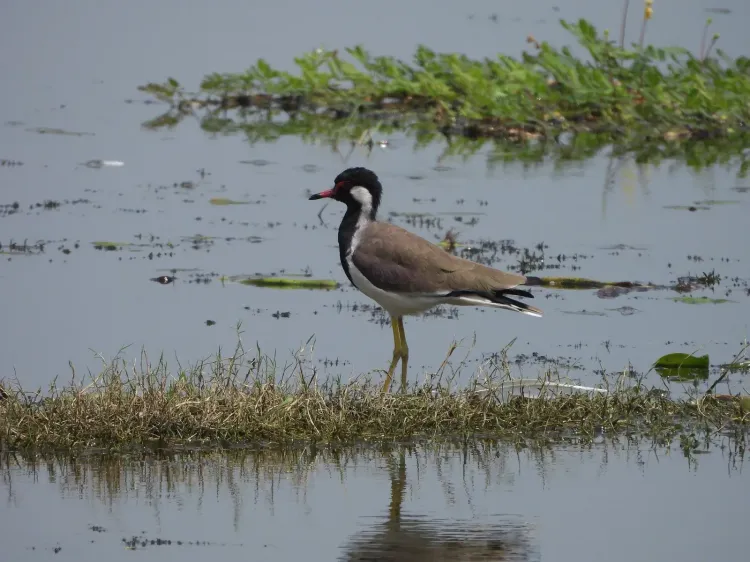
Surha Tal is noted for its avifaunal biodiversity , supporting both migratory and resident bird species.
Future focus will be on site-specific management plans under the Wetlands (Conservation and Management) Rules .
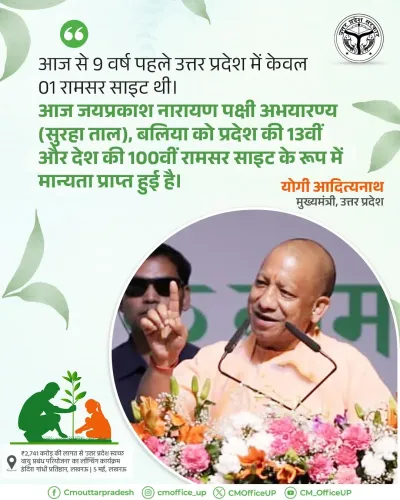
Prime Minister Narendra Modi on Friday, June 5, 2026 — World Environment Day — welcomed the designation of Jai Prakash Narayan Bird Sanctuary (Surha Tal) in Ballia, Uttar Pradesh as India's 100th Ramsar site, calling it a reflection of the country's unwavering commitment to wetland conservation.
Context
The Ramsar Convention, signed in 1971 in the Iranian city of Ramsar, is the leading international treaty for the conservation and sustainable use of wetlands. India acceded to the convention in 1982, designating Chilika Lake in Odisha as its first Ramsar site. The country had 49 sites by 2019 and has since added wetlands at a steady pace, reaching the symbolic century milestone with Surha Tal.
Prime Minister Modi wrote that the sanctuary is 'rich in avifaunal biodiversity, attracting several migratory and resident birds,' underscoring the ecological significance of the Ballia wetland in eastern Uttar Pradesh.
Policy Backdrop
India's rapid expansion of its Ramsar network is underpinned by the Wetlands (Conservation and Management) Rules and state-level action plans that integrate scientific mapping, community participation and awareness programmes. Uttar Pradesh already hosts several Ramsar sites, and the addition of Surha Tal reinforces the state's role in national biodiversity strategy.
Modi noted that 'efforts to conserve and rejuvenate wetlands have been strengthened through greater community participation, science, innovation and awareness initiatives,' pointing to a whole-of-society approach that goes beyond regulatory designation. These endeavours, he said, are aimed at preserving biodiversity, securing ecological balance and creating a 'greener future for coming generations.'
Stakeholders and Impact
Local fishing and farming communities around Surha Tal stand to benefit from the Ramsar tag, which typically unlocks technical support, conservation funding and international visibility for site management. Wetland conservation groups and ornithological researchers gain a formally recognised site for monitoring migratory and resident bird populations.
Broader ecological gains include improved water retention, flood buffering and carbon sequestration — services that benefit the wider Ballia district and downstream communities along the Ganga basin. The international designation also strengthens India's credentials in multilateral environmental negotiations.
What's Next
The focus now shifts to site-specific management plans under the Wetlands (Conservation and Management) Rules, which require designated sites to maintain ecological character and involve local communities in governance. Conservationists will watch whether the 100-site milestone is accompanied by enhanced funding and staffing for existing sites, many of which face pressures from encroachment and pollution.
With the Ramsar network now spanning 100 wetlands across multiple Indian states, the government faces the dual challenge of adding further sites and ensuring that already-designated wetlands receive the on-ground protection the international listing implies.
Point of View
Announced on World Environment Day, is as much a diplomatic signal as a conservation one — India is visibly aligning domestic biodiversity policy with its international treaty commitments ahead of multilateral climate and biodiversity forums. The rapid doubling of designated sites since 2019 reflects a deliberate political strategy to demonstrate environmental stewardship. However, critics within the conservation community have long argued that the pace of designation has outrun the capacity for on-ground management, making the quality of protection at existing sites the real test. The Surha Tal listing gives the government a symbolic win, but the harder governance work — funding, staffing and community rights frameworks — remains the measure by which this milestone will ultimately be judged.
NationPress
19 Sept 2026
Frequently Asked Questions
What is India's 100th Ramsar site?
India's 100th Ramsar site is the Jai Prakash Narayan Bird Sanctuary (Surha Tal) located in Ballia district, Uttar Pradesh , a wetland known for its rich bird diversity.
What is a Ramsar site?
A Ramsar site is a wetland designated under the Ramsar Convention of 1971 as being of international importance for biodiversity, ecology and hydrology. India joined the convention in 1982 .
How many Ramsar sites does India have in 2026?
As of June 2026 , India has 100 Ramsar sites following the designation of Surha Tal in Ballia, Uttar Pradesh.
Where is Surha Tal located?
Surha Tal is located in Ballia district in eastern Uttar Pradesh , India. It is part of the Jai Prakash Narayan Bird Sanctuary.
What was India's first Ramsar site?
India's first Ramsar site was Chilika Lake in Odisha, designated in 1981 , a year before India formally acceded to the Ramsar Convention in 1982 .