Pralhad Joshi hails India's 100th Ramsar Site milestone
Synopsis
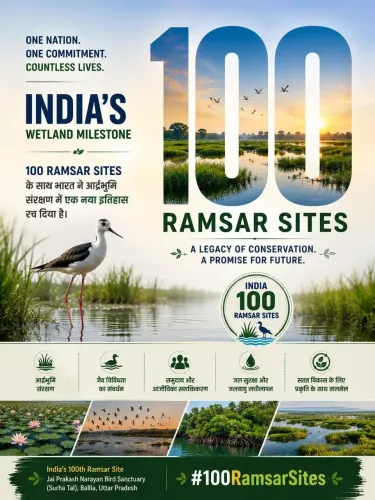
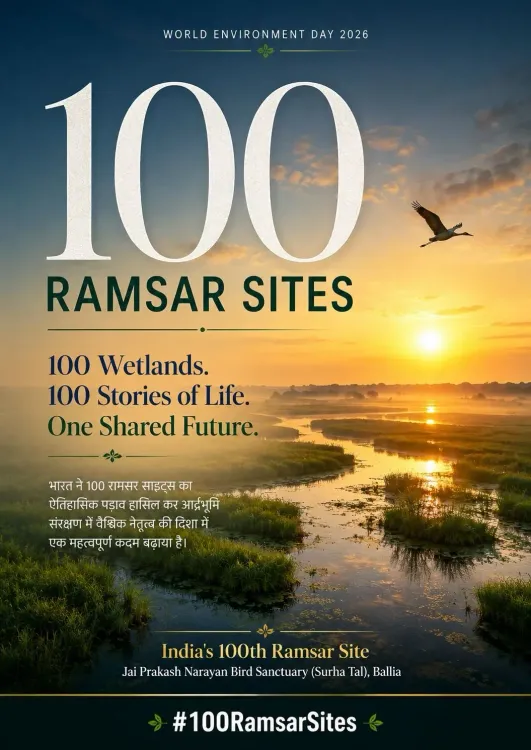
India has reached 100 Ramsar-designated wetlands with the inclusion of Jai Prakash Narayan Bird Sanctuary (Surha Tal) in Ballia, Uttar Pradesh. Union Minister Pralhad Joshi marked the milestone on World Environment Day, calling it a proud moment in India's conservation journey.
Key Takeaways
India now has 100 Ramsar Sites , a landmark in the country's wetland conservation record.
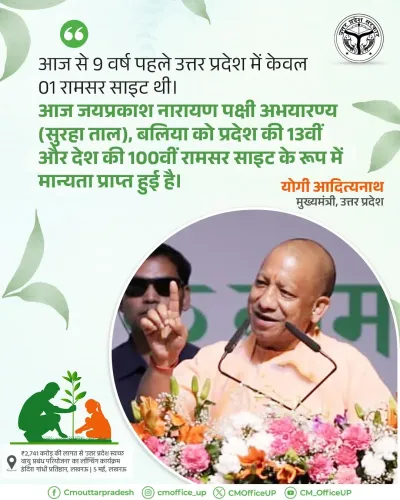
The 100th site is Jai Prakash Narayan Bird Sanctuary (Surha Tal) in Ballia district, Uttar Pradesh .
India acceded to the Ramsar Convention in 1982 ; its first designated site was Chilika Lake, Odisha .
The announcement was made on World Environment Day, June 5, 2026 by Union Minister Pralhad Joshi .
The designation carries obligations for site management planning and ecological monitoring under Ramsar rules.
The milestone strengthens India's position in global biodiversity negotiations, including commitments under the post-2020 Global Biodiversity Framework .
Union Consumer Affairs Minister Pralhad Joshi on Friday, June 5, 2026 — World Environment Day — celebrated India crossing a landmark conservation threshold, as the inclusion of Jai Prakash Narayan Bird Sanctuary (Surha Tal) in Ballia, Uttar Pradesh as a Ramsar Site brought the country's total designated wetlands to 100.
Context
In his post, Joshi described the development as 'a proud milestone in India's conservation journey,' citing the nation's 'unwavering commitment to protecting wetlands, preserving biodiversity and ensuring sustainable development for future generations.' The announcement coincides with World Environment Day, lending symbolic weight to the designation. Surha Tal is a freshwater lake and bird sanctuary situated in Ballia district of eastern Uttar Pradesh, bordering Bihar.
Policy Backdrop
India acceded to the Ramsar Convention — the international treaty on wetland conservation signed in Ramsar, Iran in 1971 — in 1982. The country's first designated site was Chilika Lake in Odisha, also listed in 1981. Over the four decades since, successive governments have systematically expanded the Ramsar network, linking wetland designations to domestic biodiversity programmes, water security initiatives, and international obligations under frameworks such as the Sustainable Development Goals.
The expansion of Ramsar Sites has accelerated notably in recent years as India aligned its conservation reporting with global biodiversity targets. Designations require site management plans and regular monitoring, making each addition a long-term governance commitment rather than a ceremonial listing.
Stakeholders and Impact
Surha Tal supports significant avian biodiversity, drawing migratory and resident bird species to its freshwater ecosystem. Local communities in Ballia depend on the wetland for fishing and agriculture, meaning the Ramsar designation carries both ecological and livelihood implications. Conservation organisations working across the Indo-Gangetic Plain have long flagged the region's wetlands as critical buffers against seasonal flooding and groundwater depletion.
The 100-site milestone places India among the leading nations globally in terms of Ramsar-designated area, reinforcing the country's standing in multilateral environmental negotiations. State governments, particularly Uttar Pradesh, stand to access technical and financial support from the Ramsar Secretariat for site management once the designation is formalised.
What's Next
Attention will now turn to the release of an official site management plan for Surha Tal, which is required under Ramsar obligations to guide conservation, community engagement, and ecological monitoring. Further proposals from state governments to the Ramsar Secretariat are expected as India looks to consolidate and expand its wetland protection framework. The milestone also sets a baseline for India's commitments under the post-2020 Global Biodiversity Framework adopted at COP15 in Montreal.
Point of View
Even as the government faces scrutiny over industrial clearances in ecologically sensitive zones. For the BJP, the milestone offers a rare convergence of nationalist pride and green credentials ahead of a period of heightened international climate scrutiny. The choice of a minister from the Consumer Affairs and Renewable Energy portfolios — rather than the Environment Ministry — to amplify the announcement suggests a deliberate effort to broaden the government's conservation messaging across the cabinet. The real test will be whether site management plans and community livelihoods at places like Surha Tal receive sustained funding and administrative attention beyond the headline moment.
NationPress
20 Oct 2026
Frequently Asked Questions
What is India's 100th Ramsar Site?
India's 100th Ramsar Site is the Jai Prakash Narayan Bird Sanctuary, also known as Surha Tal, located in Ballia district of Uttar Pradesh.
What is a Ramsar Site?
A Ramsar Site is a wetland designated under the Ramsar Convention, an international treaty signed in 1971 in Ramsar, Iran, that commits member countries to the conservation and sustainable use of their wetlands.
When did India join the Ramsar Convention?
India acceded to the Ramsar Convention in 1982. Its first designated site was Chilika Lake in Odisha, listed in 1981.
Who announced India's 100th Ramsar Site?
Union Minister Pralhad Joshi, who holds the Consumer Affairs, Food and Public Distribution, and New and Renewable Energy portfolios, announced the milestone on June 5, 2026.
Where is Surha Tal located?
Surha Tal is a freshwater lake and bird sanctuary in Ballia district of eastern Uttar Pradesh, bordering Bihar.