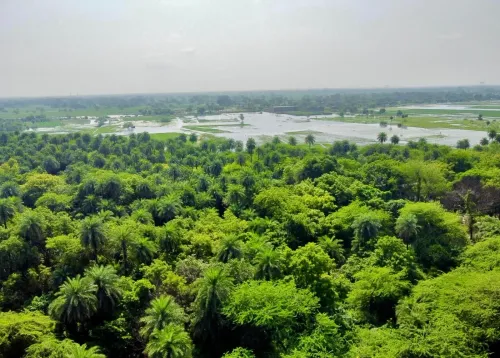
India's 100th Ramsar site: Modi hails Surha Tal, Ballia UP designation
Synopsis
India's wetland conservation story just hit triple digits. The Jai Prakash Narayan Bird Sanctuary in Ballia, UP, became the country's 100th Ramsar site — a milestone PM Modi announced on World Environment Day. The number is symbolic, but the real question is whether ground-level protection matches the growing list.
Key Takeaways
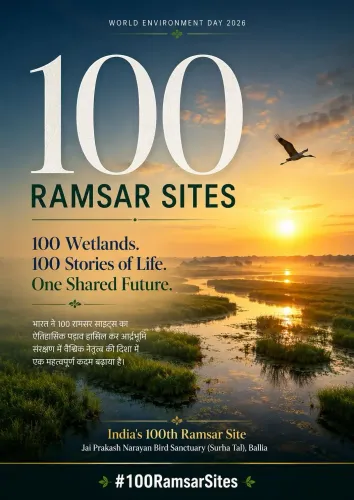
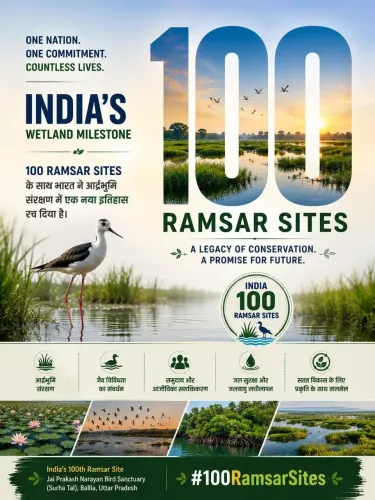
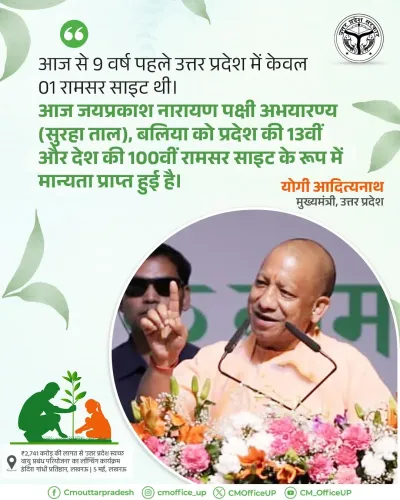
Jai Prakash Narayan Bird Sanctuary (Surha Tal) in Ballia, Uttar Pradesh has been designated India's 100th Ramsar site .
PM Narendra Modi announced the milestone on 5 June 2025 , coinciding with World Environment Day .
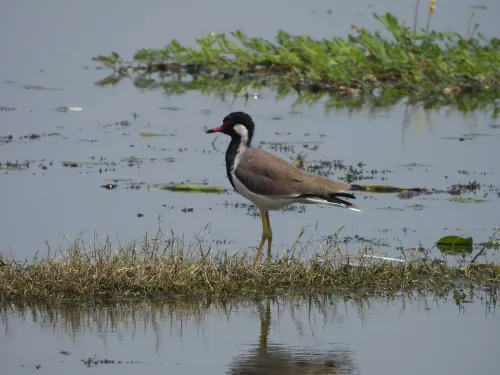
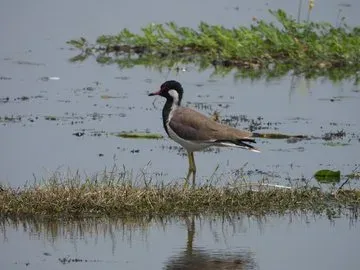
The sanctuary is noted for its avifaunal biodiversity , hosting both migratory and resident bird species.
Modi credited community participation, science, innovation, and awareness initiatives for India's wetland conservation progress.
India's Ramsar tally has grown substantially over the past decade, placing it among the world's top nations for wetland recognition.
Prime Minister Narendra Modi on 5 June 2025 — World Environment Day — announced that India has reached a landmark conservation milestone, with the Jai Prakash Narayan Bird Sanctuary (Surha Tal) in Ballia, Uttar Pradesh, officially designated as the country's 100th Ramsar site. The recognition places India among the world's leading nations in wetland protection under the international Ramsar Convention.
The 100th Site: Surha Tal in Ballia
The Jai Prakash Narayan Bird Sanctuary, locally known as Surha Tal, is a freshwater wetland in Ballia district of Uttar Pradesh. The sanctuary is noted for its rich avifaunal biodiversity, drawing a wide range of both migratory and resident bird species each season. Its designation brings the total count of India's internationally recognised wetlands to 100 — a figure that underscores a sustained national push to protect ecologically sensitive water bodies.
What PM Modi Said
Posting on social media platform X, Prime Minister Modi wrote: 'A century as far as Ramsar sites are concerned! Glad that the Jai Prakash Narayan Bird Sanctuary (Surha Tal) in Ballia, Uttar Pradesh has been designated as India's 100th Ramsar site. This wetland is rich in avifaunal biodiversity, attracting several migratory and resident birds.'
Modi added: 'India's unwavering commitment to protecting our natural surroundings and wetlands in particular is clearly reflected in this feat. Over the years, efforts to conserve and rejuvenate wetlands have been strengthened through greater community participation, science, innovation and awareness initiatives. These endeavours are helping preserve biodiversity, secure ecological balance and create a greener future for coming generations.'
Wetland Conservation: India's Broader Commitment
India's Ramsar tally has grown significantly over the past decade, reflecting a policy shift toward integrating wetland conservation into mainstream environmental governance. The government has emphasised community participation, scientific monitoring, and public awareness as the three pillars of its wetland rejuvenation strategy. Notably, several of India's more recently designated Ramsar sites lie in ecologically stressed regions, signalling a move beyond iconic sites toward protecting lesser-known but equally vital water bodies.
World Environment Day Context
The announcement came on World Environment Day, observed globally on 5 June every year under the aegis of the United Nations Environment Programme (UNEP). This year, Prime Minister Modi reaffirmed India's commitment to a cleaner, greener future guided by the principle of 'One Earth, One Family and One Future' and the spirit of Mission LiFE (Lifestyle for Environment). The day traces its origins to the 1972 United Nations Conference on the Human Environment in Stockholm, Sweden, which first brought ecological concerns to the centre of global policymaking. The first formal observance took place in 1973.
What Comes Next
With the 100th Ramsar designation achieved, conservation advocates and environmental bodies are expected to push for stronger on-ground protection measures, including buffer zone enforcement and pollution control around listed wetlands. The milestone also raises the stakes for India's commitments under the Convention on Biological Diversity and its post-2020 global biodiversity framework targets. How effectively the government translates the symbolic landmark into measurable ecological outcomes will determine the true significance of this achievement.
Point of View
But designation alone does not equal conservation. Several of India's listed wetlands face encroachment, pollution, and shrinking water tables — problems a Ramsar tag does not automatically fix. The government's emphasis on community participation is the right instinct, but without enforceable buffer-zone regulations and independent ecological monitoring, the century milestone risks becoming a number rather than a turning point. The real test will be whether the 100th site looks healthier a decade from now than it does today.
NationPress
20 Oct 2026
Frequently Asked Questions
What is India's 100th Ramsar site?
India's 100th Ramsar site is the Jai Prakash Narayan Bird Sanctuary, also known as Surha Tal, located in Ballia district of Uttar Pradesh. The designation was announced by Prime Minister Narendra Modi on 5 June 2025, World Environment Day.
What is a Ramsar site?
A Ramsar site is a wetland designated under the Ramsar Convention — an international treaty adopted in Ramsar, Iran, in 1971 — that recognises wetlands of international importance for biodiversity and ecological value. Designation commits the host country to sustainable management and conservation of the site.
Why is the Surha Tal sanctuary significant?
Surha Tal is rich in avifaunal biodiversity and serves as a habitat for both migratory and resident bird species, making it ecologically important beyond its local geography. Its Ramsar designation brings international recognition and, in principle, stronger conservation obligations.
How has India expanded its Ramsar network over the years?
India's Ramsar tally has grown significantly over the past decade through a combination of government policy, scientific surveys, and community-led conservation efforts. The government has cited greater community participation, innovation, and awareness campaigns as key drivers of this expansion.
What did PM Modi say about World Environment Day 2025?
On World Environment Day, PM Modi reaffirmed India's commitment to a cleaner and greener future guided by the principle of 'One Earth, One Family and One Future' and the Mission LiFE framework. He described the 100th Ramsar designation as a reflection of India's unwavering commitment to protecting its natural environment.