Yadav: India's Ramsar sites hit 103 with Sukhna, Sauj additions

Synopsis
Union Environment Minister Bhupender Yadav announced that Sukhna Lake in Chandigarh and Sauj Jheel in Uttar Pradesh have become India's newest Ramsar Sites, taking the national tally to 103 and reinforcing the government's wetland conservation push under the Amrit Dharohar scheme.
Key Takeaways
India's Ramsar site count reaches 103 with the addition of Sukhna Lake and Sauj Jheel.
Sukhna Lake in Chandigarh and Sauj Jheel in Uttar Pradesh are the two latest designations.
The Ramsar Convention, which India joined in 1982 , recognises wetlands of international ecological importance.
The Amrit Dharohar scheme, launched in 2023 , is the central policy framework driving India's accelerating Ramsar nominations.
Designations commit state governments to protecting wetland ecological character and integrating conservation into planning.
India's expanding Ramsar network supports its international commitments under biodiversity and climate frameworks.
Two more wetlands have earned India's highest international conservation honour — and the country's Ramsar tally has crossed a fresh milestone. Union Environment Minister Bhupender Yadav announced on Thursday, 15 October 2026 that Sukhna Lake in Chandigarh and Sauj Jheel in Uttar Pradesh have been designated as Ramsar Sites, taking India's total count to 103.
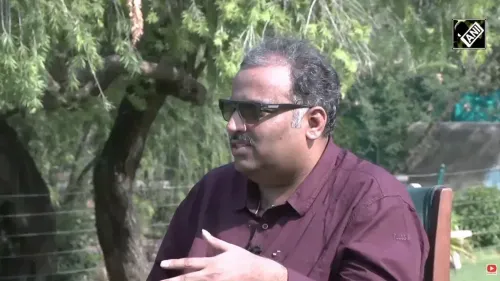
Yadav posted on X: 'India's Ramsar site tally reaches 103.' He credited the Prime Minister Narendra Modi-led government's sustained focus on wetlands for the milestone, noting their role in 'conserving biodiversity, enhancing water and climate security, and sustaining local livelihoods.' He also extended congratulations to the governments of Uttar Pradesh and Chandigarh, and — in a rare, breezy personal note — invited travellers to visit both sites.
What the Ramsar tag means for Sukhna and Sauj
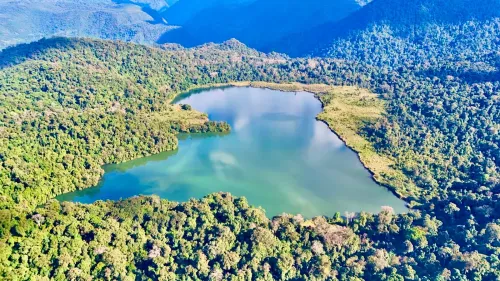
Sukhna Lake is one of India's most recognisable urban wetlands — a reservoir nestled at the foothills of the Shivalik range on the edge of Chandigarh, the planned city designed by Le Corbusier. Its designation acknowledges ecological value that has long co-existed with its role as a popular recreational destination. Sauj Jheel, in Uttar Pradesh, extends the state's Ramsar footprint and signals growing central-state coordination on biodiversity policy.
A Ramsar designation — conferred under the 1971 Ramsar Convention on Wetlands, which India joined in 1982 — commits the host government to maintaining the ecological character of the site and integrating wetland conservation into national planning. The tag brings both reputational weight and, critically, access to technical and policy frameworks for long-term protection.
The Amrit Dharohar thread running through each new designation
These additions do not exist in a vacuum. The Amrit Dharohar scheme — launched in 2023 by the central government — has been the policy engine driving India's accelerating pace of Ramsar nominations. The programme ties wetland conservation directly to community livelihoods and climate resilience, making it a rare initiative that spans biodiversity goals, water security, and local economic interests simultaneously.
India's Ramsar network has expanded rapidly in recent years, reflecting a deliberate strategy to align domestic conservation priorities with international commitments — including those under the Convention on Biological Diversity and climate frameworks. Reaching 103 designated sites places India among the world's most active participants in the Ramsar system.
What the tally signals for India's wetland strategy
Each new designation is effectively a bet on the future — a formal, internationally witnessed promise that a wetland will not be silently drained, encroached upon, or degraded for short-term use. The question now is implementation: whether state governments, particularly in rapidly urbanising regions like Chandigarh's hinterland, can deliver on the ecological management plans that the Ramsar tag demands.
Yadav tagged the hashtag #AmritDharohar, signalling the government's intent to continue framing wetland conservation as a flagship environmental identity — not a niche policy footnote. With COP-level environment meetings on the calendar and biodiversity targets under the Kunming-Montreal Global Biodiversity Framework ticking, India's 103-site count is now part of the country's international bargaining position, not just its domestic scorecard.
Point of View
However, is post-designation enforcement — previous Ramsar sites have faced encroachment and degradation pressures, and Sukhna Lake's urban setting in particular will demand sustained political will from the Chandigarh administration. On the international stage, a 103-site tally strengthens India's negotiating hand at biodiversity and climate forums, where developing-country leadership on nature-positive commitments carries growing weight.
NationPress
15 Oct 2026
Frequently Asked Questions
How many Ramsar sites does India have in 2026?
India now has 103 Ramsar sites following the designation of Sukhna Lake in Chandigarh and Sauj Jheel in Uttar Pradesh, as announced by Union Environment Minister Bhupender Yadav in October 2026.
What is Sukhna Lake's Ramsar designation?
Sukhna Lake in Chandigarh has been newly designated as a Ramsar Site of international wetland importance, recognising its ecological and urban biodiversity value.
What is Sauj Jheel and where is it located?
Sauj Jheel is a wetland in Uttar Pradesh that has been added to India's list of Ramsar Sites, supporting local biodiversity and community livelihoods in the region.
What is the Amrit Dharohar scheme?
The Amrit Dharohar scheme is a central government programme launched in 2023 to conserve India's wetlands, promote biodiversity, strengthen climate resilience, and support community livelihoods around wetland ecosystems.
When did India join the Ramsar Convention?
India became a contracting party to the Ramsar Convention on Wetlands — the 1971 international treaty protecting wetlands of global importance — in 1982 .