Yadav Marks World Environment Day with 100 Ramsar Sites Push

Synopsis
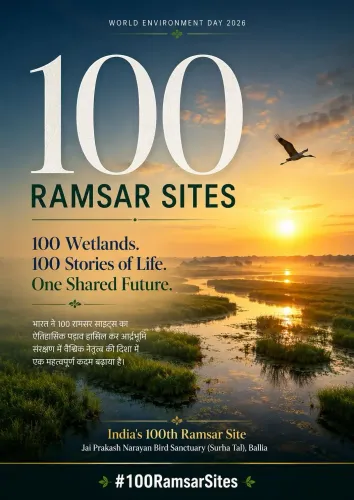
On World Environment Day 2026, Union Environment Minister Bhupender Yadav invoked a call for 'reuse, recycle, reproduce' under the #100RamsarSites hashtag, spotlighting India's drive to reach 100 internationally recognised wetland sites under the Ramsar Convention — a milestone built on rapid designations since 2019.
Key Takeaways
Union Environment Minister Bhupender Yadav posted on World Environment Day, 5 June 2026 , invoking a circular-ecology mantra under #100RamsarSites .
India acceded to the Ramsar Convention in 1982 , initially designating Chilika Lake and Keoladeo National Park .
The national Ramsar tally grew from 27 sites in 2019 to over 80 sites within a few years, with the government targeting 100 .
Wetland protection is integrated into India's Paris Agreement commitments and the National Action Plan on Climate Change .
State governments are key to the designation pipeline, submitting proposals to the central Ministry for forwarding to the Ramsar Secretariat .
An updated National Wetland Conservation Strategy is expected, alongside possible formal announcement of the 100th site.
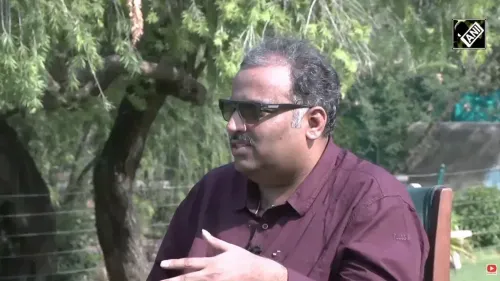
Union Environment Minister Bhupender Yadav on Friday, 5 June 2026 — World Environment Day — invoked a call for circular thinking on wetland and climate action, posting on X under the hashtags #100RamsarSites and #NowForClimate as India marks a significant milestone in its wetland conservation journey.
Writing in Hindi, the Minister declared: 'Ab samay reuse, recycle, reproduce ka hai' — 'Now is the time for reuse, recycle, reproduce' — framing wetland stewardship within a broader ethic of ecological circularity on a day observed globally to highlight urgent environmental challenges.
Context
The post arrives as India approaches what the government has flagged as a landmark target: the designation of 100 Ramsar sites — wetlands of international importance recognised under the 1971 Ramsar Convention, to which India acceded in 1982. The country's first two designations were Chilika Lake in Odisha and Keoladeo National Park in Rajasthan. Since 2019, the pace of new designations has accelerated sharply, with the national tally growing from 27 to well over 80 sites within a few years.
World Environment Day, observed every 5 June under the United Nations Environment Programme, has this year focused on the theme of restoring ecosystems — a natural backdrop for a government keen to highlight wetland gains ahead of international biodiversity reviews.
Policy Backdrop
The Ministry of Environment, Forest and Climate Change, which Yadav heads, has positioned the Ramsar expansion drive as a pillar of India's commitments under the Paris Agreement and the National Action Plan on Climate Change. Wetlands serve as carbon sinks, flood buffers, and biodiversity corridors — making their protection central to both climate adaptation and the country's obligations under the Convention on Biological Diversity.
The three-word mantra — reuse, recycle, reproduce — echoes circular-economy language that the Ministry has increasingly applied not just to waste management but to natural-resource governance, signalling an attempt to mainstream ecological thinking across policy domains.
Stakeholders and Impact
State governments play a pivotal role in the Ramsar pipeline: site proposals originate at the state level before the central Ministry forwards them to the Ramsar Secretariat in Gland, Switzerland. Reaching the 100-site milestone would make India one of the largest Ramsar networks in Asia, with implications for wetland-dependent fishing and farming communities across the country.
Wetland communities — including fisherfolk at sites such as Chilika Lake and farmers around inland marshes — stand to benefit from stronger conservation mandates that can also unlock international technical and financial support for sustainable livelihoods.
What's Next
Policy watchers will track whether the government formally announces the 100th Ramsar designation in the coming weeks, potentially timed to coincide with an upcoming international environmental forum. An updated National Wetland Conservation Strategy is also expected, which would set management benchmarks for the expanded network.
As India sharpens its climate diplomacy ahead of the next UN Climate Conference, the Ramsar milestone offers a tangible conservation credential — one the government appears eager to place front and centre in its environmental narrative.
Point of View
Hashtag-driven post on World Environment Day is a deliberate act of political branding — the government is signalling that the Ramsar expansion, a largely administrative achievement, deserves the same visibility as flagship welfare schemes. Framing wetland conservation through the language of 'reuse, recycle, reproduce' also attempts to bridge the gap between environmental policy and the circular-economy narrative popular in international climate circles. The timing, on a globally observed day, maximises diplomatic optics ahead of upcoming multilateral forums where India is keen to present itself as a proactive conservation actor. Whether the milestone translates into on-ground wetland health improvements remains the harder question that the post leaves unanswered.
NationPress
20 Oct 2026
Frequently Asked Questions
What is India's 100 Ramsar sites target?
India is working to have 100 wetlands designated as Ramsar sites — internationally recognised wetlands of importance under the 1971 Ramsar Convention. The country had 27 such sites in 2019 and has since added dozens more, pushing the total well above 80.
What did Bhupender Yadav post on World Environment Day 2026?
Union Environment Minister Bhupender Yadav posted in Hindi on 5 June 2026 , saying 'Ab samay reuse, recycle, reproduce ka hai' — 'Now is the time for reuse, recycle, reproduce' — under the hashtags #100RamsarSites and #NowForClimate.
When did India join the Ramsar Convention?
India acceded to the Ramsar Convention in 1982 , initially designating Chilika Lake in Odisha and Keoladeo National Park in Rajasthan as its first two wetlands of international importance.
Why are Ramsar sites important for India's climate goals?
Ramsar-designated wetlands act as carbon sinks, flood buffers, and biodiversity corridors, making them central to India's commitments under the Paris Agreement and the National Action Plan on Climate Change .
What happens after India reaches 100 Ramsar sites?
Reaching 100 Ramsar sites would make India one of Asia's largest Ramsar networks. The government is expected to release an updated National Wetland Conservation Strategy setting management benchmarks for the expanded network.