CM Yogi: UP Ramsar Sites Grew from 1 to 13 in 9 Years

Synopsis
On World Environment Day 2026, CM Yogi Adityanath announced that Uttar Pradesh has expanded its Ramsar wetland sites from one to thirteen in nine years and identified 100 sites under a state Wetland Scheme, linking the milestone to the 'Ek Ped Maa Ke Naam' afforestation campaign.
Key Takeaways
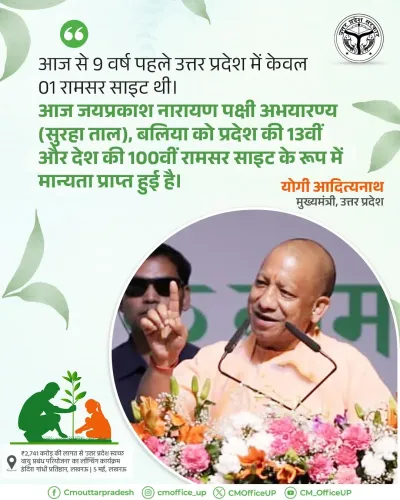
Uttar Pradesh now has 13 Ramsar-designated wetland sites , up from just one nine years ago, according to Chief Minister Yogi Adityanath.
100 wetland sites have been identified across the state under a dedicated Wetland Scheme , forming a pipeline for potential future designations.
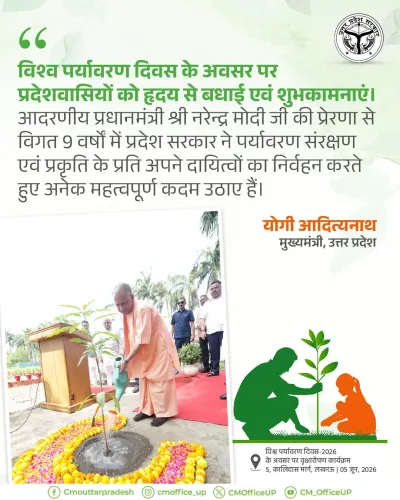
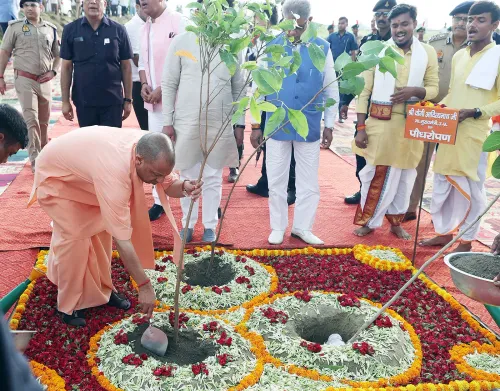
The announcement was made on World Environment Day, June 5, 2026 , under the #एक_पेड़_माँ_के_नाम ('Ek Ped Maa Ke Naam') campaign.
UP's first Ramsar site — the Upper Ganga River stretch between Brijghat and Narora — was designated in 2005 , remaining the state's only one for over a decade.
India joined the Ramsar Convention in 1982 ; accelerated designations since 2017 align with national SDG and biodiversity commitments.
Management plans for the 100 identified sites and further central nominations are the next steps to watch.
The Chief Minister's Office of Uttar Pradesh on Friday, June 5, 2026 — World Environment Day — shared remarks by Chief Minister Yogi Adityanath highlighting the state's wetland conservation record, noting that Uttar Pradesh has grown its count of internationally recognised Ramsar wetland sites from one to thirteen over the past nine years.
In the post, Chief Minister Adityanath stated: 'Wetland Scheme ke antargat akele Uttar Pradesh mein 100 sites chinhit ki gayi hain.' ['Under the Wetland Scheme, as many as 100 sites have been identified in Uttar Pradesh alone.'] He added that nine years ago the state had only a single Ramsar site, whereas today that number stands at thirteen.
Context
Uttar Pradesh's lone Ramsar site for most of its post-independence history was the Upper Ganga River stretch between Brijghat and Narora, designated in 2005. The Ramsar Convention, an international treaty signed in 1971 and joined by India in 1982, obliges signatory nations to identify and sustainably manage wetlands of international importance. A site earns Ramsar status when it meets criteria related to ecological character, biodiversity, or hydrological significance.
The remarks were made under the hashtag #एक_पेड़_माँ_के_नाम ('Ek Ped Maa Ke Naam' — 'A Tree in Mother's Name'), the state's ongoing afforestation campaign that links tree-planting pledges to personal and ecological commitments. Sharing wetland data under this campaign signals the government's intent to frame both initiatives as part of a single environmental agenda.
Policy Backdrop
India's acceleration of Ramsar designations has been a visible feature of its international environmental commitments, particularly in meeting Sustainable Development Goal 15 on life on land. Nationally, the count of Ramsar sites has risen sharply since 2017, with several new designations coming from the Ganga basin states. Uttar Pradesh, which sits astride the Ganga and its tributaries, holds some of the subcontinent's most ecologically significant floodplain and oxbow-lake wetlands.
The state government's reference to a 'Wetland Scheme' under which 100 sites have been identified suggests a structured state-level inventory exercise running alongside the national Ramsar nomination pipeline. Identification precedes formal designation and is a prerequisite for eventual protection and management-plan preparation.
Stakeholders and Impact
Wetland conservation in Uttar Pradesh directly affects fishing and farming communities dependent on floodplain ecosystems, as well as migratory bird populations that use the Indo-Gangetic Plain as a flyway corridor. The state forest department, conservation organisations, and local gram panchayats are the primary implementing bodies for site-level management.
Expanding the number of protected wetlands also carries economic implications: Ramsar-listed sites can attract eco-tourism investment and are eligible for central and international conservation funding streams. For communities living around sites such as Nawabganj Bird Sanctuary and Sandi Bird Sanctuary — both in the state — formal recognition has historically improved resource governance.
What's Next
The immediate policy task following site identification is the preparation and notification of management plans for each of the 100 identified wetlands. Formal Ramsar nomination requires central government endorsement and submission to the Ramsar Secretariat, meaning the pathway from identified to designated involves multiple administrative steps.
With World Environment Day 2026 providing a high-visibility platform, the state government's public accounting of its wetland record is likely to feed into broader discussions around UP's green-budget allocations and its commitments under India's updated National Biodiversity Targets. Whether the 100 identified sites translate into new Ramsar nominations in the near term will be the metric conservationists watch most closely.
Point of View
Converting a technical metric — Ramsar site counts — into a legible political scorecard for nine years of BJP rule in Uttar Pradesh. The framing of 'one versus thirteen' is rhetorically powerful even as the harder test — whether identified sites receive funded management plans — remains unaddressed. Linking wetland data to the 'Ek Ped Maa Ke Naam' campaign also broadens the emotional register of what is otherwise a bureaucratic achievement, tying conservation to familial sentiment ahead of what could be a busy electoral cycle. The broader pattern mirrors the national government's strategy of using Ramsar tallies as a soft-power and SDG-compliance signal on the global stage.
NationPress
20 Sept 2026
Frequently Asked Questions
How many Ramsar sites does Uttar Pradesh have in 2026?
According to Chief Minister Yogi Adityanath, Uttar Pradesh has 13 Ramsar-designated wetland sites as of 2026, up from just one nine years earlier.
What is the Wetland Scheme mentioned by CM Yogi?
CM Yogi referred to a state-level 'Wetland Scheme' under which 100 wetland sites have been identified across Uttar Pradesh for conservation and potential Ramsar nomination, though full details of the scheme have not been elaborated in this announcement.
What was UP's first Ramsar site?
Uttar Pradesh's first Ramsar site was the Upper Ganga River stretch between Brijghat and Narora , designated in 2005 .
What is Ek Ped Maa Ke Naam?
'Ek Ped Maa Ke Naam' — meaning 'A Tree in Mother's Name' — is a statewide afforestation campaign promoted by the Uttar Pradesh government that encourages citizens to plant trees as a tribute to their mothers, linking personal sentiment to ecological action.
What is the Ramsar Convention and why does it matter for India?
The Ramsar Convention is a 1971 international treaty for the conservation of wetlands of international importance. India acceded in 1982 and has been accelerating site designations to meet its biodiversity and Sustainable Development Goal commitments.