Yogi Adityanath urges UP to plant trees, conserve water on World Environment Day
Synopsis
Ahead of World Environment Day, UP CM Yogi Adityanath has framed environmental conservation as a sacred Sanatan duty — not a calendar event. With UP now boasting 12 Ramsar sites and a live river-restoration scheme, his appeal carries policy weight alongside cultural resonance.
Key Takeaways
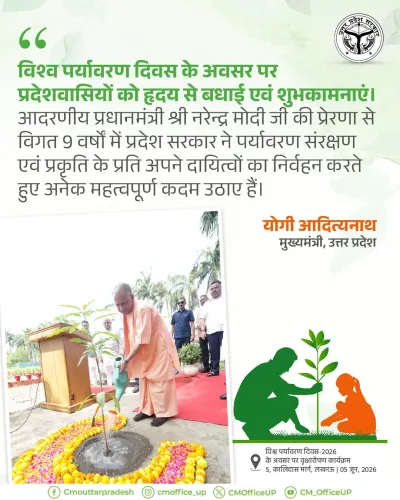
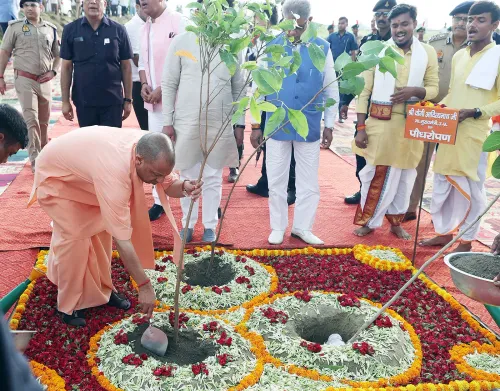
UP CM Yogi Adityanath on Monday issued an appeal for mass participation in tree plantation, water conservation and river rejuvenation ahead of World Environment Day on 5 June .
Uttar Pradesh now has 12 Ramsar sites after the inclusion of Shekha Jheel Bird Sanctuary .
The state's 'One District, One River' initiative was cited as a model for ecosystem restoration through government-community coordination.
CM Yogi urged children to plant at least one sapling every year on their birthday or a special occasion.
He invoked Sanatan cultural traditions — including Vat Savitri Vrat , Chhath and Maha Kumbh — to frame conservation as a collective moral responsibility.
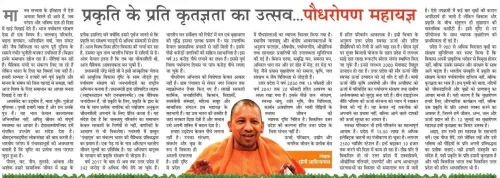
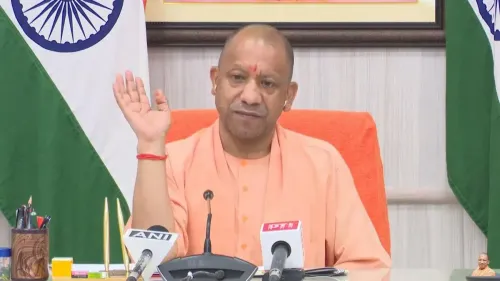
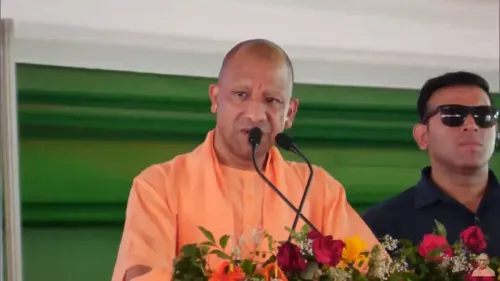
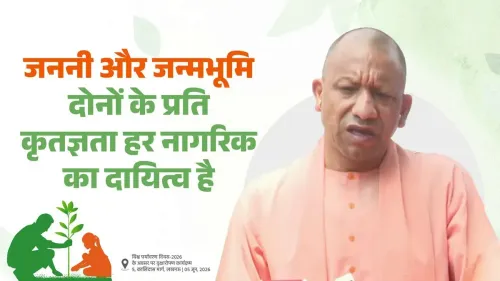
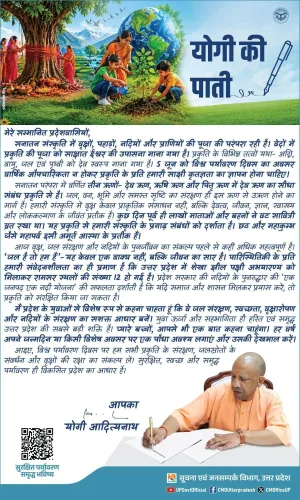
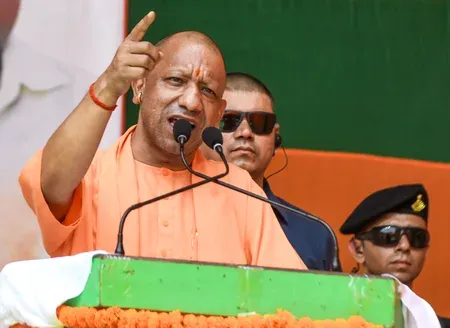
Uttar Pradesh Chief Minister Yogi Adityanath on Monday called on the people of the state to actively take part in environmental conservation ahead of World Environment Day on 5 June, urging mass participation in tree plantation, water preservation and river rejuvenation drives. The appeal, framed within India's Sanatan cultural tradition, positions environmental stewardship as a collective moral duty rather than a ceremonial annual event.
The Cultural Case for Conservation
In his message to the citizens of Uttar Pradesh, Chief Minister Yogi Adityanath drew on ancient Indian philosophy to make the case for environmental action. 'Sanatan culture has a long tradition of revering trees, mountains, rivers and living beings. The Vedas regard the worship of nature as the worship of God Himself,' he said.
He underscored that elements such as fire, air, water and earth have been considered divine manifestations in Indian thought, and that the concept of 'Dev Rin' — or debt towards the divine — is directly linked to the conservation of forests, land and water resources.
World Environment Day as More Than a Ritual
Emphasising that 5 June must transcend symbolism, the Chief Minister stated: 'The opportunity of June 5 should not remain an annual ritual but become a reflection of our shared commitment and gratitude towards the environment.' He cited festivals including Vat Savitri Vrat, Chhath and Maha Kumbh as cultural expressions of the deep bond between Indian society and the natural world.
He also invoked the phrase 'Jal hai to hum hain' — 'where there is water, there is life' — describing it as not merely a slogan but the essence of human existence.
Uttar Pradesh's Environmental Milestones
Chief Minister Yogi Adityanath pointed to concrete achievements under his government's watch. Uttar Pradesh now hosts 12 Ramsar sites following the recent inclusion of Shekha Jheel Bird Sanctuary, placing the state among India's leading wetland conservation hubs.
He also highlighted the government's 'One District, One River' initiative as a model of coordinated civic and governmental effort to restore and protect natural ecosystems across the state.
Call to Youth and Citizens
The Chief Minister specifically called on the youth of Uttar Pradesh to become ambassadors of environmental protection, urging them to lead water conservation drives, cleanliness campaigns, afforestation efforts and river protection movements. He encouraged children to plant and nurture at least one sapling on their birthday or any significant personal occasion each year.
Concluding his message, he appealed to all citizens to take a pledge on World Environment Day to protect nature, conserve water sources and safeguard trees. 'A safe, clean and prosperous environment is the foundation of a developed state and a secure future,' he said. With Uttar Pradesh's Ramsar tally growing and river restoration schemes underway, the government's next test will be translating these pledges into measurable ecological outcomes.
Point of View
Broadening its appeal beyond policy wonks. But the real measure is outcomes: UP's 12 Ramsar sites are a genuine achievement, yet the state's rivers, including stretches of the Ganga and Yamuna, continue to face severe pollution and encroachment pressures. Appeals to plant saplings and take pledges are visible and cost-free; the harder work — industrial effluent regulation, groundwater depletion, and urban encroachment on wetlands — demands institutional muscle that annual Environment Day messaging alone cannot substitute for.
NationPress
17 Oct 2026
Frequently Asked Questions
What did CM Yogi Adityanath say on World Environment Day 2025?
CM Yogi Adityanath appealed to the people of Uttar Pradesh to actively participate in tree plantation, water conservation and river rejuvenation ahead of World Environment Day on 5 June. He urged citizens to treat environmental protection as a collective duty rooted in Sanatan tradition, not an annual formality.
How many Ramsar sites does Uttar Pradesh have?
Uttar Pradesh now has 12 Ramsar sites following the inclusion of Shekha Jheel Bird Sanctuary. Ramsar sites are wetlands of international importance recognised under the Ramsar Convention, and UP's growing tally reflects the state's expanding wetland conservation footprint.
What is the 'One District, One River' initiative in Uttar Pradesh?
The 'One District, One River' initiative is a Uttar Pradesh government programme aimed at restoring and conserving river ecosystems across each district of the state. CM Yogi cited it as a successful example of coordinated effort between society and government to protect natural water bodies.
Why did CM Yogi invoke Sanatan tradition in his environment message?
CM Yogi linked environmental conservation to Sanatan cultural values — including reverence for trees, rivers and the concept of 'Dev Rin' (divine debt) — to frame ecological responsibility as a moral and spiritual obligation. He also referenced festivals like Chhath and Vat Savitri Vrat as expressions of India's traditional bond with nature.
What did CM Yogi ask the youth and children of UP to do?
He urged the youth to become ambassadors of environmental protection by leading water conservation, afforestation and river protection campaigns. He also encouraged children to plant and nurture at least one sapling every year on their birthday or a special occasion.