CM Yogi launches UP Clean Air Management Project 2026
Synopsis
On World Environment Day 2026, CM Yogi Adityanath launched the Uttar Pradesh Swachh Vayu Prabandhan Pariyojana and unveiled the logo for Vriksharopan Maha Abhiyan 2026, combining clean-air management with a large-scale tree plantation drive across India's most populous state.
Key Takeaways
Chief Minister Yogi Adityanath launched the Uttar Pradesh Swachh Vayu Prabandhan Pariyojana (Clean Air Management Project) on June 5, 2026 .
The event also featured the logo unveiling of the Vriksharopan Maha Abhiyan 2026 (Mega Tree Plantation Drive 2026).
The launch was timed to coincide with World Environment Day , giving it international visibility.
Uttar Pradesh hosts several of India's 131 NCAP non-attainment cities , making clean-air policy a pressing state priority.
The initiative combines central National Clean Air Programme funding with state-led plantation and urban greening campaigns.
Third-party audits of plantation survival rates and city-level air-quality data releases will be key accountability markers going forward.
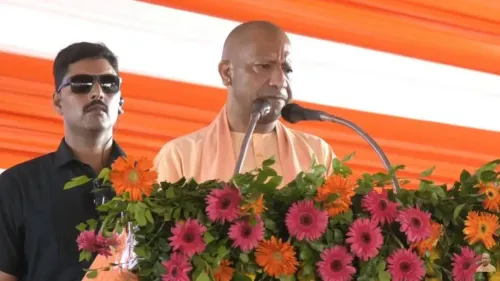
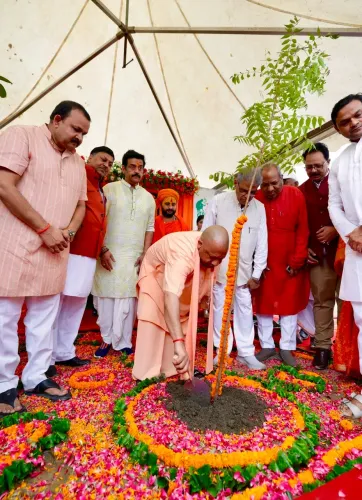
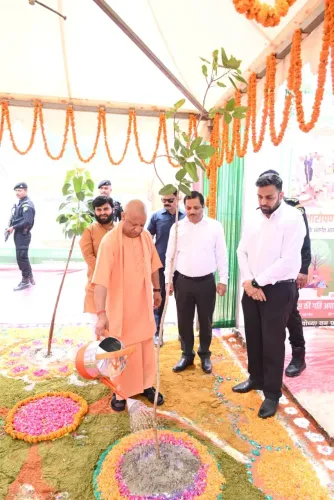
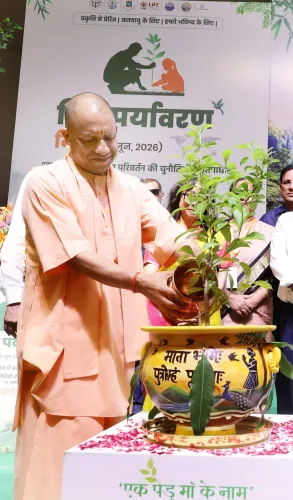
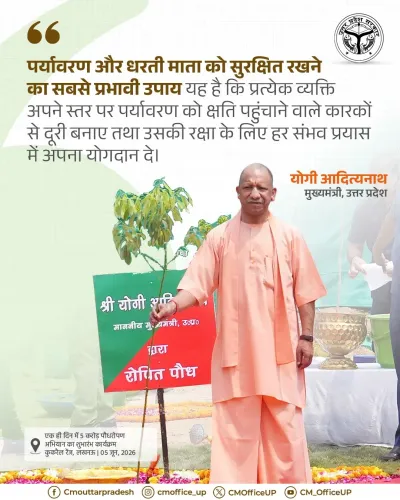
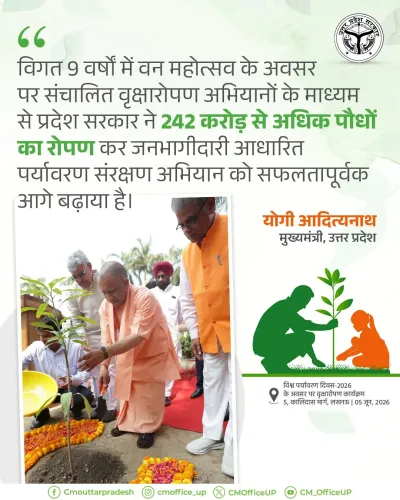
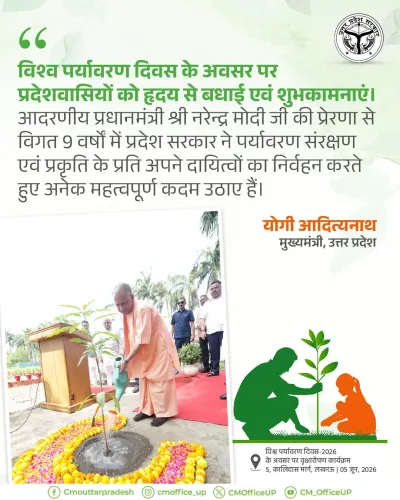
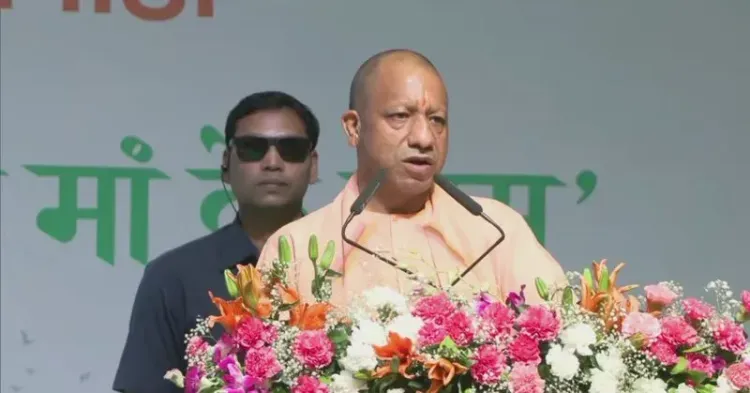
The Chief Minister's Office of Uttar Pradesh announced on Friday, June 5, 2026 — World Environment Day — that Chief Minister Yogi Adityanath participated in the launch of the Uttar Pradesh Swachh Vayu Prabandhan Pariyojana (Uttar Pradesh Clean Air Management Project) and the unveiling of the logo for the Vriksharopan Maha Abhiyan 2026 (Mega Tree Plantation Drive 2026).
Context
The event, held on World Environment Day 2026, saw CM Yogi Adityanath formally inaugurate two linked environmental initiatives: a structured clean-air management project for Uttar Pradesh and the logo launch for the state's large-scale plantation campaign for the year. The Chief Minister's Office shared a live broadcast of the ceremony, signalling the state government's intent to publicly anchor the initiative at the highest political level.
'उत्तर प्रदेश स्वच्छ वायु प्रबंधन परियोजना' [Uttar Pradesh Clean Air Management Project] and the 'वृक्षारोपण महाअभियान-2026' [Mega Tree Plantation Drive 2026] together represent the state's twin-track approach — reducing existing pollution loads while simultaneously expanding green cover.
Policy Backdrop
The launch builds on the National Clean Air Programme (NCAP), a central government scheme introduced in 2019 to cut particulate matter — PM2.5 and PM10 — in 131 designated non-attainment cities across India. Uttar Pradesh hosts several of these cities, including urban centres in the Indo-Gangetic plain, which consistently record some of the country's highest pollution readings.
Since 2017, the state government under CM Yogi Adityanath has scaled up annual plantation drives, combining central NCAP funding with state-led agro-forestry and urban greening targets. The Van Mahotsav tradition — a national tree-planting festival observed since independence — has been amplified in Uttar Pradesh into multi-crore sapling campaigns in recent years.
Stakeholders and Impact
The initiative directly concerns Uttar Pradesh's urban residents, who bear the highest health burden from poor air quality, as well as industrial clusters whose emissions contribute significantly to the state's pollution profile. Farmers and rural communities in agro-forestry belts are also key participants in the plantation component, which aims to integrate green cover with livelihood support.
Environmental regulators, urban local bodies, and district administrations are expected to serve as implementation agencies under the project's city-specific action plans. Third-party monitoring of both plantation survival rates and air-quality data will be critical to establishing whether targets translate into measurable improvement on the ground.
What's Next
Attention will now turn to the 2026-27 state budget allocations earmarked for the clean-air project, the release of city-specific action plans, and the rollout schedule for the Vriksharopan Maha Abhiyan 2026 plantation drives across Uttar Pradesh's districts. Independent audits of sapling survival rates — a persistent challenge in past drives — and periodic air-quality monitoring data releases will be the key metrics by which the initiative's real-world impact will be judged. With World Environment Day providing a high-visibility launch platform, the state government has set a clear public benchmark against which progress will be measured in the months ahead.
Point of View
Crop burning, and dense urban traffic across the Indo-Gangetic plain — has long demanded a structured, funded response beyond annual plantation ceremonies. Combining the NCAP framework with a visible state-branded project suggests an attempt to institutionalise what has historically been a campaign-mode approach to environmental governance. The real test will lie in budget allocations, city-specific action plans, and independently verified air-quality improvements rather than the scale of the launch event itself.
NationPress
20 Oct 2026
Frequently Asked Questions
What is the Uttar Pradesh Swachh Vayu Prabandhan Pariyojana?
The Uttar Pradesh Swachh Vayu Prabandhan Pariyojana is a state-level clean air management project launched by Chief Minister Yogi Adityanath on June 5, 2026, aimed at reducing air pollution across Uttar Pradesh, particularly in cities designated as non-attainment zones under the National Clean Air Programme.
What is Vriksharopan Maha Abhiyan 2026?
Vriksharopan Maha Abhiyan 2026 is Uttar Pradesh's Mega Tree Plantation Drive for the year 2026. Its logo was unveiled by CM Yogi Adityanath at the same event, continuing the state's annual large-scale afforestation campaigns that have been scaled up since 2017.
Why was the UP Clean Air project launched on June 5?
June 5 is observed globally as World Environment Day, and the Uttar Pradesh government chose the date to align the launch with international environmental awareness, giving the initiative higher visibility.
What is the National Clean Air Programme and how does it relate to UP?
The National Clean Air Programme (NCAP) is a central government scheme launched in 2019 to reduce PM2.5 and PM10 particulate levels in 131 designated non-attainment cities across India. Uttar Pradesh hosts several of these cities, making it a key state for NCAP implementation and funding.
How will the success of UP's clean air and plantation drives be measured?
Success will be tracked through city-specific air-quality monitoring data, state budget allocations for 2026-27, and third-party audits of sapling survival rates from the plantation drives — metrics that have historically been the weak link in such campaigns.