CM Yogi Flags Water Conservation as Today's Need
Synopsis
Uttar Pradesh Chief Minister Yogi Adityanath on 21 June 2026 called water conservation 'today's need' on X, reinforcing the state's alignment with Namami Gange and Jal Shakti Abhiyan. The post signals renewed official emphasis on groundwater recharge and river rejuvenation ahead of the monsoon season.
Key Takeaways
CM Yogi Adityanath posted on 21 June 2026 that water conservation is 'today's need', with an accompanying video.
The message aligns with two Central schemes active in Uttar Pradesh : Namami Gange (launched 2014 ) and Jal Shakti Abhiyan (intensified 2019 ).
Farmers , rural households , and urban local bodies are the primary stakeholders targeted by the state's water conservation agenda.
The post follows a pattern of seasonal conservation messaging from the Uttar Pradesh administration, typically timed ahead of the monsoon.
State-level progress reports on water-body rejuvenation and recharge structures are expected in coming weeks.
Any new budgetary provision or scheme announcement linked to this post remains unconfirmed pending further official communication.
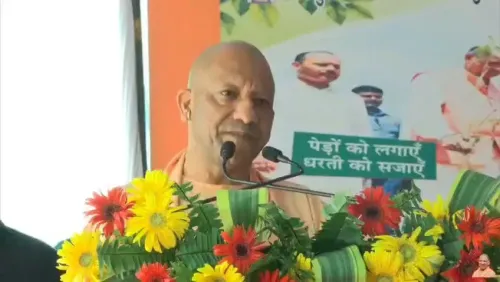
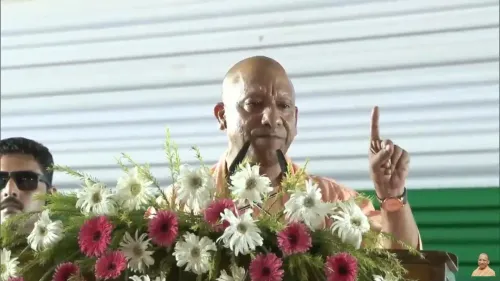
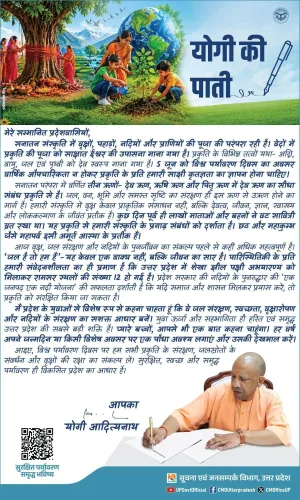
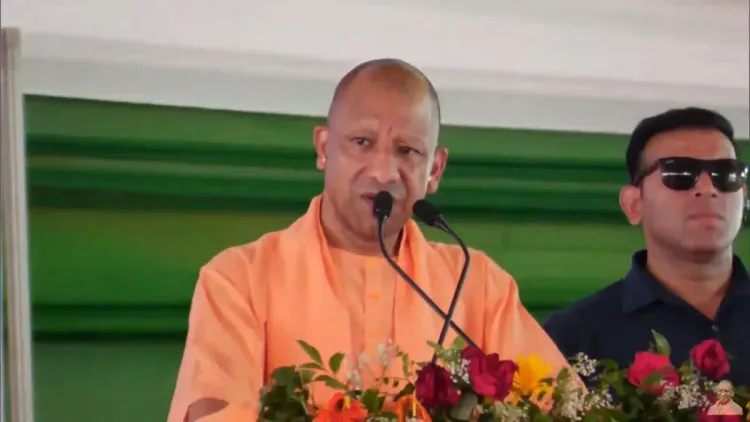
Uttar Pradesh Chief Minister Yogi Adityanath on Sunday, 21 June 2026, took to X to underscore the urgency of water conservation, posting that 'jal sanrakshan aaj ki aavashyakata hai' ('water conservation is today's need'). The post, which carried an attached video, came on a day that coincides with international environmental observance periods and reinforces a pattern of seasonal conservation messaging from the Lucknow-based administration.
Context
Chief Minister Yogi Adityanath has consistently positioned water stewardship as a governance priority since assuming office in 2017. His administration has aligned state policy with central schemes targeting river rejuvenation and groundwater recharge, framing water security as a development imperative for Uttar Pradesh, one of India's most populous and agriculturally intensive states. The June post reiterates that framing in a single, direct phrase.
The brevity of the message — 'water conservation is today's need' — is deliberate in its reach, addressing farmers, urban households, and local bodies simultaneously without privileging any single constituency. The accompanying video, details of which could not be independently verified at the time of publication, is understood to reinforce the conservation theme visually.
Policy Backdrop
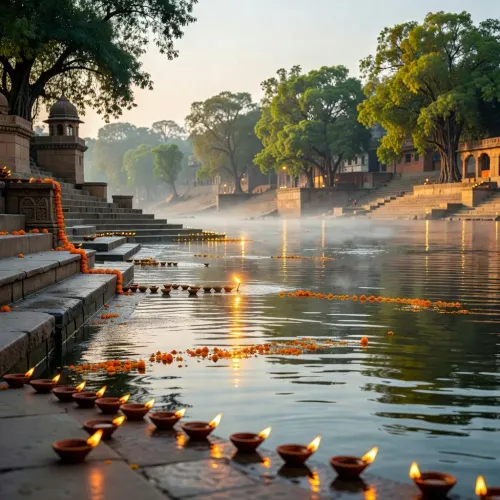
Two flagship programmes form the structural backbone of Uttar Pradesh's water agenda. The Namami Gange programme, launched by the Central government in 2014, targets pollution abatement, afforestation, and biodiversity restoration along the Ganga river system, with the state serving as one of its most critical implementation zones. Progress on sewage treatment plants and riverfront development has been a recurring point of official communication from the state capital.
The Jal Shakti Abhiyan, intensified from 2019, brought district-level committees into the field for water-body mapping and the construction of groundwater recharge structures across Uttar Pradesh. State-level drives under this campaign covered rainwater harvesting infrastructure in both rural blocks and urban wards. Together, these two programmes constitute the institutional scaffolding within which the Chief Minister's conservation messaging operates.
Uttar Pradesh under the present administration has also integrated water conservation goals with broader river-linking discussions and state afforestation targets, reflecting a BJP-governed state's alignment with Central environmental priorities since 2014.
Stakeholders and Impact
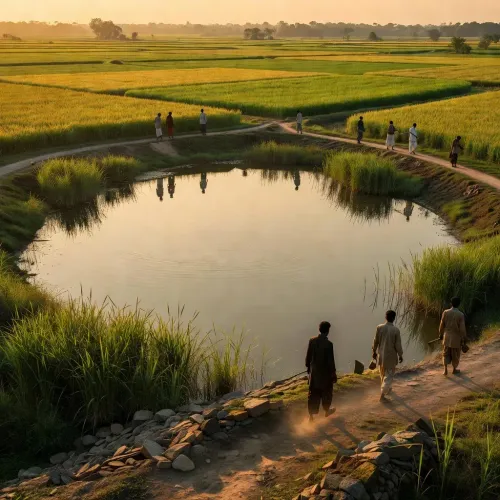
Farmers across Uttar Pradesh's agrarian belts stand as the most immediately affected stakeholder group, given that groundwater depletion directly threatens irrigation-dependent cropping cycles. Rural households dependent on hand-pumps and community wells face seasonal water stress that conservation messaging seeks to address through behavioural change and infrastructure investment.
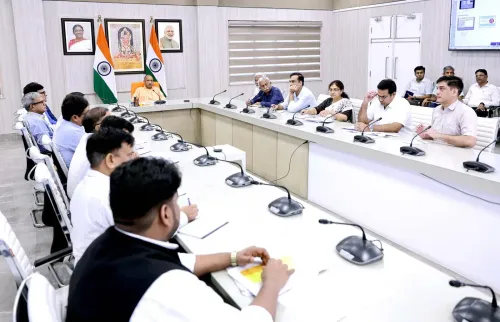
Urban local bodies in cities such as Lucknow, Kanpur, and Varanasi are key implementation partners for rainwater harvesting mandates and water-body restoration drives. A Chief Minister's public communication on the subject functions as a signal to district administrations to renew field-level compliance and reporting under ongoing schemes.
What's Next
Observers will watch for whether the post presages a formal policy announcement — such as revised budgetary allocations for micro-irrigation or new targets for water-body rejuvenation in the next fiscal cycle. State-level progress reports on the number of recharge structures built and rivers desilted under active campaigns are expected to follow in the coming weeks as the monsoon season approaches.
The monsoon window is traditionally when conservation infrastructure is stress-tested, making pre-monsoon messaging from the Chief Minister's office a recurring and strategically timed feature of Uttar Pradesh's environmental governance calendar. Whether this post signals a new scheme, an expanded campaign, or a seasonal reminder will become clearer as official communications from the state government unfold.
Point of View
The Chief Minister signals to district machinery that conservation targets remain live political priorities, not administrative footnotes. The message also reinforces the BJP's broader positioning of environmental stewardship as an electoral asset in a state where agricultural water stress is a lived reality for crores of voters. Whether it translates into fresh policy action or remains symbolic communication will define its lasting significance.
NationPress
20 Sept 2026
Frequently Asked Questions
What did CM Yogi Adityanath say about water conservation on 21 June 2026?
Chief Minister Yogi Adityanath posted on X that 'water conservation is today's need', accompanied by a video, signalling renewed official emphasis on the issue ahead of the monsoon season in Uttar Pradesh.
What is the Jal Shakti Abhiyan and how does it apply to Uttar Pradesh?
The Jal Shakti Abhiyan is a nationwide water conservation campaign intensified from 2019 that involves district-level committees in Uttar Pradesh for water-body mapping, rainwater harvesting, and groundwater recharge structure construction.
What is Namami Gange and what is its role in Uttar Pradesh?
Namami Gange is a Central government programme launched in 2014 for pollution abatement, afforestation, and biodiversity restoration along the Ganga river system, with Uttar Pradesh being one of its most critical implementation states.
Why does Yogi Adityanath post about water conservation before the monsoon?
Pre-monsoon messaging from the Chief Minister's office functions as a signal to district administrations to renew field-level compliance under active conservation schemes, as the monsoon window is when rainwater harvesting and recharge infrastructure is most relevant and stress-tested.
Who are the main beneficiaries of Uttar Pradesh's water conservation schemes?
Farmers dependent on groundwater for irrigation, rural households relying on community wells and hand-pumps, and urban local bodies in cities such as Lucknow, Kanpur, and Varanasi are the primary stakeholders targeted by the state's water conservation agenda.