CM Bhajanlal Sharma Champions Girls' Education at Jaipur Talent Camp
Synopsis
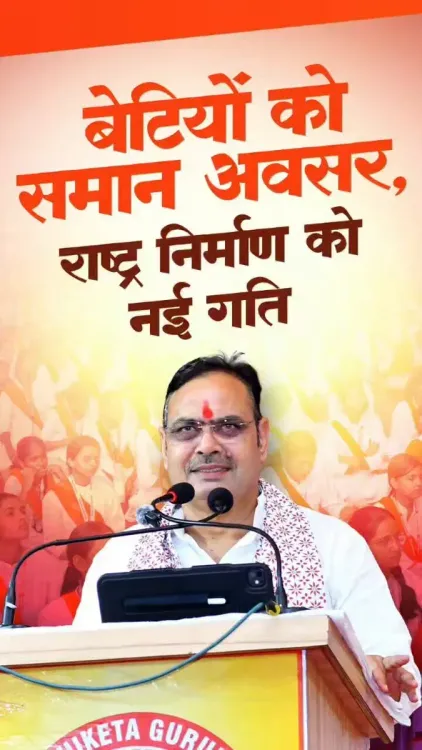
Chief Minister Bhajanlal Sharma addressed the Pratibha Vikas Shivir in Jaipur, citing NEP 2020 gender equity provisions and asserting that equal opportunities for girls are indispensable for India's national development.
Key Takeaways
CM Bhajanlal Sharma addressed the Pratibha Vikas Shivir — a talent development camp for meritorious girl students — in Jaipur on November 4, 2026 .
He cited the National Education Policy 2020 as containing 'special provisions' to advance girls' education and opportunity.
NEP 2020, approved by the Union Cabinet in July 2020 , replaced India's education framework dating to 1986 and includes explicit gender equity mandates.
Sharma framed girls' equal opportunity not as welfare, but as a prerequisite for their contribution to nation-building.
The event reflects Rajasthan's broader effort to align state-level education programs with the NEP 2020 framework on gender inclusion.
The hashtag #आपणो_अग्रणी_राजस्थान ('Our Pioneering Rajasthan') accompanied the official post, signalling the state's self-positioning as a leader in NEP implementation.
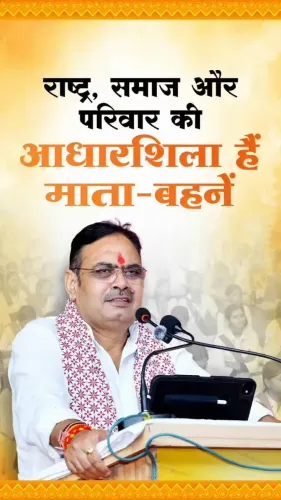
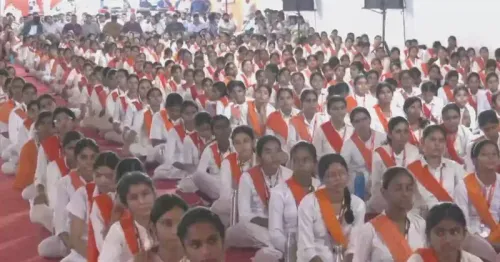
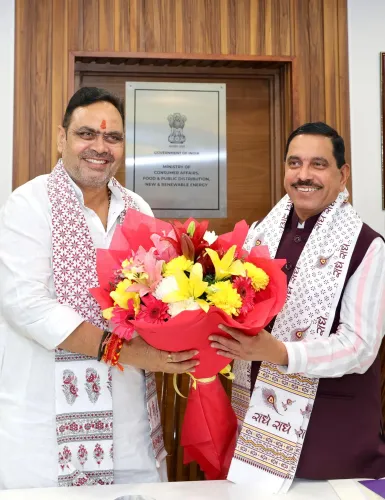
In a packed auditorium in Jaipur on Wednesday, November 4, 2026, Chief Minister Bhajanlal Sharma told an audience of academically meritorious girl students that equal opportunity is not a courtesy — it is a prerequisite for nation-building. The Chief Minister's Office of Rajasthan announced his address at the Pratibha Vikas Shivir, a state-level talent development camp honouring high-achieving girl students.
Speaking at the event, CM Sharma said: 'The National Education Policy 2020 has made special provisions to advance our daughters. We believe that only when girls receive equal opportunities will they be able to contribute to nation-building with their full potential.' The remark, delivered under the hashtag #आपणो_अग्रणी_राजस्थान ('Our Pioneering Rajasthan'), framed girls' education explicitly as a development imperative rather than a welfare gesture.
NEP 2020's gender equity mandate meets Rajasthan's classrooms
The National Education Policy 2020, approved by the Union Cabinet in July 2020, replaced India's education framework that had stood since 1986. Among its defining features is a systematic emphasis on gender equity — from flexible school pathways to targeted support mechanisms designed to keep girls in education longer and push them into higher learning. Rajasthan's Pratibha Vikas Shivir is one of the state's efforts to operationalise that mandate at the ground level, bringing together meritorious students for recognition and skill-enrichment programming.
CM Sharma, who has led the state since December 2023, has made the alignment of Rajasthan's education infrastructure with NEP 2020 a recurring public-outreach theme. The Jaipur camp gives that alignment a face — girl students whose academic performance is being formally acknowledged by the state machinery.
Why the 'equal opportunity' framing matters
The phrasing Sharma chose is worth noting. Rather than framing girls' education as social welfare, he anchored it in economic productivity and national potential — a rhetorical shift that mirrors how NEP 2020 itself is written. The policy does not merely ask states to enrol more girls; it asks them to dismantle the structural barriers — distance, safety, financial cost, curriculum bias — that suppress girls' achievement after enrolment. A camp that singles out meritorious girl students sends a signal that the state intends to track and amplify talent, not just widen access.
The watch item now is whether Rajasthan's upcoming budget and assembly sessions will back these platform commitments with dedicated line items for NEP implementation focused on girls — the clearest test of whether Wednesday's address translates into policy action.
Point of View
Sharma is adopting the modernising register that NEP 2020 itself uses, potentially broadening the political appeal of the initiative beyond traditional women's-welfare constituencies. The key test of intent will be whether this platform messaging is followed by concrete budget allocations for NEP gender-equity programs in Rajasthan's forthcoming assembly and finance cycles. Until then, the Pratibha Vikas Shivir functions both as genuine recognition for high-achieving girl students and as a durable, camera-ready symbol of the state's education priorities.
NationPress
4 Nov 2026
Frequently Asked Questions
What is the Pratibha Vikas Shivir in Rajasthan?
The Pratibha Vikas Shivir is a state-level talent development camp in Rajasthan that recognises and supports academically meritorious girl students. CM Bhajanlal Sharma addressed its latest edition in Jaipur on November 4, 2026.
What did CM Bhajanlal Sharma say about girls' education?
CM Sharma said that the National Education Policy 2020 contains special provisions to advance girls, and that equal opportunities for them are essential for their full contribution to nation-building.
What are the gender equity provisions in NEP 2020?
The National Education Policy 2020, approved in July 2020, includes a systematic emphasis on gender equity — covering flexible school pathways, targeted support mechanisms, and measures to increase girls' access to higher education.
When did Bhajanlal Sharma become Chief Minister of Rajasthan?
Bhajanlal Sharma, a BJP politician, has served as Chief Minister of Rajasthan since December 2023.
How is Rajasthan implementing NEP 2020 for girls?
Rajasthan has been aligning state education initiatives — such as the Pratibha Vikas Shivir — with NEP 2020's gender-inclusion goals. Upcoming state budget and assembly sessions are expected to reveal the depth of funding commitment to these programs.