Pralhad Joshi Meets Rajasthan CM on NEP 2020 and Solar Push
Synopsis
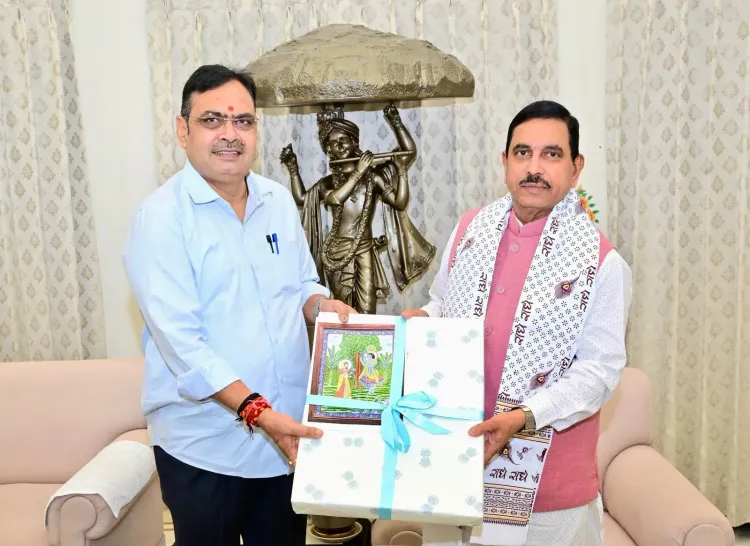
Union Minister Pralhad Joshi met Rajasthan CM Bhajan Lal Sharma on October 31 to coordinate on NEP 2020 rollout and renewable energy expansion, signalling active centre-state alignment on two of India's flagship policy priorities.
Key Takeaways
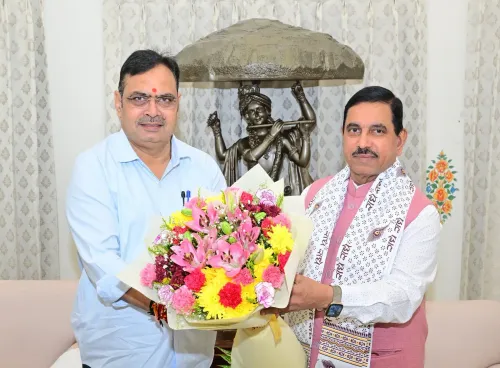
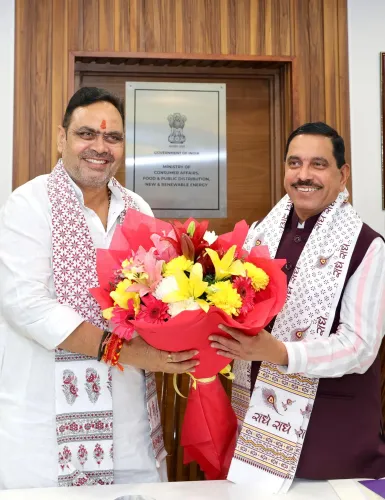
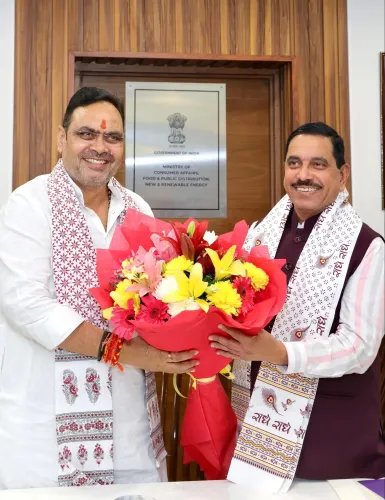
Pralhad Joshi , Union Minister for New and Renewable Energy, met Rajasthan CM Bhajan Lal Sharma at his residence on October 31, 2026 .
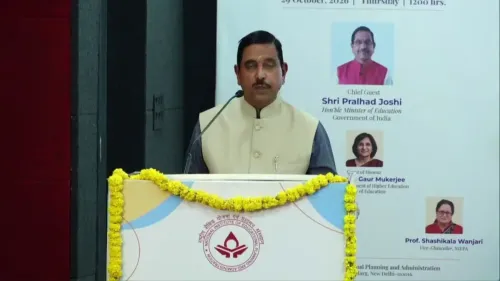
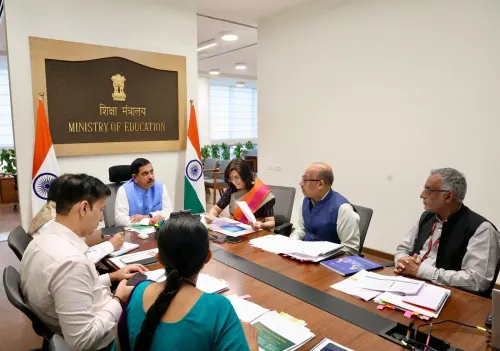
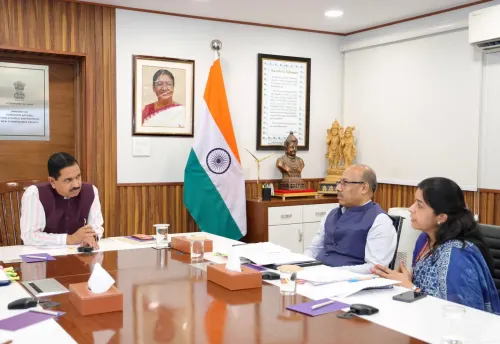
Discussions covered strengthening educational infrastructure and implementing NEP 2020 effectively in the state.
Both leaders discussed accelerating solar and renewable energy initiatives and expanding investment opportunities in Rajasthan.
Rajasthan, home to Bhadla Solar Park , is a key pillar of India's 500 GW non-fossil fuel capacity target by 2030 .
NEP 2020 was approved by the Union Cabinet in July 2020 to restructure school and higher education across India.
No specific project commitments from the meeting have been publicly announced yet.
Two of the BJP's most consequential policy portfolios — education reform and renewable energy — landed on the same table on Saturday, October 31, when Union Consumer Affairs and New and Renewable Energy Minister Pralhad Joshi called on Rajasthan Chief Minister Bhajan Lal Sharma at the CM's residence in Jaipur.
NEP 2020 implementation takes centre stage
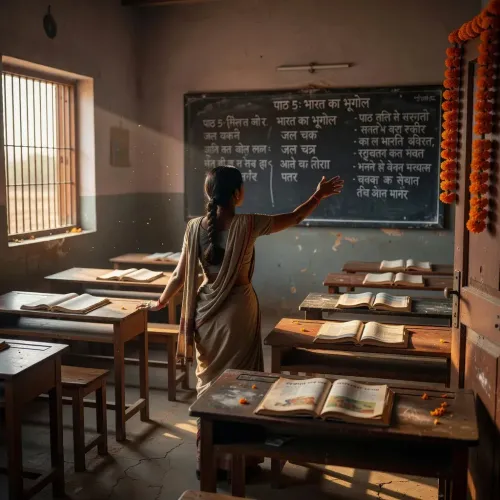
The two leaders deliberated on strengthening educational infrastructure across Rajasthan and ensuring the effective rollout of the National Education Policy 2020 (NEP 2020) — the Union Cabinet-approved framework that aims to overhaul school and higher education from curriculum design to assessment systems. Rajasthan's sheer scale, home to one of India's largest student populations, makes its NEP implementation a bellwether for how the reform plays out in large BJP-governed states.
The meeting signals that the Centre is actively tracking state-level progress rather than treating NEP 2020 as a one-time policy notification. Smooth alignment between state school boards, universities, and the national framework remains a work in progress across most states.
Rajasthan's solar ambition — and why it matters for India's 500 GW target
On energy, Joshi's presence carried institutional weight: as the minister directly responsible for new and renewable energy, his discussion with Sharma on accelerating solar and renewable energy initiatives was a direct centre-state coordination exercise. Rajasthan is already home to the Bhadla Solar Park — one of the world's largest — and its vast arid tracts make it a cornerstone of India's 500 GW non-fossil fuel capacity target by 2030.
Expanding investment opportunities and positioning Rajasthan as a leading renewable energy hub were also on the agenda. For investors eyeing utility-scale solar or wind projects, a joint centre-state push on land clearances and grid connectivity is the single biggest unlock — and that is exactly the kind of signal such bilateral meetings are designed to send.
Centre-state coordination — routine mechanism, real consequences
While the meeting follows a well-worn template — central ministers regularly engage BJP-ruled state counterparts on concurrent subjects — the combination of education and energy in a single sitting reflects a broader governing rhythm under the current dispensation. Both sectors require state machinery to translate Union policy into ground-level action, and both are flagged as priority areas ahead of Rajasthan's next budget cycle.
Specific outcomes or fresh project commitments from this October 2026 meeting have not yet been announced publicly. What to watch: state notifications on NEP 2020 curriculum changes and any new solar park or investment policy announcements from the Rajasthan government in the weeks ahead.
Rajasthan has the land, the sunlight, and now renewed ministerial attention. Whether those ingredients convert into signed projects and classroom reform will be the real measure of today's conversation.
Point of View
Joshi's direct oversight of the ministry gives such meetings real signalling value for investors watching for grid and land-policy movement in Rajasthan. On education, the Centre's engagement with a large state like Rajasthan on NEP 2020 suggests awareness that reform velocity on the ground still lags the ambition on paper. Together, the twin agenda reflects a governance pattern of bundling infrastructure and human-capital priorities in a single executive conversation rather than routing them through slower bureaucratic channels.
NationPress
31 Oct 2026
Frequently Asked Questions
Why did Pralhad Joshi meet Rajasthan CM Bhajan Lal Sharma?
Joshi met Sharma on October 31, 2026 to discuss the implementation of NEP 2020 in Rajasthan, strengthening educational infrastructure, and accelerating solar and renewable energy projects in the state.
What is NEP 2020 and why does Rajasthan matter for its rollout?
The National Education Policy 2020 was approved by the Union Cabinet in July 2020 to overhaul school and higher education. Rajasthan, with one of India's largest student populations, is a critical test case for how effectively the reform translates into state-level action.
Why is Rajasthan important for India's renewable energy targets?
Rajasthan hosts the Bhadla Solar Park, one of the world's largest solar installations, and its vast arid land makes it central to India's goal of 500 GW non-fossil fuel energy capacity by 2030.
What investment opportunities were discussed at the Joshi-Sharma meeting?
The leaders discussed expanding investment opportunities in Rajasthan's renewable energy sector and the state's potential to emerge as a leading hub for solar and other renewable energy projects.
What should we watch for after this meeting?
Key developments to watch include state-level notifications on NEP 2020 curriculum changes and any fresh solar park or renewable energy investment policy announcements from the Rajasthan government.