CM Bhajan Lal hosts Union Minister Pralhad Joshi for NEP, solar energy talks
Synopsis
Rajasthan Chief Minister Bhajan Lal Sharma hosted Union Minister Pralhad Joshi at the CM residence on 31 October, holding detailed talks on NEP 2020 implementation, modern educational infrastructure, solar and renewable energy projects, and Rajasthan's vision to become a national green energy hub.
Key Takeaways
Rajasthan CM Bhajan Lal Sharma hosted Union Minister Pralhad Joshi at the Chief Minister's residence in Jaipur on 31 October 2026 .
Discussions covered effective rollout of NEP 2020 and building modern educational infrastructure across the state.
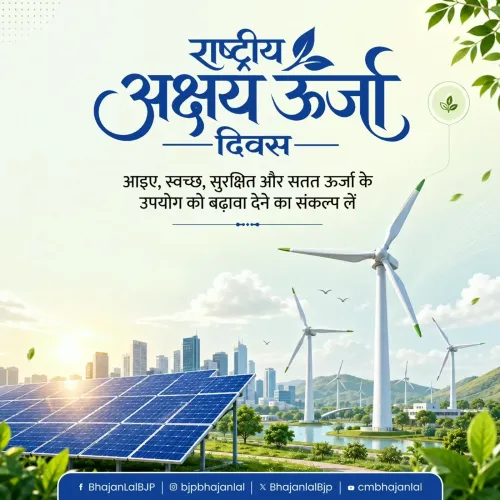
Solar energy, renewable energy projects, and new investment opportunities were central to the agenda, with a focus on making Rajasthan a Green Energy Hub .
Rajasthan BJP state president Madan Rathore was also present at the meeting.
Pralhad Joshi holds the Union portfolios of Education, Consumer Affairs, Food and Public Distribution, and New and Renewable Energy — spanning both reform areas discussed.
Rajasthan's high solar irradiance and existing solar parks position it as a key contributor to India's 500 GW non-fossil fuel target by 2030 .
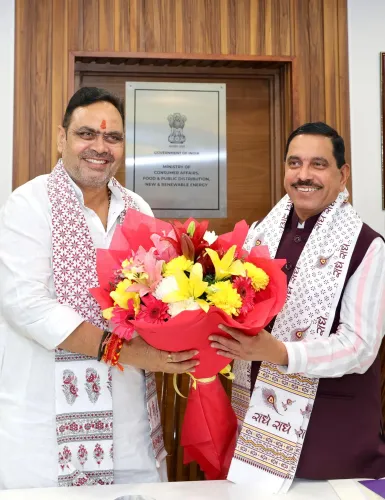
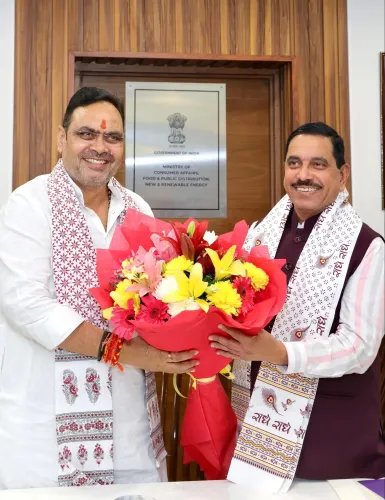
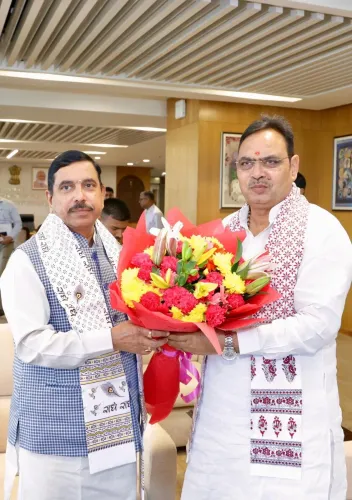
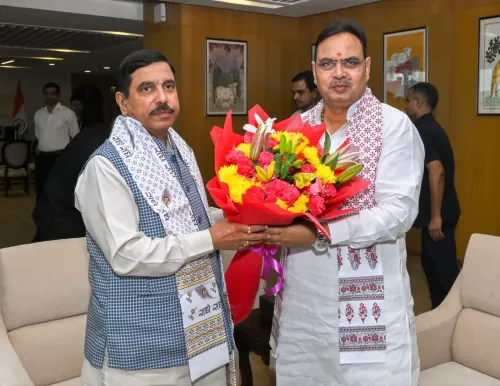
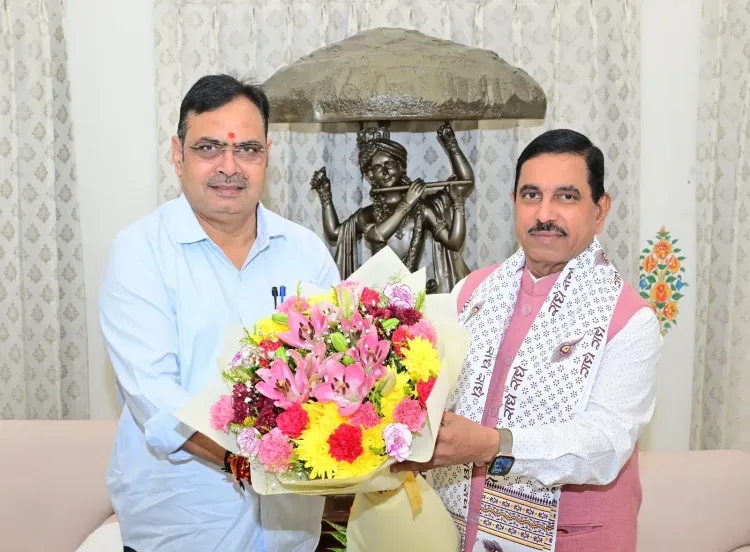
At his official residence in Jaipur on Saturday, 31 October 2026, Rajasthan Chief Minister Bhajan Lal Sharma welcomed Union Minister Pralhad Joshi with a bouquet — and then got down to the business of turning Rajasthan into a green energy powerhouse while fast-tracking the state's rollout of the National Education Policy (NEP 2020).
A meeting at the top, with an agenda to match
The CM's residence served as the venue for wide-ranging discussions that spanned two of the most consequential reform fronts in Indian governance right now. Pralhad Joshi holds a uniquely broad Cabinet mandate — simultaneously overseeing Education, Consumer Affairs, Food and Public Distribution, and New and Renewable Energy — making him a rare single point of contact for a state that has ambitious targets on both fronts. Rajasthan BJP state president Madan Rathore was also present, signalling the meeting carried political as well as administrative weight.
According to the Chief Minister's post, the conversation covered modern educational infrastructure, effective implementation of NEP, solar and renewable energy projects, fresh investment opportunities, and the overarching goal of making Rajasthan a Green Energy Hub.
NEP 2020 and the infrastructure gap Rajasthan must close
NEP 2020, approved by the Union Cabinet in July 2020, replaced a policy framework dating back to 1986 and demands state-level action on multidisciplinary curricula, early childhood care, and vocational training. For a large state like Rajasthan — with a vast rural hinterland and significant first-generation learners — building modern educational infrastructure is the precondition for making the policy more than paper. That gap, and the Centre's role in funding and guiding its closure, was squarely on the agenda.
Rajasthan's solar ambition — geography as a policy asset
Rajasthan holds one of the highest solar irradiance profiles of any Indian state, a geographic fact that successive state budgets have tried to convert into installed capacity. India's broader commitment — 500 GW of non-fossil fuel capacity by 2030 — puts desert-rich Rajasthan at the centre of the national energy transition. The state has already hosted large solar parks and is being positioned in central planning around green hydrogen corridors and transmission infrastructure.
Discussions on new investment opportunities and the 'Green Energy Hub' vision align directly with that national framework — and with the Union Ministry of New and Renewable Energy's mandate to crowd in private capital alongside public projects.
Why central-state coordination matters here
With the same party at the helm in both Jaipur and New Delhi, coordination meetings like this one are a routine but genuinely productive mechanism for aligning state budgets, land allocation, and institutional reform with central scheme guidelines. The presence of Madan Rathore adds a party-coordination layer — ensuring that political and administrative timelines move together. What the state watches for next: formal MoUs or investment announcements on renewable projects, and a concrete NEP implementation roadmap backed by central funding.
Point of View
Reducing the friction that often stalls state-level implementation. For Rajasthan, the green energy hub ambition is not just economic policy but a political brand differentiator ahead of future electoral cycles. NEP rollout, meanwhile, remains the Centre's most visible governance legacy in the social sector, and states with same-party governments are expected to show measurable progress. How quickly Rajasthan converts these discussions into sanctioned projects and funded infrastructure will be the real test of this coordination.
NationPress
31 Oct 2026
Frequently Asked Questions
What did CM Bhajan Lal Sharma and Pralhad Joshi discuss?
They discussed the effective implementation of NEP 2020, modern educational infrastructure in Rajasthan, solar and renewable energy projects, new investment opportunities, and plans to develop Rajasthan as a green energy hub.
What is Pralhad Joshi's role in the Union Cabinet?
Pralhad Joshi is a senior BJP leader from Karnataka who currently holds the portfolios of Education, Consumer Affairs, Food and Public Distribution, and New and Renewable Energy in the Union Cabinet.
What is NEP 2020 and how does it affect Rajasthan?
NEP 2020, approved by the Union Cabinet in July 2020, is India's comprehensive education reform framework replacing the 1986 policy. For Rajasthan, it requires building modern educational infrastructure and reforming curricula to align with the new framework's emphasis on multidisciplinary and vocational learning.
Why is Rajasthan important for India's renewable energy goals?
Rajasthan has one of the highest solar irradiance levels in India, making it a prime location for solar parks and renewable projects. The state is central to India's target of achieving 500 GW of non-fossil fuel capacity by 2030.
Who is Madan Rathore and why was he at the meeting?
Madan Rathore is the Rajasthan BJP state president and MLA. His presence at the meeting indicates the discussions carried both administrative and party-coordination significance for the state.