CM Bhajan Lal Hails Dharmendra Pradhan's Education Tenure
Synopsis
Rajasthan CM Bhajan Lal Sharma on 25 July 2026 hailed Union Education Minister Dharmendra Pradhan's tenure as a 'golden achievement,' crediting him with implementing NEP 2020 and removing language barriers in JEE, NEET, and BTech programmes by enabling Indian-language options.
Key Takeaways
CM Bhajan Lal Sharma publicly praised Union Education Minister Dharmendra Pradhan on 25 July 2026 via a post on X.
Sharma called Pradhan's tenure a 'golden achievement' in India's education history.
NEP 2020 implementation was cited as a landmark reform under Pradhan's leadership, replacing the 1986 policy framework.
Competitive exams including JEE and NEET , as well as BTech programmes , have been made available in Indian languages under these reforms.
Select undergraduate programmes at IITs have been offered in Indian languages as part of the language-access push.
Sharma extended wishes for Pradhan's good health and bright future, signalling the tribute may mark a transition in Pradhan's role.
Rajasthan Chief Minister Bhajan Lal Sharma on Saturday, 25 July 2026 paid a warm tribute to Union Education Minister Dharmendra Pradhan, calling his tenure a 'golden achievement' in India's educational history. Sharma credited Pradhan with steering landmark reforms — from implementing the National Education Policy (NEP) 2020 to making competitive examinations such as JEE, NEET, and BTech programmes available in Indian languages — that he said would guide generations to come.
Context
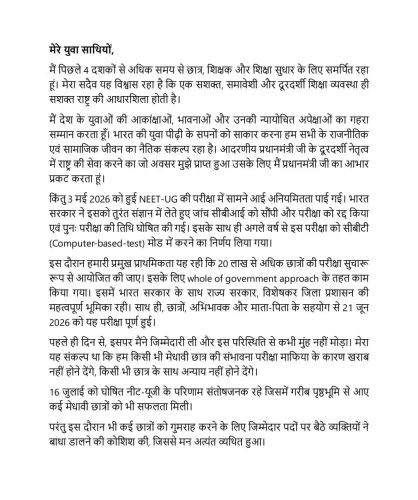
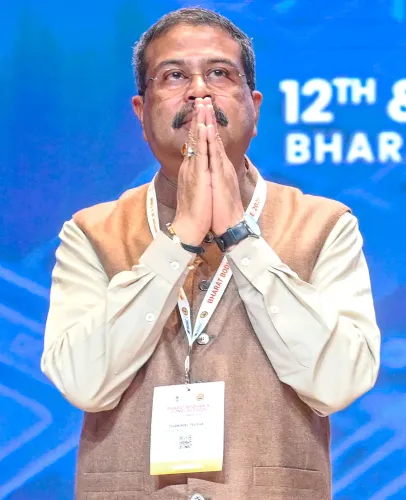
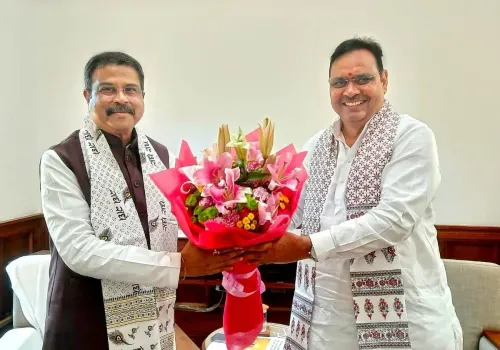
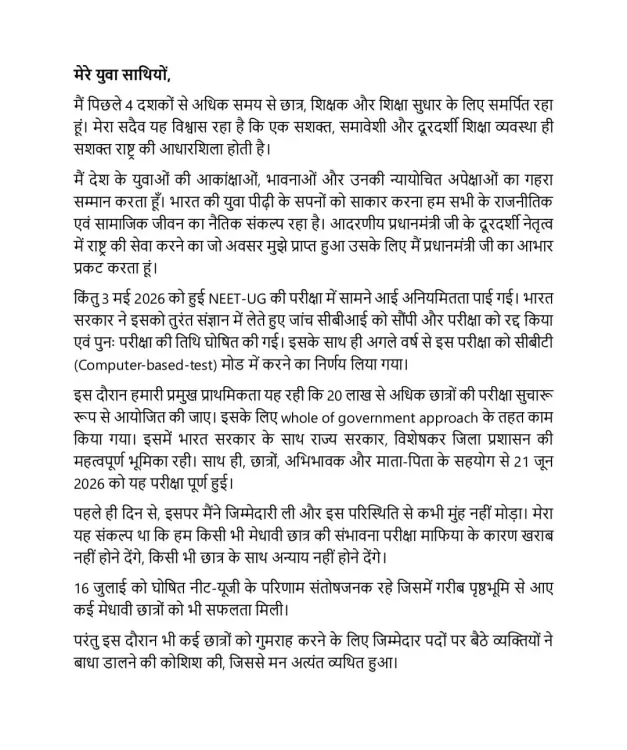
Writing on X, CM Sharma described Pradhan as someone dedicated to educational and social uplift since his student days. In his post, Sharma wrote — 'करोड़ों विद्यार्थियों की अपेक्षाओं और बदलती वैश्विक आवश्यकताओं के बीच संतुलन बनाते हुए उन्होंने भारतीय शिक्षा व्यवस्था को एक नई दिशा दी है' [He gave a new direction to the Indian education system while balancing the expectations of crores of students and the changing global needs]. The tribute was accompanied by two images and extended warm wishes for Pradhan's good health and bright future.
Sharma specifically highlighted Pradhan's role in removing 'language barriers' by enabling technical and competitive courses and examinations to be conducted in Indian languages — a move he described as 'unprecedented work.'
Policy Backdrop
NEP 2020, which replaced the National Education Policy of 1986, introduced multidisciplinary learning, mother-tongue instruction, and vocational integration as core pillars. Under its framework, select undergraduate programmes at Indian Institutes of Technology (IITs) have been offered in Indian languages, and both the Joint Entrance Examination (JEE) and the National Eligibility cum Entrance Test (NEET) have been made available in multiple regional languages to reduce barriers for non-English-medium students.
This language-access push aligns with a broader pattern across the BJP-led central government of expanding participation in technical and professional education beyond English-dominant urban cohorts. Similar language-inclusion efforts have been introduced in civil services and banking recruitment examinations.
Stakeholders and Impact
The reforms lauded by CM Sharma directly affect millions of competitive exam aspirants — particularly students from rural and semi-urban backgrounds who study in regional-language mediums. By allowing NEET and JEE to be attempted in Indian languages, the policy aims to level the playing field between urban English-medium and regional-language students competing for seats in premier institutions.
Rajasthan, with a large rural student population, stands to benefit from such access reforms. CM Sharma's alignment with central education initiatives reflects the state's active engagement with NEP 2020 implementation.
What's Next
State-level progress on NEP 2020 adoption remains a key metric to watch, including how effectively regional-language options are being exercised in examinations and technical courses. Further expansion of Indian-language options to additional professional programmes — such as law, medicine, and management — is a possibility that policymakers and student groups will be tracking closely.
The tribute from a sitting Chief Minister underscores the political salience of education reform as both a governance achievement and a mobilising issue ahead of future electoral cycles.
Point of View
IIT language reforms, JEE, and NEET signals a deliberate endorsement of the BJP's education agenda as a governance success story. The timing and tone suggest the tribute may coincide with a transition in Pradhan's portfolio or role, though this cannot be confirmed from available information. By anchoring the praise in language-access reforms, Sharma is also signalling Rajasthan's alignment with the Centre's push to democratise technical education for regional-medium students. This fits a broader BJP pattern of framing policy achievements in the education sector as instruments of social equity rather than purely administrative reform.
NationPress
24 Oct 2026
Frequently Asked Questions
What did CM Bhajan Lal Sharma say about Dharmendra Pradhan?
CM Bhajan Lal Sharma called Dharmendra Pradhan's tenure as Union Education Minister a 'golden achievement,' praising his role in implementing NEP 2020 and enabling Indian-language options in JEE, NEET, and BTech programmes.
What is NEP 2020 and what did Dharmendra Pradhan do for it?
NEP 2020 is India's National Education Policy that replaced the 1986 framework, promoting mother-tongue instruction, multidisciplinary learning, and vocational integration. Dharmendra Pradhan oversaw its rollout, including making IIT programmes and competitive exams available in Indian languages.
Can students now take JEE and NEET in Indian languages?
Yes. Under reforms implemented during Dharmendra Pradhan's tenure, both the Joint Entrance Examination (JEE) and the National Eligibility cum Entrance Test (NEET) are available in multiple Indian regional languages, reducing barriers for non-English-medium students.
Why is Bhajan Lal Sharma praising the Union Education Minister?
CM Sharma's tribute highlights the educational reforms carried out under Pradhan's tenure, particularly those benefiting students from regional-language backgrounds. It also reflects Rajasthan's alignment with the Centre's NEP 2020 implementation agenda.
What language reforms were introduced in IITs under NEP 2020?
Select undergraduate programmes at Indian Institutes of Technology have been offered in Indian languages under NEP 2020-linked reforms, allowing students who studied in regional-language mediums to access premier technical education more easily.