CM Bhajan Lal Marks National Renewable Energy Day
Synopsis
On National Renewable Energy Day, Rajasthan CM Bhajan Lal Sharma called for a public resolve to adopt clean and sustainable energy, framing the transition as a duty to future generations — as India works toward its 500 GW non-fossil fuel target by 2030.
Key Takeaways
National Renewable Energy Day is observed on 20 August annually to promote sustainable energy awareness across India.
Rajasthan CM Bhajan Lal Sharma called for a public resolve to adopt clean, safe, and sustainable energy sources.
His message framed the energy transition as a generational responsibility — protecting the environment for future generations.
Rajasthan holds significant solar and wind potential, making it a key state in India's national clean-energy push.
India has committed to 500 GW of non-fossil fuel capacity by 2030 and net-zero emissions by 2070 , set at COP26.
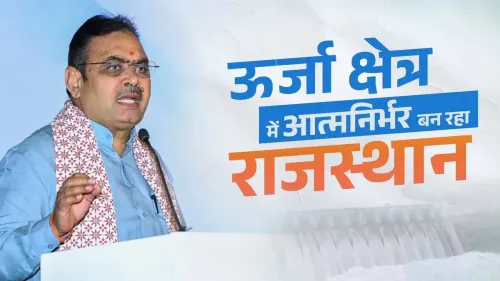
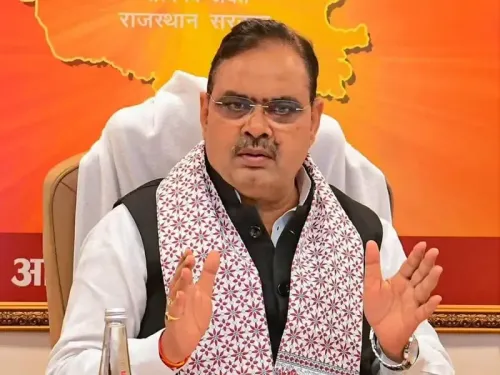
On National Renewable Energy Day, 20 August, Rajasthan Chief Minister Bhajan Lal Sharma called on citizens to embrace nature-friendly energy sources and pledge to protect a clean environment for future generations.
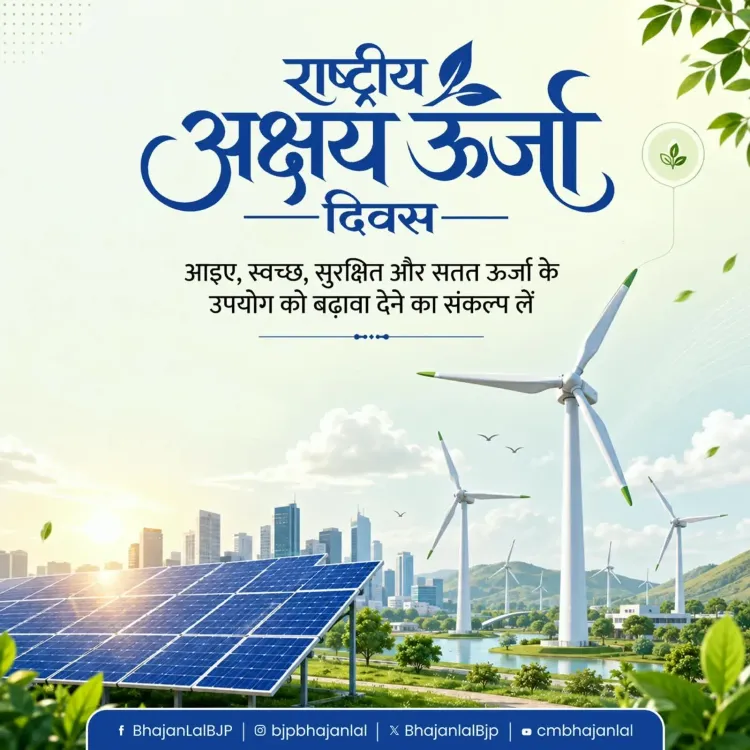
Posting in Hindi, CM Sharma wrote: 'National Renewable Energy Day gives us the message to adopt energy sources in harmony with nature and preserve a clean environment for coming generations. Let us, on this occasion, resolve to promote the use of clean, safe and sustainable energy.' ('राष्ट्रीय अक्षय ऊर्जा दिवस हमें प्रकृति के अनुकूल ऊर्जा स्रोतों को अपनाने और आने वाली पीढ़ियों के लिए स्वच्छ पर्यावरण सुरक्षित रखने का संदेश देता है।')
Why Rajasthan Sits at the Centre of India's Renewable Push
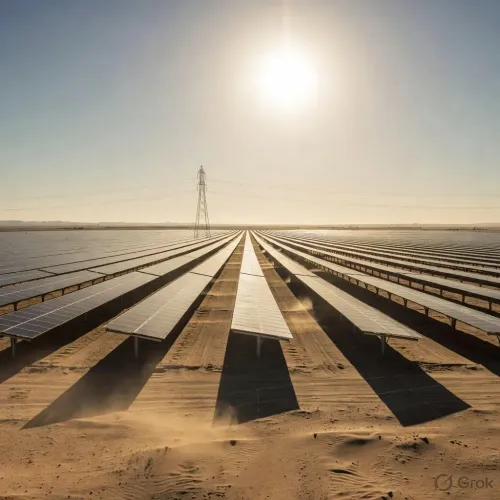
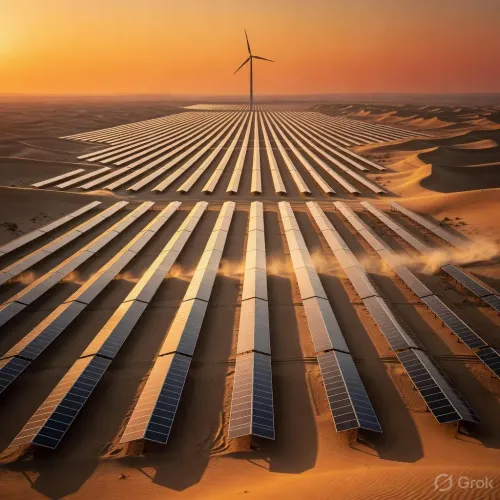
Rajasthan is one of India's most solar- and wind-rich states, and successive governments have channelled that geography into solar parks, rooftop installations, and grid integration projects. The state's vast arid tracts make it a natural anchor for the country's clean-energy ambitions.
Those ambitions are substantial. At COP26 in 2021, India committed to reaching 500 GW of non-fossil fuel capacity by 2030 and achieving net-zero emissions by 2070 — targets that depend heavily on high-potential states like Rajasthan delivering on ground-level capacity additions.
A Day Built Around One Idea: Generational Responsibility
National Renewable Energy Day, observed every 20 August, is an annual platform for governments, institutions, and citizens to recommit to sustainable energy practices. CM Sharma's message threads the personal into the national — framing the energy transition not as a technocratic target but as a moral obligation to the next generation.
For a state that has historically depended on thermal power, the rhetorical shift toward clean energy — sustained across political cycles — signals how deeply the sustainability narrative has embedded itself in mainstream governance messaging.
The real measure of the pledge will come in Rajasthan's next round of renewable capacity additions and any new state schemes or central funding allocations that follow.
Point of View
But it lands in a context that is anything but routine — Rajasthan is a critical node in India's race to 500 GW of non-fossil fuel capacity by 2030. The framing of renewable energy as a 'generational responsibility' rather than a policy metric is a deliberate rhetorical choice, one that broadens the audience beyond industry to ordinary citizens. For a BJP-led state government, sustained public messaging on clean energy also signals alignment with the Centre's climate diplomacy commitments. The test, as always, is whether the rhetoric is followed by measurable capacity additions and state-level scheme announcements.
NationPress
5 Oct 2026
Frequently Asked Questions
What is National Renewable Energy Day and when is it observed?
National Renewable Energy Day is observed on 20 August each year in India to promote awareness about renewable energy sources and sustainable practices.
What did Rajasthan CM Bhajan Lal Sharma say on National Renewable Energy Day 2026?
CM Bhajan Lal Sharma urged citizens to adopt nature-friendly energy sources and resolve to promote clean, safe, and sustainable energy in order to protect the environment for future generations.
What is India's renewable energy target by 2030?
India committed at COP26 in 2021 to achieving 500 GW of non-fossil fuel energy capacity by 2030 and reaching net-zero emissions by 2070.
What is Rajasthan's role in India's renewable energy plans?
Rajasthan is one of India's most solar- and wind-rich states, contributing significantly to national renewable capacity through solar parks, rooftop installations, and grid integration projects.
Who is Bhajan Lal Sharma?
Bhajan Lal Sharma is the Chief Minister of Rajasthan, serving since December 2023 , and is a senior leader of the Bharatiya Janata Party (BJP).