CM Bhajan Lal Hails Green Energy Corridor Phase-III Nod
Synopsis
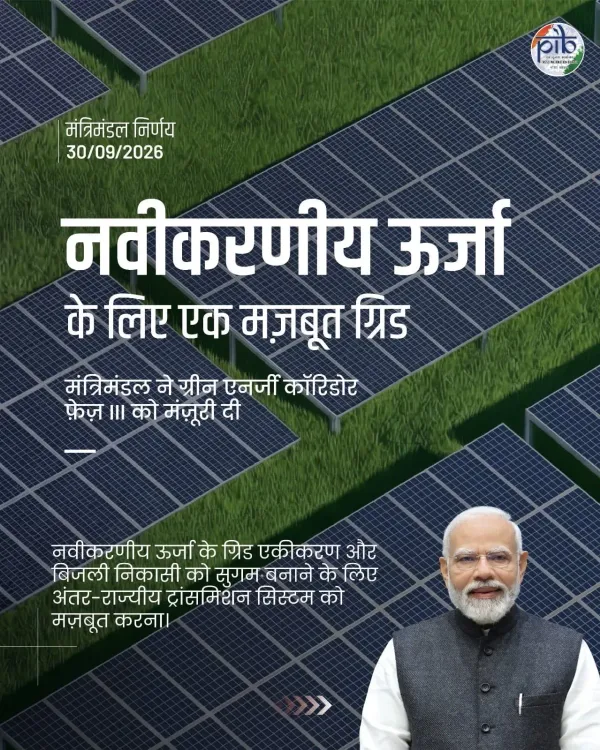
The Union Cabinet under PM Modi approved Green Energy Corridor Phase-III, a transmission and storage infrastructure project. Rajasthan CM Bhajan Lal Sharma called it a historic step, highlighting the state's exceptional solar and wind potential and its role in India's clean-energy ambitions.
Key Takeaways
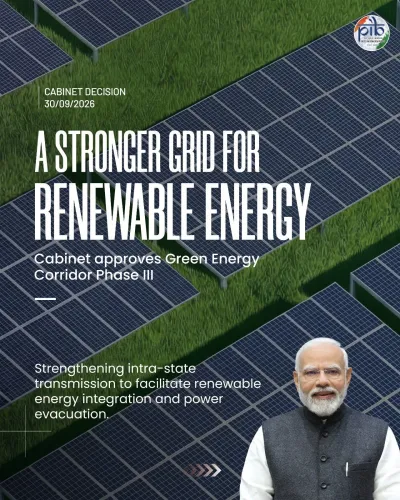
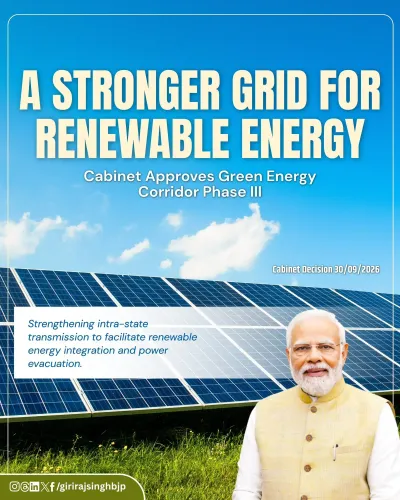
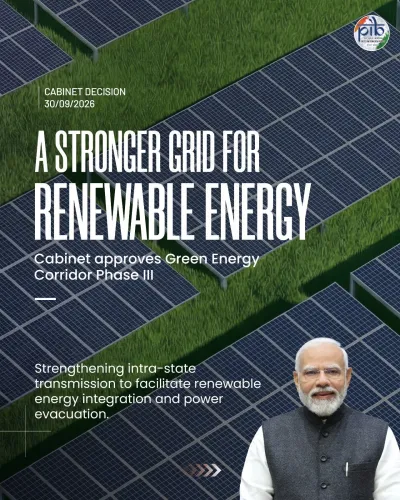
The Union Cabinet , chaired by PM Narendra Modi , approved the Green Energy Corridor Phase-III on 30 September 2026 .
CM Bhajan Lal Sharma described the decision as a 'historic step' toward a green and self-reliant energy future for India.
The project aims to connect Rajasthan's vast renewable energy capacity to the national grid and promote energy storage.
The Green Energy Corridor programme began with Phase-I in 2015 , targeting interstate transmission from solar- and wind-rich states.
India targets 500 GW of non-fossil fuel capacity by 2030 and net-zero emissions by 2070 ; grid infrastructure is central to achieving both.
Funding details, specific transmission corridors, and storage components are expected in the full Cabinet note.
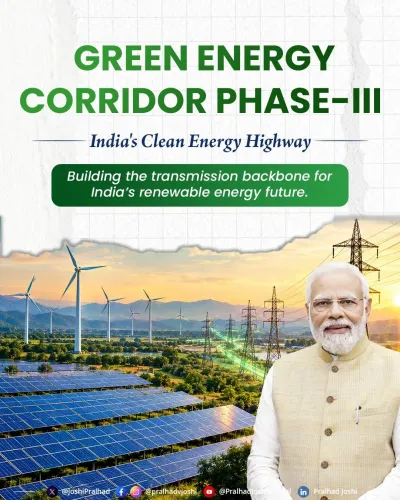
A Cabinet decision aimed at rewiring India's energy map landed with particular force in Rajasthan on Wednesday, 30 September 2026 — and Rajasthan Chief Minister Bhajan Lal Sharma was quick to frame exactly why. The Union Cabinet, chaired by Prime Minister Narendra Modi, approved the Green Energy Corridor Phase-III, a central transmission infrastructure project designed to evacuate, integrate, and store renewable electricity from states sitting on the country's richest solar and wind reserves.
Posting on X, CM Sharma called the decision 'ऐतिहासिक कदम' — a historic step — toward a 'green and self-reliant energy future.' He was pointed about Rajasthan's stake: the state, he noted, holds 'immense potential in solar and wind energy,' and the approval would give 'new momentum to connecting the state's vast renewable energy capacity to the grid, its better utilisation, and promotion of energy storage.'
Why Rajasthan Sits at the Centre of This Decision
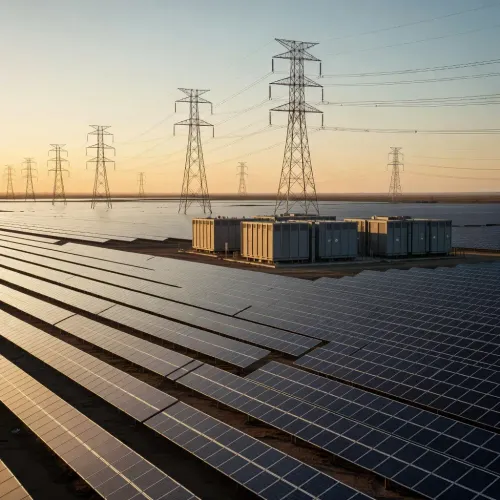
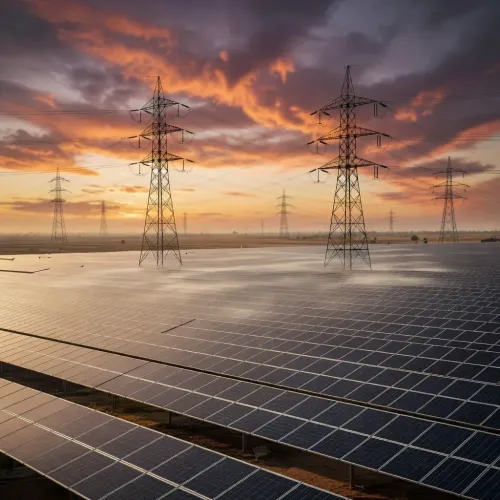
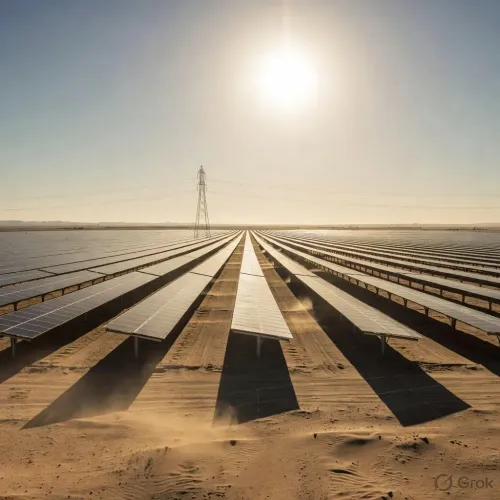
Rajasthan is not a peripheral beneficiary — it is arguably the primary one. The state's vast, sun-drenched Thar Desert and open plains make it one of India's highest-potential zones for both solar and wind generation. The core problem has never been generation capacity alone; it has been evacuation — getting that power out of sparsely populated, resource-rich regions and into the demand centres hundreds of kilometres away. That is precisely the gap the Green Energy Corridor programme was designed to close.
The corridor concept dates back to 2015, when Phase-I was approved to build interstate transmission lines serving states including Rajasthan and Gujarat. Each successive phase extends that spine deeper and smarter — adding storage integration and grid-balancing infrastructure to handle the variable nature of solar and wind supply.
India's 500 GW Target and the Transmission Bottleneck
India has committed to reaching 500 GW of non-fossil fuel capacity by 2030 and net-zero emissions by 2070. Meeting those targets is not just a generation challenge — it is overwhelmingly a grid challenge. Variable renewables require transmission networks that can absorb sudden surges and dips, and storage systems that can bank surplus power for peak-demand hours. Without that infrastructure, even the most ambitious capacity additions sit stranded.
The Green Energy Corridor programme is the central government's direct answer to that bottleneck. Phase-III, by extending the framework, signals that New Delhi is treating grid infrastructure — not just panel and turbine installations — as mission-critical to the clean-energy transition.
What Rajasthan Stands to Gain
CM Sharma's response underlines a straightforward calculus for the state: better grid connectivity means renewable energy developers can actually monetise Rajasthan's natural endowment, state utilities can reduce dependence on costly thermal power, and energy storage incentives can smooth out the supply curve. For a state government that has positioned green energy as a pillar of economic growth, the Cabinet nod removes a structural ceiling on how far that ambition can travel.
The specifics — funding allocations, exact transmission corridors, and storage components — are expected to emerge from the detailed Cabinet note. State-level implementation timelines in Rajasthan will be the next milestone to track.
India's energy transition has long been described as a race between ambition and infrastructure. With Phase-III now cleared, the race just got a new lane — and Rajasthan is in pole position to use it.
Point of View
Less glamorous work of transmission and storage. For CM Bhajan Lal Sharma, publicly anchoring Rajasthan's identity to green energy is a dual play: it aligns the state with the BJP-led Centre's flagship energy narrative while also making a concrete economic pitch to renewable developers eyeing the Thar Desert. The political signal is as deliberate as the infrastructure logic — Rajasthan wants to be seen as the engine of India's solar ambitions, not merely a beneficiary. Whether Phase-III delivers on that promise will depend almost entirely on implementation speed at the state level.
NationPress
30 Sept 2026
Frequently Asked Questions
What is Green Energy Corridor Phase-III?
Green Energy Corridor Phase-III is a central government transmission infrastructure project approved by the Union Cabinet to evacuate, integrate, and store renewable electricity from high-potential states such as Rajasthan, building on Phase-I approved in 2015.
How does Green Energy Corridor Phase-III benefit Rajasthan?
Rajasthan, one of India's richest states for solar and wind energy, will gain improved grid connectivity to transmit its renewable power to demand centres, better utilisation of existing capacity, and support for energy storage systems.
What did CM Bhajan Lal Sharma say about the Cabinet decision?
CM Bhajan Lal Sharma called the approval a 'historic step' toward a green and self-reliant energy future, specifically highlighting that it would give new momentum to connecting Rajasthan's vast renewable capacity to the grid and promoting energy storage.
What is India's renewable energy target by 2030?
India has committed to achieving 500 GW of non-fossil fuel energy capacity by 2030 and reaching net-zero emissions by 2070, with grid infrastructure programmes like the Green Energy Corridor central to meeting those goals.
When was Green Energy Corridor Phase-I approved?
Green Energy Corridor Phase-I was approved by the Union Cabinet in 2015 to build interstate transmission lines for evacuating renewable power from states including Rajasthan and Gujarat.