Cabinet Clears ₹1.86 Lakh Cr Green Energy Corridor Phase-III
Synopsis
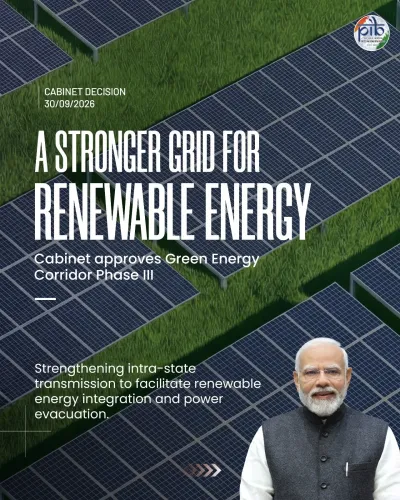
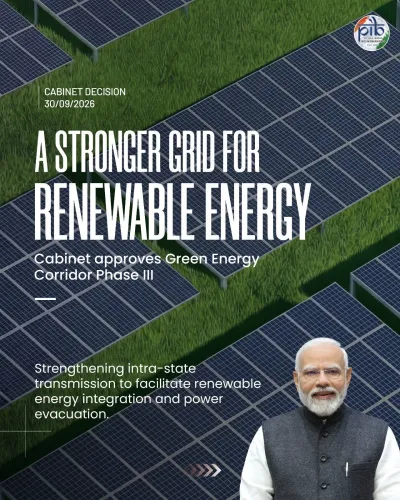
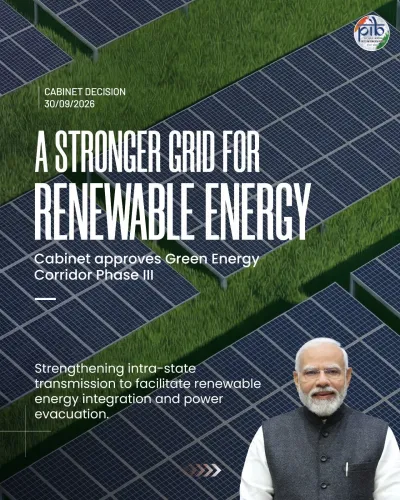
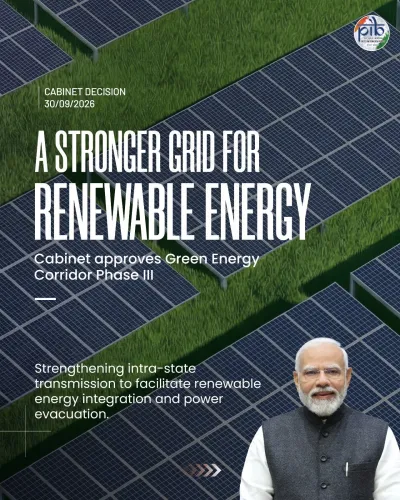
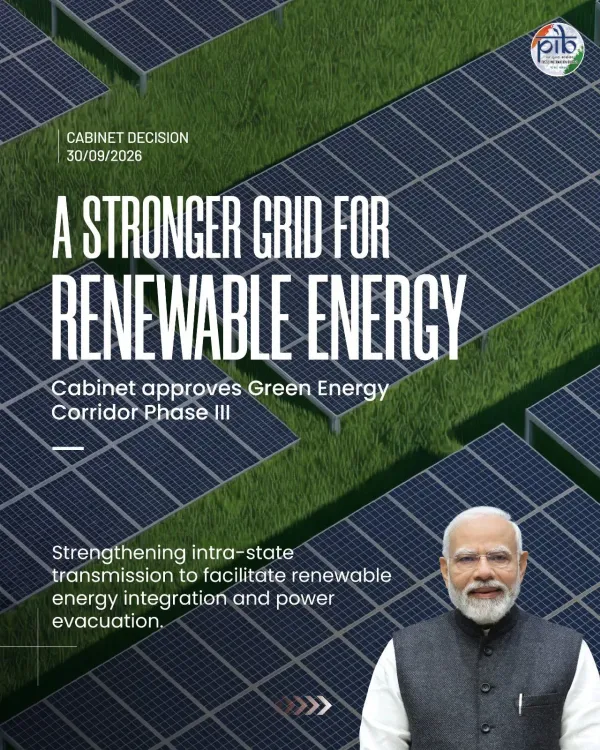
The Union Cabinet has approved the Green Energy Corridor Phase-III scheme worth ₹1,86,405 crore to strengthen intra-state transmission infrastructure, evacuate up to 135 GW of renewable energy, and deploy 50 GWh of battery storage by FY 2032-33.
Key Takeaways
The Union Cabinet approved Green Energy Corridor Phase-III on 30 September 2026 , chaired by PM Narendra Modi .
Total project outlay is ₹1,86,405 crore , making it one of India's largest clean energy infrastructure investments.
The scheme targets evacuation of up to 135 GW of renewable energy across states and Union Territories via an upgraded Intra-State Transmission System (InSTS) .
50 GWh of Battery Energy Storage Systems (BESS) will be deployed to address grid intermittency, congestion, peak-hour curtailment, and non-solar hour demand.
The scheme is targeted for completion by FY 2032–33 .
Phase-III builds on Green Energy Corridor Phase-I (approved 2015), which focused on inter-state transmission rather than intra-state infrastructure.
India just made its biggest single bet on clean power infrastructure. The Union Cabinet, chaired by Prime Minister Narendra Modi, on Wednesday, 30 September 2026, approved the Green Energy Corridor Phase-III scheme — a ₹1,86,405 crore programme to rewire the country's intra-state transmission backbone and plug in large-scale battery storage, enabling the evacuation of up to 135 GW of renewable energy across states and Union Territories.
Union Environment Minister Bhupender Yadav announced the Cabinet decision on X, calling it a 'Cleaner Greener power' moment for India. The scheme, he noted, also mandates the deployment of 50 GWh of Battery Energy Storage Systems (BESS) — placed at renewable energy generator ends or other strategically important grid locations — to tackle the four chronic pain points of India's clean power network: intermittency, congestion, peak-hour curtailment, and non-solar hour demand.
What Phase-III Actually Fixes — and Why It Matters Now
India's renewable capacity has raced ahead of its grid's ability to carry that power to consumers. Solar and wind farms generate electricity when the sun shines or the wind blows — not necessarily when households and factories need it most. The result: curtailment, where perfectly good green electricity is simply wasted because the wires cannot carry it or the grid cannot absorb it in time.
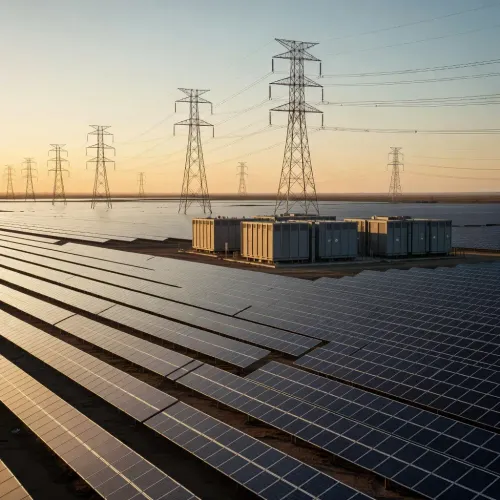
Phase-III attacks that problem at two levels simultaneously. The Intra-State Transmission System (InSTS) component builds the physical highways — new high-voltage lines within each state — so renewable power can actually reach the grid. The BESS component acts as the shock absorber: storing surplus generation during peak solar hours and releasing it after sunset or during demand spikes, smoothing out the lumpy, unpredictable nature of wind and solar output.
The scheme is targeted for completion by FY 2032–33, giving state transmission utilities and renewable energy developers a firm planning horizon.
The Policy Lineage: From Phase-I in 2015 to a ₹1.86 Lakh Crore Phase-III
This is not India's first attempt to solve the transmission puzzle. Green Energy Corridor Phase-I, approved in 2015, focused on inter-state transmission — building the arteries between states to carry renewable power from generation-rich regions like Rajasthan and Gujarat to demand centres elsewhere. Phase-III shifts the focus inward, to the capillaries: the intra-state lines that connect individual wind farms, solar parks, and storage installations to the broader grid.
The scale jump is striking. Phase-III's outlay of ₹1,86,405 crore dwarfs earlier corridor investments and signals that the government views transmission and storage — not just generation capacity — as the critical bottleneck in its race to 500 GW of non-fossil fuel capacity by 2030 and net-zero emissions by 2070.
Who Builds It, Who Watches It
The primary actors are state transmission utilities — the state-level agencies responsible for building and maintaining the intra-state grid — alongside renewable energy developers and generators, who will host or co-locate much of the BESS capacity. Central funding flows through the scheme framework, with state-level project approvals and fund disbursement timelines the key milestones to track in the months ahead.
Physical progress on intra-state line construction and actual BESS commissioning will be the real test of whether a landmark Cabinet approval translates into electrons on the wire by 2032–33.
India has approved the grid. Now it has to build it — fast enough to matter.
Point of View
86,405 crore, the scheme signals that the government recognises grid infrastructure, not solar panels alone, as the decisive variable in meeting its 500 GW non-fossil target by 2030. The inclusion of 50 GWh of BESS at the generator end is particularly significant: it embeds storage as a structural grid asset rather than an afterthought, a model that aligns with global best practice. The real political test, however, will be execution — state-level fund absorption, utility capacity, and timely commissioning have historically lagged behind Cabinet-level ambition in India's power sector.
NationPress
30 Sept 2026
Frequently Asked Questions
What is the Green Energy Corridor Phase-III scheme?
Green Energy Corridor Phase-III is a Union Cabinet-approved scheme worth ₹1,86,405 crore to strengthen intra-state transmission infrastructure and deploy 50 GWh of battery storage, enabling the evacuation of up to 135 GW of renewable energy across India by FY 2032-33.
How much money has the government allocated for Green Energy Corridor Phase-III?
The total project outlay approved by the Union Cabinet is ₹1,86,405 crore.
What is BESS and why is it part of the Green Energy Corridor scheme?
BESS stands for Battery Energy Storage Systems. Phase-III includes 50 GWh of BESS to store surplus renewable power and release it during peak demand or non-solar hours, reducing grid intermittency, congestion, and curtailment.
When will Green Energy Corridor Phase-III be completed?
The scheme is targeted for completion by FY 2032-33.
How does Phase-III differ from earlier Green Energy Corridor phases?
Green Energy Corridor Phase-I, approved in 2015, focused on inter-state transmission lines. Phase-III focuses on intra-state transmission systems (InSTS), strengthening the grid within individual states and adding large-scale battery storage.