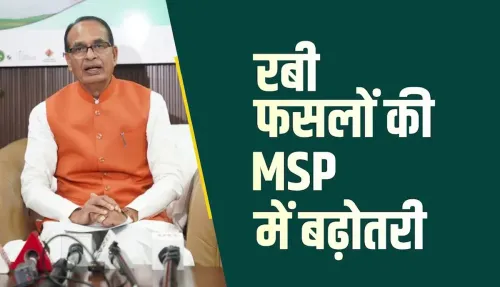
CM Rekha Gupta Hails Cabinet's MSP Hike for Rabi 2027-28

Synopsis
The Union Cabinet approved an MSP hike for Rabi crops for the 2027-28 marketing season. Delhi CM Rekha Gupta praised the decision as a reaffirmation of the Modi government's commitment to farmer welfare and income security.
Key Takeaways
The Union Cabinet approved a hike in MSP for Rabi crops for the 2027-28 marketing season on 30 September 2026 .
Delhi CM Rekha Gupta endorsed the decision, saying it will ensure remunerative prices and strengthen farmer incomes.
Since 2018 , the government has pegged MSP at a minimum of 1.5 times the cost of production for notified crops.
The decision follows an established annual Cabinet cycle of MSP revisions ahead of each Rabi sowing season.
Effective income gains for farmers depend on subsequent procurement targets set by FCI and state agencies.
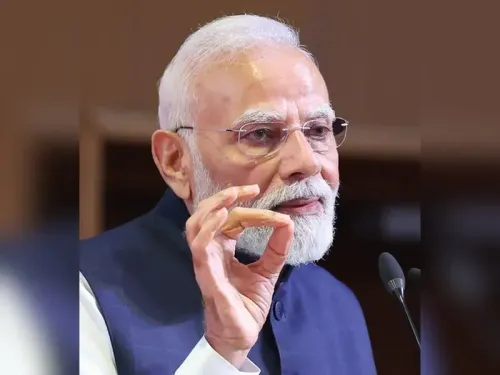
Millions of Indian farmers growing wheat, mustard, and other winter crops woke up to a significant policy signal on Wednesday, 30 September 2026: the Union Cabinet, under Prime Minister Narendra Modi, approved a hike in the Minimum Support Price (MSP) for Rabi crops for the 2027-28 marketing season — and Delhi Chief Minister Rekha Gupta was quick to frame what it means for the country's farming households.
In her post, CM Gupta wrote that the Cabinet's decision 'will ensure remunerative prices for the produce of crores of farmers and strengthen their income' — a direct endorsement of a central government move that sits at the heart of India's agricultural support architecture.
What MSP Does — and Why the Rabi Revision Matters
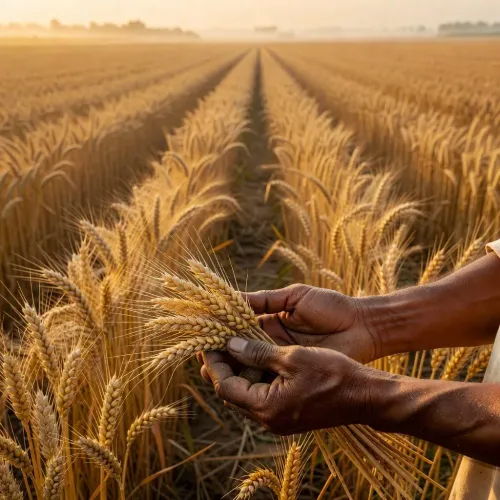
The Minimum Support Price is the government's assured-price floor: when market rates fall below it, designated agencies step in to procure notified crops at the MSP rate, shielding growers from price crashes. For Rabi crops — the winter-sown harvest that includes wheat, gram, lentils, and mustard — the Cabinet announces revised rates ahead of each sowing season so farmers can plan their inputs with price certainty in hand.
The mechanism gained a sharper edge in 2018, when the Union Cabinet formalised the policy of pegging MSP at a minimum of 1.5 times the cost of production for notified crops — a formula that successive annual revisions have carried forward. Each year's Cabinet approval is therefore not a one-off gesture; it is a link in a long chain of procurement-backed income support.
Delhi's CM Weighs In on a National Farm Policy Call
Rekha Gupta, who leads the BJP government in Delhi, does not oversee agricultural procurement directly — that domain belongs to state governments with large rural hinterlands and the central Food Corporation of India (FCI). Her post is nonetheless politically significant: it signals the party's unified messaging on farmer welfare ahead of what is always a closely watched procurement cycle.
The #CabinetDecisions hashtag she used places her statement squarely in the BJP's coordinated communication effort around major Cabinet announcements — a pattern that amplifies central policy decisions through state-level voices.
What Follows the Announcement
An MSP revision is only as effective as the procurement machinery behind it. The next critical steps will be the targets set by FCI and state procurement agencies once the crop-wise rates are formally notified, and whether any accompanying changes in crop insurance or input subsidies deepen the support package for Rabi growers.
For farmers sowing this winter's crop, the Cabinet's green light on MSP is the opening signal. Whether the price floor translates into actual income gains depends on how aggressively agencies procure — and at what scale.
Point of View
But its political salience never fades — farm distress remains one of India's most electorally sensitive issues. By amplifying the announcement, CM Gupta reinforces the BJP's farmer-welfare narrative at a state level, even though Delhi's own agricultural footprint is minimal. The real test of this revision will come in the procurement season: an MSP on paper means little without robust FCI and state-agency offtake. The announcement also keeps alive the broader debate about whether price-support mechanisms alone are sufficient, or whether structural reforms in rural markets are overdue.
NationPress
1 Oct 2026
Frequently Asked Questions
What is MSP and how does it help farmers?
MSP, or Minimum Support Price, is a government-guaranteed price floor for notified crops. When market prices fall below this level, government agencies procure the crop at the MSP rate, protecting farmers from price crashes and income loss.
Which crops are covered under the Rabi MSP revision for 2027-28?
Rabi crops typically covered under MSP include wheat, gram (chickpea), lentils, mustard, and barley. The exact crop-wise rates for 2027-28 will be formally notified after the Cabinet approval.
Why did Delhi CM Rekha Gupta comment on a central farm policy decision?
As a senior BJP leader and state chief minister, Rekha Gupta routinely amplifies key central government decisions as part of coordinated party communication, even when the policy domain — like agricultural procurement — falls primarily under central and other state governments.
What is the 1.5 times cost-of-production formula for MSP?
In 2018, the Union Cabinet formalised a policy to fix MSP at a minimum of 1.5 times the cost of production for notified crops, ensuring farmers receive a meaningful profit margin above their input costs.
Who procures crops at MSP after the Cabinet announcement?
The Food Corporation of India (FCI) and designated state government procurement agencies are the primary bodies that purchase crops from farmers at the notified MSP rates during the marketing season.