CM Dhami Backs Cabinet's Rabi MSP Hike for 2027-28
Synopsis
The Union Cabinet approved higher Minimum Support Prices for all key Rabi crops for marketing season 2027-28, a move Uttarakhand CM Pushkar Singh Dhami hailed as a landmark step in protecting the livelihoods of India's farmers.
Key Takeaways
The Union Cabinet , chaired by PM Narendra Modi , approved a hike in MSP for all major Rabi crops for the 2027-28 marketing season on 30 September 2026 .
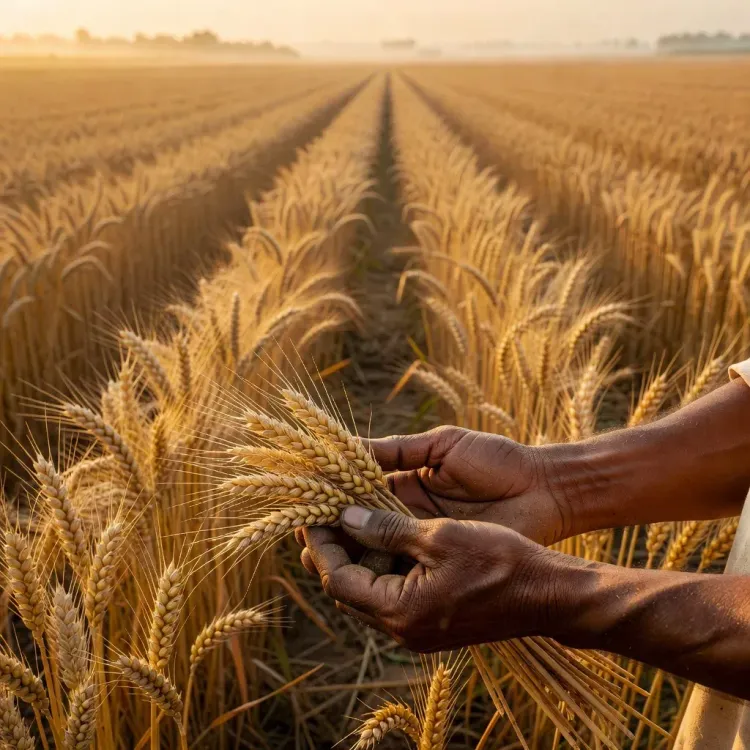
Rabi crops covered typically include wheat, barley, gram, lentil, and mustard — sown in winter and harvested in spring.
CM Pushkar Singh Dhami welcomed the decision on behalf of Uttarakhand's farming community, expressing gratitude to the PM and the Cabinet.
The 1.5× cost-of-production MSP benchmark, established in 2018 , continues to anchor the current pricing framework.
State-level procurement operations at the revised rates and a subsequent Kharif 2027-28 MSP announcement are the next milestones to watch.
Every autumn, India's farm calendar turns on a single Cabinet decision — and on Wednesday, 30 September 2026, the Union Cabinet under Prime Minister Narendra Modi delivered its latest: a hike in the Minimum Support Price (MSP) for all key Rabi crops for the 2026-27 marketing season (2027-28). Uttarakhand Chief Minister Pushkar Singh Dhami was quick to welcome the move, calling it a decisive step toward ensuring farmers receive fair value for their labour.
What the Cabinet approved — and why it matters
The Minimum Support Price is the government-set floor price that shields farmers from market volatility by guaranteeing a minimum return on their produce. Separate MSP announcements are made each year for the Rabi season (sown in winter, harvested in spring — primarily wheat, barley, gram, lentil, and mustard) and the Kharif season. The Cabinet's approval of higher MSPs ahead of the sowing window gives farmers a price signal before they commit seed to soil — the decision's timing is, by design, its most important feature.
CM Dhami, posting in Hindi, described the decision as 'annadata ke hiton ko prathamikta dene' — 'prioritising the interests of the nation's food providers' — and conveyed gratitude from Uttarakhand's farming community to the Prime Minister and the Union Cabinet.
A policy with a decade of lineage
The current framework has roots in a landmark 2018 Cabinet decision that pegged MSP at a minimum of 1.5 times the cost of production for 14 crops — part of the BJP government's broader pledge to double farmers' incomes. Since then, the annual MSP revision has become a fixture of the pre-sowing calendar, often accompanied by outreach from state-level BJP leaders who relay the announcement to their rural constituencies. CM Dhami's post fits squarely into that pattern: Uttarakhand has a significant smallholder farming base, and wheat and mustard are among the state's principal Rabi crops.
The revision also dovetails with wider rural-welfare architecture — the PM-KISAN income-support scheme and the Pradhan Mantri Fasal Bima Yojana crop-insurance programme — that the Centre has used to build a multi-layered safety net for cultivators.
What farmers and state agencies will watch next
An MSP announcement is only as effective as the procurement machinery behind it. State-level agencies — including Uttarakhand's own food and civil supplies department — must stand ready to buy at the revised rates if open-market prices fall below the floor. How quickly and widely procurement operations roll out at the new rates will determine whether the Cabinet decision translates into actual income gains in the field. A separate announcement for Kharif MSP for the same marketing year is also expected to follow in mid-2027.
For now, the signal from New Delhi is clear: the country's winter-crop farmers head into the sowing season with a government-backed price guarantee in hand.
Point of View
Tangible signal of farmer-welfare commitment that state leaders like CM Dhami amplify to their rural bases. The 2018 pledge to guarantee MSP at 1.5 times production cost gave this exercise a durable policy anchor, but the real test remains procurement depth: whether government agencies actually buy at the floor price or leave it as a paper guarantee. With agrarian discontent still a live electoral variable in several states, timely and widespread procurement at the revised rates will matter as much as the headline numbers. The announcement also keeps the broader rural-welfare narrative — PM-KISAN, crop insurance, MSP — intact as an integrated policy arc ahead of future state election cycles.
NationPress
30 Sept 2026
Frequently Asked Questions
What is MSP and how does it help farmers?
MSP, or Minimum Support Price, is a floor price set by the government for key agricultural commodities. It protects farmers from price crashes by guaranteeing a minimum return on their produce, regardless of market conditions.
Which Rabi crops are covered under the MSP hike for 2027-28?
The Cabinet approved MSP increases for all key Rabi crops. These typically include wheat, barley, gram (chickpea), masur (lentil), and rapeseed-mustard, though exact crop-wise figures have not been independently verified yet.
What did CM Dhami say about the Rabi MSP decision?
Uttarakhand CM Pushkar Singh Dhami called it a decisive step to prioritise farmers' interests and ensure fair value for their hard work, conveying gratitude from Uttarakhand's farming community to PM Modi and the Union Cabinet.
How is the current MSP calculated under the Modi government?
Since a 2018 Cabinet decision, MSP has been set at a minimum of 1.5 times the cost of production for 14 major crops, a benchmark aimed at boosting farmers' incomes.
When is the Kharif MSP for 2027-28 expected to be announced?
Kharif MSP announcements are typically made in mid-year ahead of the Kharif sowing season. A separate announcement for Kharif 2027-28 is expected around mid-2027.