Chirag Paswan Backs Cabinet Approval of Green Energy Corridor Phase-III
Synopsis
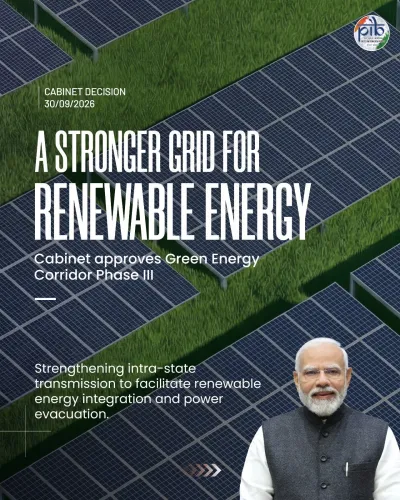
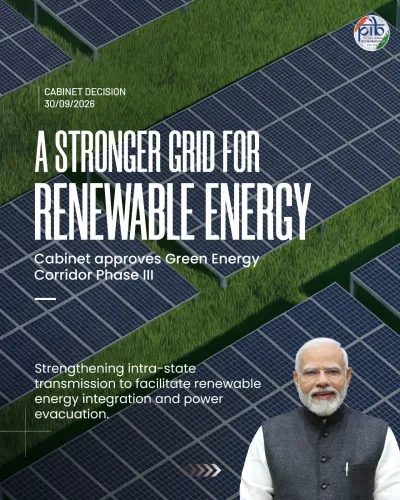
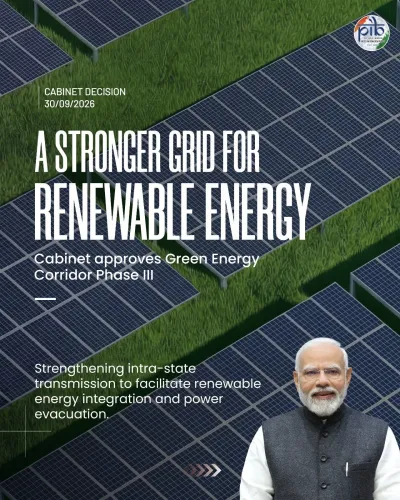
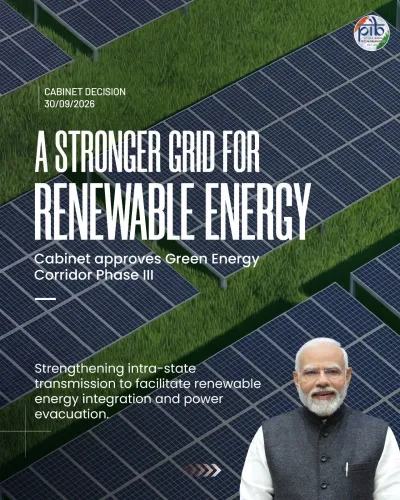
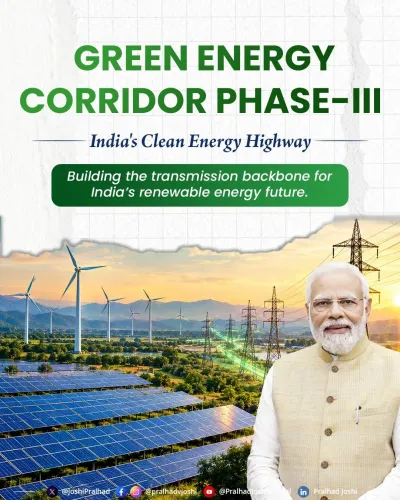
The Union Cabinet under PM Narendra Modi has approved Green Energy Corridor Phase-III, strengthening intra-state transmission for renewable energy integration. Union Minister Chirag Paswan welcomed the decision, citing gains for energy security, renewable utilisation, and job creation across states and UTs.
Key Takeaways
The Union Cabinet has approved the Green Energy Corridor Phase-III (GEC-III) scheme under PM Narendra Modi's leadership.
GEC-III targets intra-state transmission systems across states and Union Territories to enable better renewable energy evacuation.
The scheme builds on earlier GEC phases launched from 2015 that focused on inter-state transmission corridors.
Union Minister Chirag Paswan welcomed the decision on 30 September 2026 , highlighting energy security, better renewable utilisation, and job creation as key benefits.
State transmission utilities and renewable energy developers are the primary stakeholders responsible for ground-level execution.
State-level implementation timelines and funding progress will be the critical metrics to track going forward.
India's renewable energy grid just got a major structural push. Union Food Processing Minister Chirag Paswan on Wednesday, 30 September 2026 welcomed the Union Cabinet's approval of the Green Energy Corridor Phase-III (GEC-III), a scheme aimed at fortifying the country's intra-state transmission infrastructure to handle the surge in solar and wind power generation.
Posting in Hindi on X, Paswan described the decision as a 'visionary initiative' (दूरदर्शी पहल) under the leadership of Prime Minister Narendra Modi. He highlighted three core outcomes he expects from the scheme: stronger energy security, better utilisation of renewable energy, and the creation of new employment in the power sector.
What GEC-III Is Designed to Fix
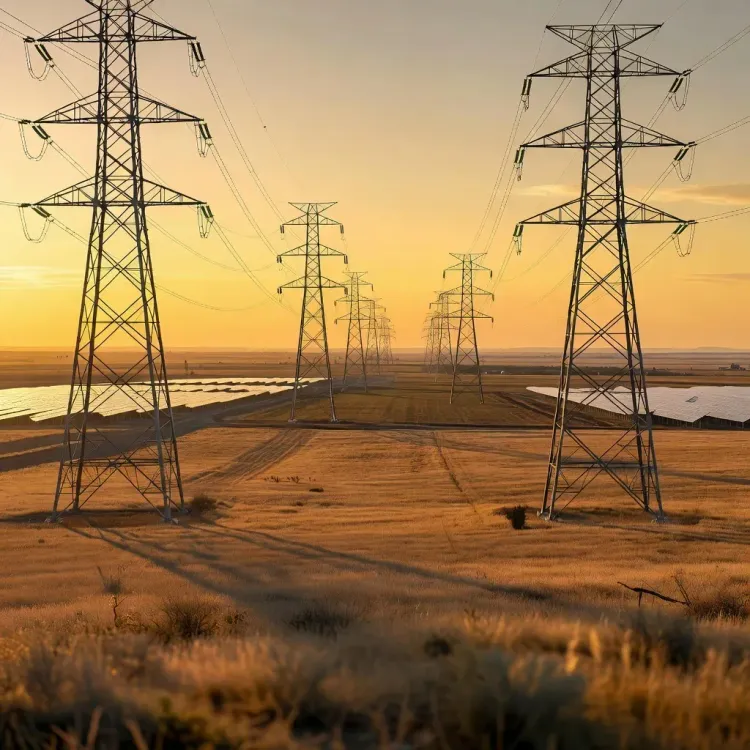
The Green Energy Corridor project has been India's answer to one of the cleanest and most stubborn problems in its energy transition: you can build all the solar panels and wind farms you want, but if the grid cannot carry the power to where it is needed, the capacity sits idle. GEC Phase-III specifically targets intra-state transmission systems — the web of lines, substations, and switching stations inside individual states and Union Territories — to ensure that renewable generation can actually be evacuated and distributed.
Earlier phases of the corridor project, initiated from around 2015, built dedicated inter-state transmission infrastructure for high-renewable-potential states. GEC-III extends that logic deeper into the grid, reaching the sub-state level where bottlenecks have increasingly choked evacuation of new capacity.
Grid Strength as the Renewable Energy Bottleneck
India's renewable capacity addition has accelerated rapidly over the past decade, but transmission infrastructure has not always kept pace. Solar and wind power are inherently variable — they spike and dip with weather — which puts stress on grids not designed for such fluctuation. Strengthening intra-state transmission corridors directly addresses this variability challenge, allowing state transmission utilities and renewable energy developers to integrate new capacity without grid instability.
The broader pattern is clear: successive Union Budgets and cabinet decisions have treated generation targets and evacuation infrastructure as inseparable. GEC-III fits squarely into that framework, signalling that the Centre views grid modernisation — not just megawatt targets — as central to India's energy security architecture.
Employment and State-Level Stakes
Beyond the engineering rationale, Paswan flagged job creation as a material benefit, reflecting the government's broader effort to frame the energy transition as an economic opportunity. Construction of new transmission lines, substations, and associated civil infrastructure across states and UTs will generate employment in both skilled and unskilled categories. State governments and their transmission utilities will be central to the scheme's on-ground execution — making state-level implementation timelines the critical variable to watch in the months ahead.
India's energy future is not waiting. With GEC-III now approved, the next test is whether the steel, cable, and civil works can reach the field before the next wave of renewable capacity floods a grid still catching up.
Point of View
Framing the scheme through energy security and job creation also serves a dual purpose: it appeals to both climate-conscious investors and domestic employment constituencies. The speed at which states translate this approval into physical infrastructure will determine whether GEC-III becomes a genuine grid transformation or another well-intentioned scheme caught in execution delays.
NationPress
30 Sept 2026
Frequently Asked Questions
What is the Green Energy Corridor Phase-III (GEC-III)?
GEC-III is a central government scheme approved by the Union Cabinet to strengthen intra-state transmission systems across India's states and Union Territories, enabling better integration and evacuation of renewable energy such as solar and wind power.
Why is intra-state transmission important for renewable energy in India?
Renewable energy generated within a state needs robust local grid infrastructure to be evacuated and distributed. Without strong intra-state transmission, power generated by solar or wind farms can remain stranded, wasting clean energy capacity.
How is GEC-III different from earlier Green Energy Corridor phases?
Earlier GEC phases from around 2015 primarily built dedicated inter-state transmission corridors connecting high-renewable-potential states to consumption centres. GEC-III goes deeper, targeting the intra-state grid infrastructure inside individual states and UTs.
What did Chirag Paswan say about the GEC-III approval?
Union Food Processing Minister Chirag Paswan welcomed the Cabinet decision on 30 September 2026, calling it a 'visionary initiative' and stating it would strengthen energy security, improve renewable energy utilisation, and create new employment opportunities in the energy sector.
Who are the key stakeholders responsible for implementing GEC-III?
State transmission utilities and renewable energy developers are the primary stakeholders. State governments will be central to on-ground execution, making state-level timelines and regulatory progress key indicators of the scheme's success.