Gadkari: Cabinet clears ₹1.86 lakh cr Green Energy Corridor Phase-III
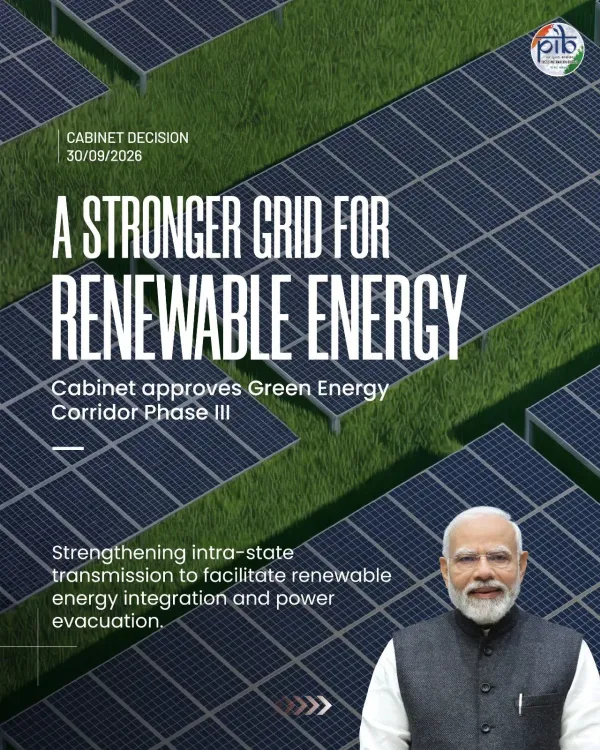
Synopsis
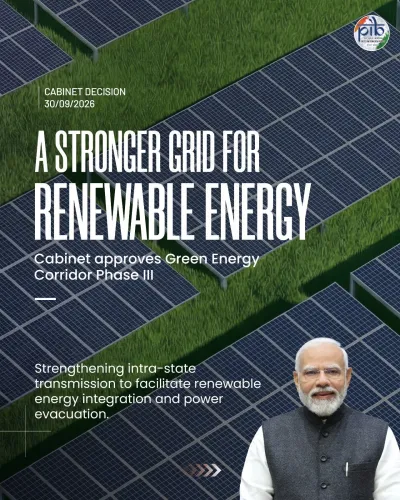
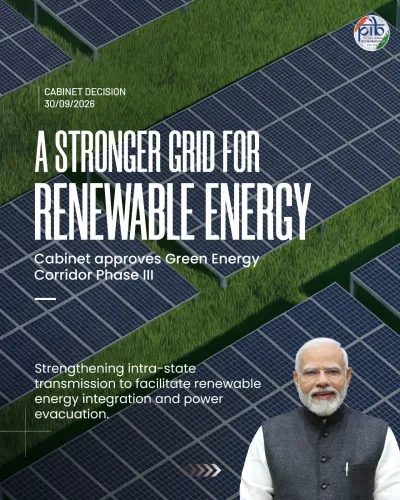
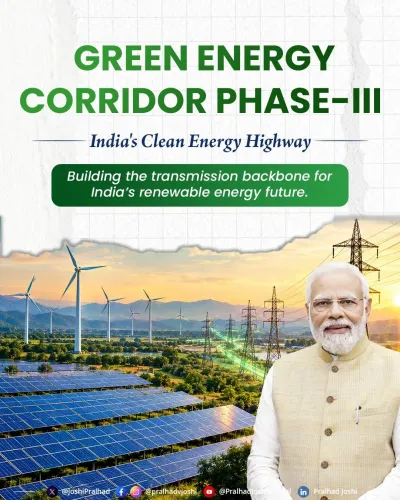
The Union Cabinet has approved Green Energy Corridor Phase-III, a ₹1,86,405 crore scheme to build intra-state transmission infrastructure and deploy 50 GWh of BESS, targeting evacuation of 135 GW of renewable energy by FY 2032-33.
Key Takeaways
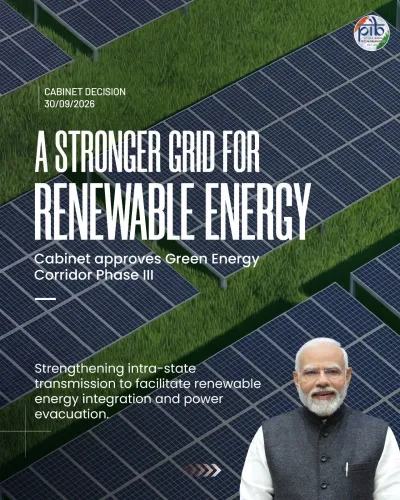
Union Cabinet, chaired by PM Narendra Modi , approved Green Energy Corridor Phase-III on 30 September 2026 .
Total project outlay: ₹1,86,405 crore ; completion target: FY 2032-33 .
Scheme will enable evacuation of up to 135 GW of renewable energy through an upgraded Intra-State Transmission System (InSTS) .
50 GWh of Battery Energy Storage Systems (BESS) will be deployed at generator ends and strategic locations to address intermittency and peak-hour demand.
Phase-III pivots from interstate lines (covered in Phases I and II) to the intra-state, last-mile infrastructure where curtailment bottlenecks are most acute.
The scheme supports India's broader goal of 500 GW non-fossil capacity by 2030 and round-the-clock renewable supply.
India's grid just got a landmark upgrade order. The Union Cabinet, chaired by Prime Minister Narendra Modi, on Wednesday, 30 September 2026, approved the Green Energy Corridor Phase-III scheme — a ₹1,86,405 crore bet on intra-state transmission and battery storage that aims to move up to 135 GW of renewable power across states and union territories by FY 2032–33. Union Road Transport and Highways Minister Nitin Gadkari announced the decision on X, calling it a landmark initiative for India's clean energy future.
What Phase-III actually builds — and why it's different
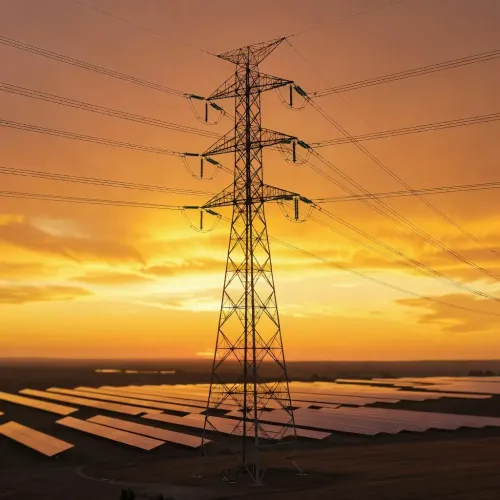
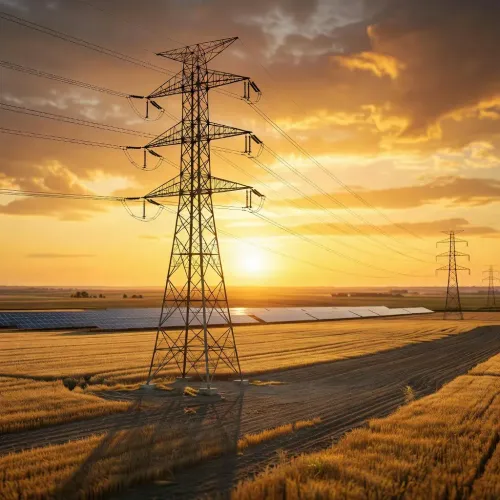
Every previous Green Energy Corridor phase focused on interstate highways for electrons — the long-haul transmission lines connecting renewable-rich states to demand centres elsewhere. Phase-III pivots sharply inward. Its primary mandate is the Intra-State Transmission System (InSTS): the last-mile substations, feeders, and high-voltage lines that sit inside a state's borders and connect wind farms and solar parks to the wider grid.
That gap has been the quiet chokepoint of India's renewable push. Generation capacity has raced ahead; evacuation infrastructure inside states has struggled to keep pace, causing curtailment — power that's generated but simply cannot flow anywhere. Phase-III is specifically designed to drain that bottleneck.
50 GWh of batteries — India's biggest storage push yet
Alongside the transmission buildout, the scheme mandates the deployment of 50 GWh of Battery Energy Storage Systems (BESS) at renewable energy generator ends or at other strategically identified locations. The logic is direct: solar panels stop producing after sunset; wind speeds are variable. Without storage, grid operators must either curtail renewable output at peak generation times or scramble to meet non-solar-hour demand with fossil backup. BESS sits at that hinge point — absorbing surplus, releasing it on demand, flattening the curve.
The explicit targets — tackling 'intermittency, congestion, peak-hour curtailment and non-solar hour demand' — signal that this scheme is designed for round-the-clock renewable supply, not just daytime green energy credits.
Phase-I to Phase-III: the corridor that grew a spine
The Green Energy Corridor programme traces back to 2015, when Phase-I was approved to build interstate transmission capacity for renewable-heavy states. Phase-II followed, extending that interstate evacuation network further. Each phase reflected the ambition of India's escalating renewable targets — the country has committed to reaching 500 GW of non-fossil capacity by 2030, a target that demands not just more panels and turbines, but a grid that can actually absorb and deliver what they produce.
Phase-III marks a maturation of that thinking: the interstate backbone now largely exists; the urgent frontier is inside the states, at the generator end, where storage and local lines will determine whether India's renewable gigawatts translate into reliable, usable kilowatt-hours.
₹1,86,405 crore and a 2032–33 deadline
The total project outlay of ₹1,86,405 crore makes this one of the largest single-scheme infrastructure approvals in India's energy history. The completion target of FY 2032–33 gives state utilities and renewable developers roughly six and a half years to execute — a timeline that will be closely watched given the scale of BESS deployment and intra-state line construction involved. State-level project sanctions, land acquisition progress, and the pace of actual BESS installations will be the real metrics to track in the quarters ahead.
With 135 GW of evacuation capacity as the headline ambition, the scheme is calibrated to absorb the renewable additions India plans to commission through the late 2020s and into the early 2030s. Whether the grid gets there on time is the question that every state power utility, renewable developer, and clean-energy investor will now be watching.
Point of View
The government is now targeting the intra-state capillaries that determine whether renewable power actually reaches consumers. The inclusion of a 50 GWh BESS mandate signals a policy acknowledgment that storage — not just generation or transmission — is the missing variable in India's 500 GW ambition. The ₹1,86,405 crore outlay and a 2032-33 deadline set clear accountability benchmarks, but execution will hinge on state utilities and renewable developers moving in lockstep — historically the weakest link in India's energy infrastructure rollouts. If the storage deployments and intra-state lines keep pace, this scheme could meaningfully advance India's credibility on round-the-clock clean power at scale.
NationPress
30 Sept 2026
Frequently Asked Questions
What is Green Energy Corridor Phase-III?
Green Energy Corridor Phase-III is a Union Cabinet-approved scheme worth ₹1,86,405 crore to build intra-state transmission infrastructure and deploy 50 GWh of Battery Energy Storage Systems (BESS), enabling the evacuation of up to 135 GW of renewable energy across India by FY 2032-33.
How is Phase-III different from earlier Green Energy Corridor phases?
Phases I and II focused on interstate transmission lines to carry renewable power across state borders. Phase-III shifts the focus inward to Intra-State Transmission Systems (InSTS) — the grid infrastructure within individual states — and adds large-scale battery storage to address curtailment and intermittency.
What is the total cost of Green Energy Corridor Phase-III?
The total project outlay approved by the Union Cabinet is ₹1,86,405 crore, with a completion deadline of FY 2032-33.
Why is BESS being deployed under this scheme?
Battery Energy Storage Systems (BESS) are being deployed to store surplus renewable energy generated during peak solar or wind hours and release it during non-solar hours or periods of high demand, reducing grid congestion, curtailment, and dependence on fossil backup.
How does this scheme relate to India's 500 GW renewable energy target?
India has committed to 500 GW of non-fossil power capacity by 2030. Green Energy Corridor Phase-III directly supports that goal by ensuring intra-state grids and storage systems can absorb and deliver the renewable power being added, turning generation capacity into reliable, usable electricity.