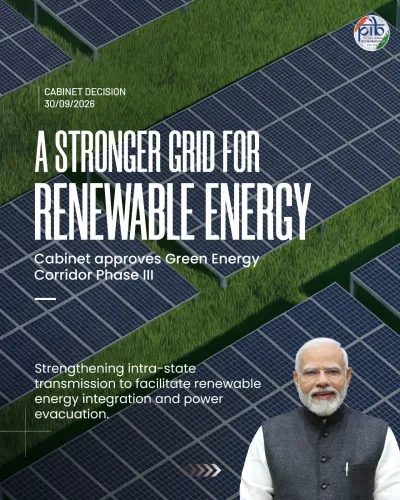
GEC-III: Cabinet clears ₹1,86,405 crore green energy corridor for 135 GW evacuation by 2033
Synopsis
India's Cabinet has cleared a ₹1,86,405 crore bet on its clean energy future — GEC-III will wire up 135 GW of renewable evacuation capacity and deploy 50 GWh of battery storage by FY 2032-33. With non-fossil sources already at 54% of installed capacity, this is the infrastructure push that could determine whether India hits its audacious 900 GW non-fossil target by 2035.
Key Takeaways
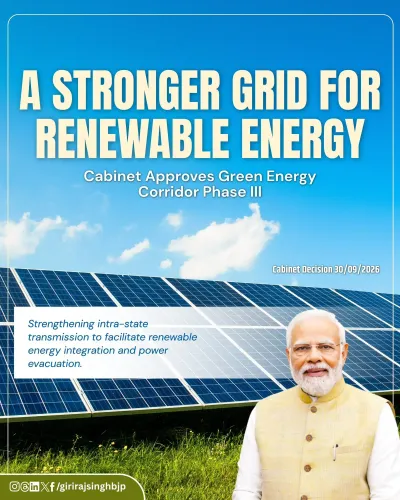
Cabinet approved the Green Energy Corridor Phase-III (GEC-III) scheme on 30 September 2026 with a total outlay of ₹1,86,405 crore .
The scheme enables evacuation of up to 135 GW of renewable energy across states and Union Territories, with completion targeted by FY 2032-33 . ₹50,000 crore is allocated for 50 GWh of Battery Energy Storage Systems (BESS) to tackle grid intermittency and peak-hour demand.
Central financial support under the scheme stands at ₹54,082 crore .
India's non-fossil capacity is already at 300.50 GW — over 54% of total installed capacity of 552 GW as of July 2026.
PM Modi described GEC-III as a 'big push' towards India's 900 GW non-fossil capacity target by 2035 .
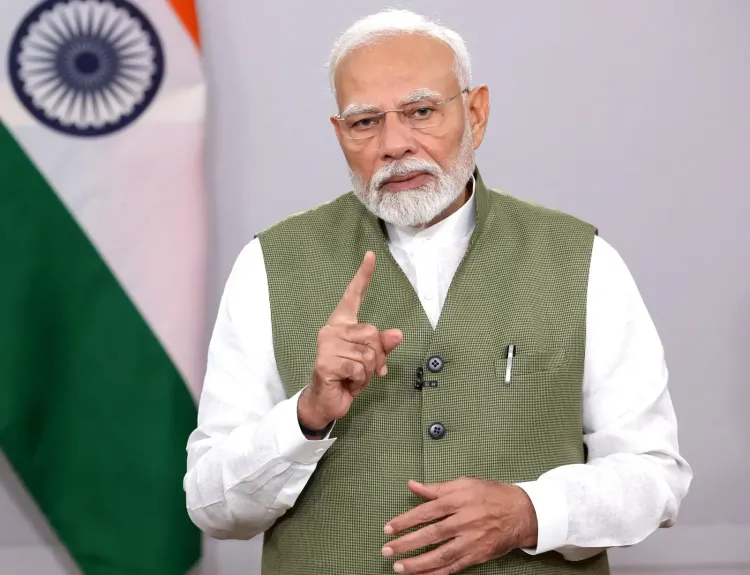
Prime Minister Narendra Modi on 30 September 2026 described the Cabinet's approval of the Green Energy Corridor Phase-III (GEC-III) scheme as a 'big push' towards India's target of 900 GW non-fossil capacity by 2035. The scheme, with a total project outlay of ₹1,86,405 crore, is designed to enable evacuation of up to 135 GW of renewable energy across states and Union Territories and is targeted for completion by FY 2032-33.
What GEC-III Covers
The scheme has two primary components: ₹1,36,378 crore allocated for the development of Intra-State Transmission Systems (InSTS) under GEC-III, and ₹50,000 crore earmarked for 50 GWh of Battery Energy Storage Systems (BESS). The Central government's financial support under the scheme stands at ₹54,082 crore.
The BESS component is slated for deployment at the renewable energy developer or generator end, or at other grid-critical locations, to address intermittency, congestion, peak-hour curtailment, and non-solar hour demand — longstanding challenges in integrating variable renewable power into the national grid.
PM Modi's Statement
'Cleaner power. Stronger grids. More opportunities,' Prime Minister Modi said in a post on X, listing the scheme's outcomes: 135 GW renewable energy evacuation, 50 GWh battery storage, stronger power grids across states and Union Territories, and more jobs in manufacturing, construction, and energy storage. He described the decision as a 'big push towards 900 GW non-fossil capacity by 2035.'
India's Renewable Energy Footprint
India's total installed power capacity reached 552 GW in July 2026, more than double the 249 GW recorded in 2014. Non-fossil capacity stood at 300.50 GW as of 31 July 2026, accounting for over 54 per cent of total installed capacity. India ranks third globally in renewable energy installed capacity.
Installed solar capacity has climbed to 164.59 GW as of 31 July 2026, up sharply from just 2.8 GW in 2014 — solar is now the single largest component of India's renewable energy mix. India became the world's second-largest solar growth market in 2025, adding more than 37 GW of solar capacity, surpassing the 34 GW added by the United States.
Jobs and Grid Modernisation
Beyond capacity addition, the scheme is expected to generate long-term skilled employment in operation, maintenance, and grid management across participating states. BESS manufacturing and deployment will additionally create jobs in the domestic energy storage industry — a sector the government has been actively trying to build out to reduce import dependence.
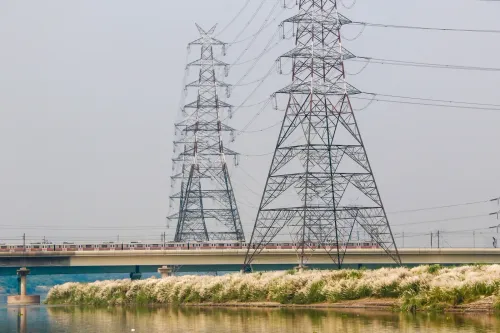
This comes amid growing urgency to modernise India's transmission infrastructure, which has historically lagged behind generation capacity additions, creating bottlenecks that prevent clean power from reaching consumers efficiently. With GEC-III, the Centre is making a structural bet that grid expansion can keep pace with the accelerating renewable buildout.
Point of View
Making evacuation bottlenecks a chronic drag on clean energy utilisation. The ₹50,000 crore BESS allocation is particularly significant: battery storage is the missing piece that can smooth solar intermittency and finally make India's grid hour-agnostic. The real test, however, is execution speed. Earlier Green Energy Corridor phases faced delays tied to land acquisition and state-level coordination, and GEC-III spans a far larger footprint. Whether the FY 2032-33 deadline holds will depend on how firmly the Centre enforces cross-state coordination, and whether disbursements are tied to verifiable milestones rather than just capacity sanctions.
NationPress
30 Sept 2026
Frequently Asked Questions
What is the Green Energy Corridor Phase-III (GEC-III) scheme?
GEC-III is a Cabinet-approved scheme with a total outlay of ₹1,86,405 crore designed to enable evacuation of up to 135 GW of renewable energy across Indian states and Union Territories, with completion targeted by FY 2032-33. It also includes a ₹50,000 crore component for deploying 50 GWh of Battery Energy Storage Systems to address grid intermittency.
How much Central government funding does GEC-III receive?
The Central financial support under GEC-III stands at ₹54,082 crore. The remaining outlay is split between ₹1,36,378 crore for Intra-State Transmission Systems and ₹50,000 crore for Battery Energy Storage Systems.
Why does India need GEC-III?
India's renewable generation capacity has grown rapidly — non-fossil sources now account for over 54% of installed capacity — but transmission infrastructure has struggled to keep pace, creating evacuation bottlenecks. GEC-III is aimed at modernising and expanding the grid so that clean power can reach consumers efficiently and India can hit its 900 GW non-fossil target by 2035.
What is India's current renewable energy capacity?
India's total installed power capacity stood at 552 GW as of July 2026, with non-fossil capacity at 300.50 GW — over 54% of the total. Installed solar capacity alone reached 164.59 GW, up from 2.8 GW in 2014, making India the world's third-largest renewable energy market by installed capacity.
What jobs will GEC-III create?
The scheme is expected to generate employment in manufacturing, construction, and energy storage linked to BESS deployment, as well as long-term skilled jobs in grid operation, maintenance, and management across participating states. The government has not provided a specific jobs estimate in the scheme announcement.