Cabinet Approves MSP for Rabi Crops for Marketing Season 2027-28
Synopsis
The Union Cabinet, chaired by PM Narendra Modi, approved the Minimum Support Price for Rabi crops for Marketing Season 2027-28 on September 30, 2026, ahead of the winter sowing season — a move that anchors farmer income expectations and shapes procurement planning nationwide.
Key Takeaways
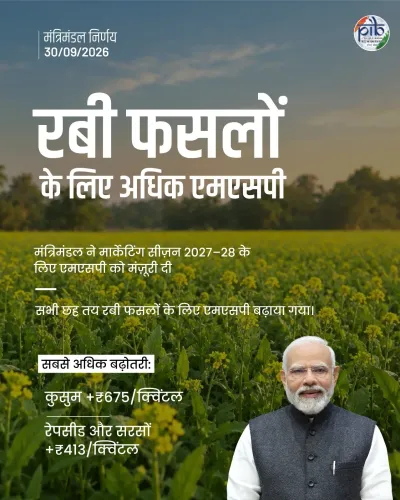
The Union Cabinet chaired by PM Narendra Modi approved the MSP for Rabi crops for Marketing Season 2027-28 on September 30, 2026 .
The MSP is a government-fixed floor price designed to protect farmers from market price volatility for key winter crops.
Key Rabi crops covered include wheat, mustard, and barley, which are sown in winter and harvested in spring.
The announcement comes ahead of the Rabi sowing season, giving farmers price certainty before planting decisions are made.
Specific per-crop MSP rates and procurement targets are the next figures the farming community and commodity markets will closely monitor.
Annual MSP revisions are a pillar of India's food security system, supporting both farmer incomes and the Public Distribution System .
India's farmers received a major policy signal on Wednesday, September 30, 2026, as the Union Cabinet, chaired by Prime Minister Narendra Modi, approved the Minimum Support Price (MSP) for Rabi crops for the Marketing Season 2027-28 — a decision that sets the floor beneath the income of millions of winter-crop growers across the country. Union Minister Sarbananda Sonowal shared the Cabinet's decision on X, flagging it as part of a series of approvals.
What the MSP Decision Means for Rabi Farmers
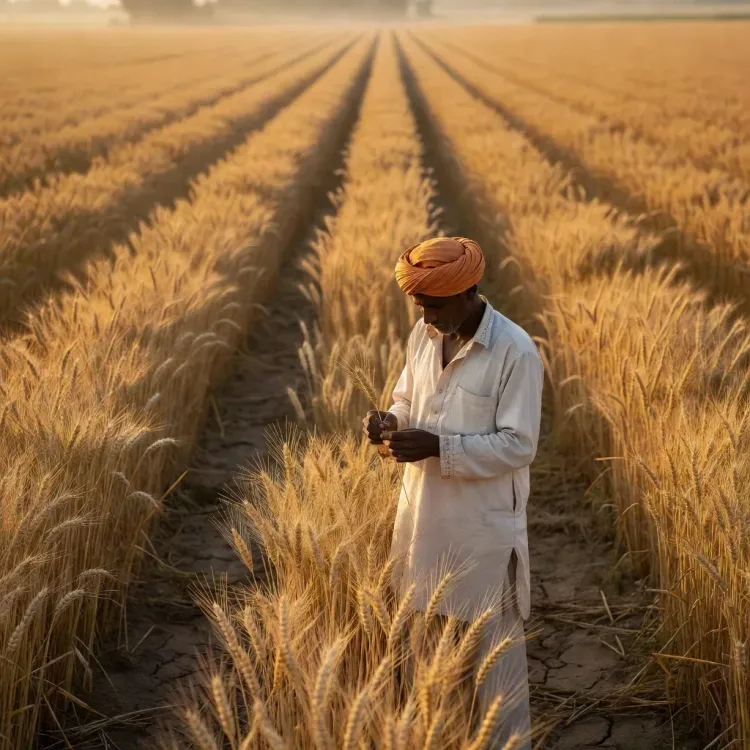
The Minimum Support Price is the government-guaranteed floor price for select agricultural commodities — a lifeline designed to insulate farmers from market volatility. For Rabi crops — chiefly wheat, mustard, and barley, sown through the winter months and harvested in spring — the annual MSP announcement is one of the most consequential policy moments in the agricultural calendar. It directly shapes sowing decisions: a higher MSP nudges farmers toward particular crops; a stagnant one prompts anxiety.
The approval comes ahead of the Rabi sowing season, which is exactly when it needs to. Farmers and procurement agencies need certainty before seeds go into the ground. That timing is deliberate — and it matters.
A Ritual with Real Stakes: India's Annual Price Support Cycle
Annual MSP revisions for Rabi crops are a cornerstone of India's agricultural price support architecture, maintained by successive governments to serve a dual mandate: stabilise farmer incomes and ensure sufficient buffer stocks for the Public Distribution System, which feeds hundreds of millions of households. The Cabinet's decision each year attempts to thread a needle — rewarding producers without triggering runaway consumer prices.
The broader pattern is well established: the government fixes MSPs, central procurement agencies like the Food Corporation of India step in to buy at those rates, and the grain flows into the national food security net. Each percentage-point rise in MSP is watched closely by farm economists, state governments managing procurement logistics, and commodity markets tracking eventual market arrivals.
What to Watch as Sowing Season Approaches
The headline approval is confirmed. What the market, farming community, and state governments will now scrutinise are the specific per-crop MSP rates — the precise rupee figures for wheat, mustard, barley and other Rabi commodities — alongside any accompanying procurement targets. Those numbers will determine how aggressively farmers plant, how buoyant rural sentiment is heading into the season, and how effectively the government meets its food security commitments through Marketing Season 2027-28.
For India's farmers, the Cabinet has spoken. Now comes the harder work of turning a policy approval into grain in the ground — and income in hand.
Point of View
Making the specific per-crop rate revisions more politically loaded than the approval headline alone suggests. The fact that a minister from the Ports and Shipping portfolio is amplifying a farm-policy announcement underlines how Cabinet decisions now travel as a unified political communication exercise. The rates, when published, will be the true measure of ambition — or caution.
NationPress
30 Sept 2026
Frequently Asked Questions
What is MSP for Rabi crops and why does it matter?
MSP, or Minimum Support Price, is the government-guaranteed floor price for agricultural commodities. For Rabi crops like wheat and mustard, it protects winter-season farmers from market price crashes and guides sowing choices ahead of each season.
Which crops are covered under Rabi MSP 2027-28?
Rabi crops typically covered under MSP include wheat, mustard, barley, gram, and lentils. The Cabinet's approval for Marketing Season 2027-28 applies to this basket of winter-harvested crops.
When was the MSP for Rabi crops 2027-28 approved?
The Union Cabinet chaired by Prime Minister Narendra Modi approved the MSP for Rabi crops for Marketing Season 2027-28 on September 30, 2026.
How does MSP approval affect farmers during the Rabi sowing season?
An MSP announcement before the sowing window gives farmers a guaranteed price baseline, helping them decide which crops to plant and how much area to allocate — directly influencing agricultural production and rural incomes.
What is the Marketing Season for Rabi crops?
The Marketing Season for Rabi crops refers to the procurement and sale period following the spring harvest. For the 2027-28 season, this covers crops sown in the 2026 winter and harvested and marketed in 2027.