Cabinet Approves MSP for Rabi Crops for 2027-28 Season
Synopsis
The Union Cabinet chaired by PM Narendra Modi approved Minimum Support Prices for Rabi crops for Marketing Season 2027-28. Minister Dr. Jitendra Singh confirmed the decision, continuing India's decades-old pre-sowing price guarantee that covers 23 crops and guides FCI procurement operations.
Key Takeaways
The Union Cabinet under PM Narendra Modi approved MSP for Rabi crops for Marketing Season 2027-28 on September 30, 2026 .
The MSP framework covers 23 crops nationally, providing farmers a state-guaranteed floor price against market volatility.
The Commission for Agricultural Costs and Prices (CACP) recommends MSP levels annually based on production costs and input prices.
The Food Corporation of India (FCI) and state agencies procure Rabi crops at MSP to build national buffer stocks.
India's Rabi MSP policy has been in continuous operation since the 1960s , expanded from wheat to six major winter crops.
Procurement volumes during the 2027-28 harvest season will determine how effectively the floor price reaches farmers on the ground.
Every winter crop season in India begins with a single political signal — and on Wednesday, September 30, 2026, the Union Cabinet under Prime Minister Narendra Modi sent it loud and clear: Minimum Support Prices for Rabi crops for the Marketing Season 2027-28 stand approved. Union Science and Technology Minister Dr. Jitendra Singh confirmed the decision via an official post on X, flagging it under #CabinetDecisions.
What the MSP guarantee means for winter sowing
The Minimum Support Price is not merely a number — it is the floor beneath which the government promises farmers will not fall. Covering 23 crops under the national MSP framework, the scheme provides a state-backed price guarantee that shields growers from the volatility of open markets. For Rabi crops — sown through October and November and harvested by spring — the pre-season announcement is critical: it shapes planting decisions before a single seed goes into the ground.
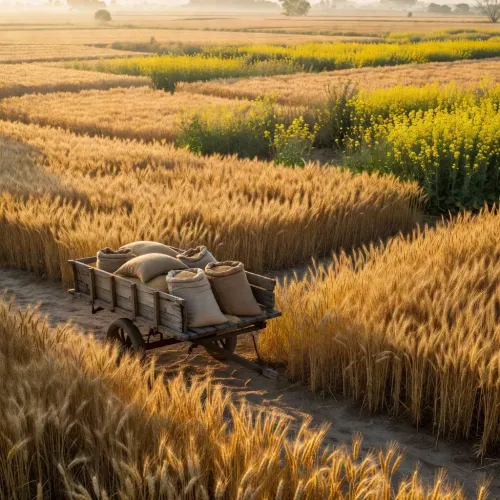
Wheat, barley, mustard, gram, and lentils are among the principal Rabi crops whose producers now have a guaranteed price floor for the 2027-28 marketing season. The Commission for Agricultural Costs and Prices (CACP), the statutory body that recommends MSP levels by analysing production costs, input prices, and market trends, feeds its recommendations into the Cabinet process each year before the sowing window opens.
A policy that predates independence-era economics
India's MSP regime for Rabi crops is one of the oldest instruments of agricultural policy, running continuously since the 1960s — initially anchored to wheat procurement and gradually expanding to six major winter crops. The annual pre-sowing approval has been maintained across successive governments, making it one of the few farm-support mechanisms with genuine bipartisan institutional continuity.
The Food Corporation of India (FCI), along with state procurement agencies, operationalises these prices by purchasing eligible crops at MSP during the harvest season, building buffer stocks that feed the public distribution system and stabilise national foodgrain reserves.
What procurement watchers will track next
With the MSP now set, attention shifts to execution. The real test of any MSP cycle is not the Cabinet announcement but the procurement volumes that follow — whether FCI and state agencies actually reach farmers at the mandi level and whether effective price realisation matches the declared floor. Wheat and mustard growers in states like Punjab, Haryana, Madhya Pradesh, and Rajasthan will be watching procurement operations closely when the 2027-28 harvest arrives.
The Cabinet's pre-sowing approval keeps the government on its traditional policy timeline — giving farmers the certainty they need before the October-November planting window closes.
Point of View
Surviving multiple governments because it directly anchors farmer income expectations before the planting window. For the Modi Cabinet, timely approval signals administrative intent to maintain procurement commitments, especially as farm income and food inflation remain sensitive political variables. The real policy stress-test, however, lies downstream: whether FCI's procurement machinery and state agencies translate the approved floor price into actual market access for small and marginal farmers. Persistent gaps between declared MSP and effective price realisation remain the central unresolved tension in India's farm support architecture.
NationPress
30 Sept 2026
Frequently Asked Questions
What is MSP for Rabi crops and how does it work?
Minimum Support Price (MSP) for Rabi crops is a government-guaranteed floor price for winter crops like wheat, mustard, barley, and gram. The Cabinet approves these prices before the sowing season so farmers know the minimum they will receive when they sell to government procurement agencies.
Which crops are covered under Rabi MSP in India?
Major Rabi crops covered under MSP include wheat, barley, gram (chickpea), masur (lentil), rapeseed and mustard, and safflower. India's overall MSP framework covers 23 crops across Kharif and Rabi seasons.
Who decides the MSP rates for Rabi crops?
The Commission for Agricultural Costs and Prices (CACP), a statutory body under the Ministry of Agriculture, recommends MSP levels each year. The Union Cabinet then formally approves the rates before the sowing season begins.
What is the role of FCI in Rabi MSP procurement?
The Food Corporation of India (FCI), along with state government agencies, procures Rabi crops — primarily wheat — at the declared MSP from farmers. This procurement builds national buffer stocks used for the public distribution system and food security operations.
When was MSP for Rabi crops 2027-28 approved?
The Union Cabinet approved MSP for Rabi crops for Marketing Season 2027-28 on September 30, 2026, as confirmed by Union Minister Dr. Jitendra Singh in an official post on X.