Shekhawat Hails Cabinet's Rabi MSP Hike for 2027–28
Synopsis
The Union Cabinet approved Minimum Support Price hikes for six rabi crops for marketing season 2027–28. Safflower leads with ₹675 per quintal, mustard gets ₹413, and wheat ₹25. Union Minister Gajendra Singh Shekhawat highlighted the direct benefit for Rajasthan's Marwar wheat and mustard farmers.
Key Takeaways
Six rabi crops received MSP hikes for the 2027–28 marketing season in a Cabinet decision welcomed on 30 September 2026 .
Safflower (kusum) recorded the largest single increase at ₹675 per quintal , signalling a push to boost domestic oilseed output.
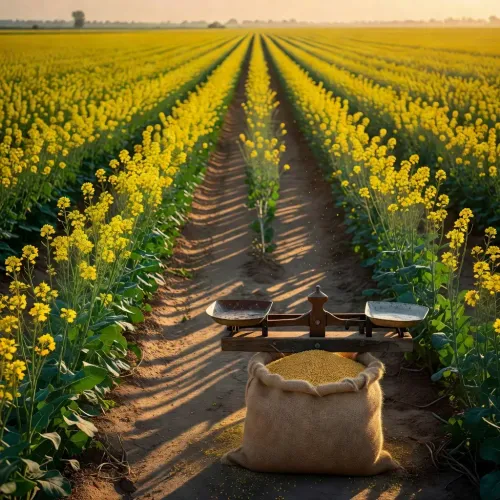
Mustard MSP rose by ₹413 per quintal and wheat by ₹25 per quintal — directly benefiting Rajasthan's Marwar farming belt.
Lentil (masoor) got a ₹390 per quintal hike; barley rose ₹136 ; gram rose ₹83 .
The MSP mechanism sets a government floor price for notified crops, with procurement by FCI and state agencies when market prices fall below it.
Actual impact will depend on procurement volumes and payment timelines once the 2027–28 marketing season begins.
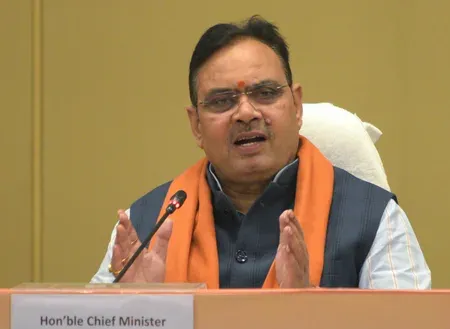
Before a single seed goes into the ground for the coming rabi season, the Union Cabinet has moved to reset the price floor — and for farmers in Rajasthan's Marwar belt, the numbers are hard to ignore. Union Culture and Tourism Minister Gajendra Singh Shekhawat on Wednesday, 30 September 2026, welcomed the Cabinet's approval of Minimum Support Price hikes across six rabi crops for the 2027–28 marketing season, calling it a decisive step toward making farming more rewarding for India's cultivators.
Six crops, six hikes — and one that towers above the rest
The Cabinet approved increases across the full basket of notified rabi crops. Wheat — the season's anchor crop — gets a hike of ₹25 per quintal. Barley rises by ₹136, gram (chana) by ₹83, and lentil (masoor) by ₹390 per quintal. Two oilseeds lead the pack: mustard (sarson) climbs by ₹413 per quintal, while safflower (kusum) records the single largest jump of the lot — ₹675 per quintal.
That safflower figure is the headline number. It signals a deliberate push to shore up oilseed cultivation at a time when domestic edible-oil import dependence remains a live policy concern. The government's logic is straightforward: if the floor price is attractive enough, acreage follows.
Why Marwar farmers are watching the mustard and wheat lines closely
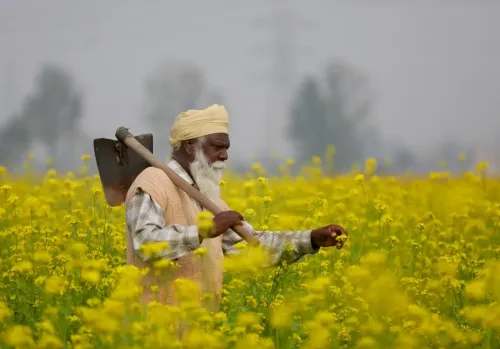
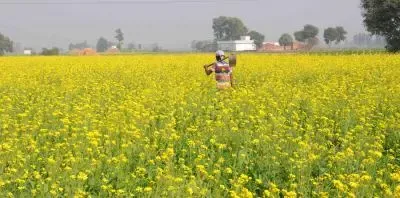
Shekhawat, the Lok Sabha MP from Jodhpur, was pointed about the regional dividend. Rajasthan's Marwar districts are among the country's most significant producers of both wheat and mustard — two crops that together define the rabi calendar in the region. A combined boost of ₹25 on wheat and ₹413 on mustard translates directly into improved realisation per quintal at the mandi gate.
In his post, Shekhawat described the hike as honouring the hard work of farmers — 'kisanon ke parishram ka samman' (respect for the toil of farmers) — and framed it as part of Prime Minister Narendra Modi's sustained effort to make agriculture more profitable and empowering.
MSP as a policy instrument: what the mechanism actually does
The Minimum Support Price is a government-declared floor price for notified crops. When market prices fall below the MSP, procurement agencies — chiefly the Food Corporation of India and state-level bodies — step in to buy at the declared rate, preventing distress sales. The Cabinet Committee on Economic Affairs, acting on recommendations from the Commission for Agricultural Costs and Prices (CACP), approves revisions ahead of each sowing window so farmers can factor the price signal into planting decisions.
Since 2014, the central government has maintained a policy of year-on-year MSP increases for rabi crops, and a 2015–16 budget commitment set a benchmark of MSP at least 50 percent above the cost of production for notified crops — a benchmark that successive revisions have referenced.
The real test, as always, will come when the marketing season opens: whether procurement machinery moves fast enough and payment reaches farmers on time. Announcement and delivery are two different harvests.
Point of View
But the scale of the safflower and mustard hikes suggests a dual objective: placating farmer constituencies ahead of potential state elections while nudging acreage toward oilseeds to reduce import dependence. For Shekhawat, framing the decision through a Marwar lens is deliberate constituency management — Jodhpur's agricultural hinterland runs heavily on wheat and mustard. The broader policy arc, however, hinges on whether procurement infrastructure can match the price signal; historically, the gap between announced MSP and effective realisation has been the sharpest criticism of the mechanism.
NationPress
30 Sept 2026
Frequently Asked Questions
What is the MSP hike for wheat in 2027–28?
The Cabinet approved an increase of ₹25 per quintal in the Minimum Support Price for wheat for the 2027–28 marketing season.
Which rabi crop got the highest MSP increase for 2027–28?
Safflower (kusum) received the largest hike at ₹675 per quintal , the highest among all six rabi crops revised for the 2027–28 season.
What is the MSP hike for mustard in 2027–28?
The MSP for mustard (sarson) was increased by ₹413 per quintal for the 2027–28 marketing season.
How does MSP work for rabi crops in India?
The Minimum Support Price is a government-declared floor price for notified crops. If market prices fall below the MSP, agencies like the Food Corporation of India procure the crop at the declared rate to protect farmers from distress sales.
Why did Gajendra Singh Shekhawat highlight the MSP hike for Rajasthan farmers?
As the Lok Sabha MP from Jodhpur , Shekhawat noted that Rajasthan's Marwar region is a major producer of wheat and mustard — two crops that received significant MSP hikes — making the revision directly beneficial for farmers in his constituency.