Rabi MSP hike 2027-28: Rajasthan farmers relieved as CCEA raises safflower rate by ₹675/quintal

Synopsis
With Rajasthan's monsoon falling short and Rabi sowing season around the corner, the Centre's MSP hike for six crops — led by a ₹675/quintal jump in safflower and ₹413/quintal for mustard — has offered farmers a rare cushion. For a state that produces a large share of India's mustard, the timing is as political as it is agricultural.
Key Takeaways
The CCEA , chaired by PM Narendra Modi , approved Rabi MSP hikes for six crops for the 2027-28 marketing season on 1 October 2026 .
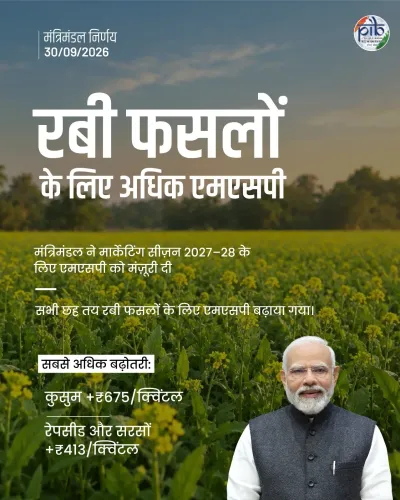
Safflower received the highest hike at ₹675 per quintal ; rapeseed and mustard rose by ₹413 per quintal .
Lentil (Masur) up ₹390/quintal , barley up ₹136/quintal , gram up ₹83/quintal , wheat up ₹25/quintal .
Farmers in Jodhpur and Churu , Rajasthan, cited rainfall deficit as a key concern the hike partially addresses.
Higher input costs — fertilisers, manure, fuel — were a primary reason farmers welcomed the revision.
The Cabinet Committee on Economic Affairs (CCEA), chaired by Prime Minister Narendra Modi, on 1 October 2026 approved a hike in the Minimum Support Price (MSP) for six major Rabi crops for the 2027-28 marketing season, bringing relief to farmers in Rajasthan who have been battling a rainfall deficit this year. The decision has been welcomed particularly by mustard, chana, and wheat growers across the state.
Key MSP Increases Announced
The Centre announced the steepest hike for safflower, at ₹675 per quintal, followed by rapeseed and mustard at ₹413 per quintal. Lentil (Masur) received an increase of ₹390 per quintal, while barley was raised by ₹136 per quintal, gram by ₹83 per quintal, and wheat by ₹25 per quintal, according to an official statement from the government.
Farmers Respond: Relief After a Difficult Kharif Season
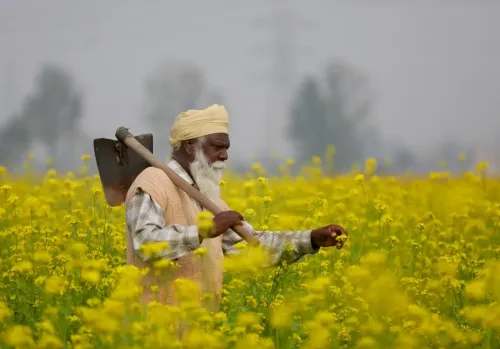
In Jodhpur, a farmer primarily engaged in mustard and chana cultivation said the MSP revision addresses some of the anxiety caused by below-normal monsoon rains. 'We are majorly into mustard and chana cultivation. If the sale of these crops increases, we will be able to benefit from the increase in the hike in MSP for Rabi crops,' he said. He noted that chana sowing had been lower than usual this season due to the rainfall deficit, but expressed hope that stronger mustard prices would compensate.
Another farmer from Jodhpur pointed out that the revision would help offset rising input costs. 'It will definitely benefit farmers,' he said, adding that the hike would cover expenditure on fertilisers, manure, petrol, and diesel.
In Churu, a farmer said the announcement provided direct relief to those anxious about the patchy monsoon. 'Farmers who were worried with deficit rainfall can now heave a sigh of relief. This hike in MSP (for Rabi crops) will be extremely helpful,' he said. A fourth farmer highlighted the significance of the wheat and jowar MSP increase, saying earnings that were 'negligible' earlier would now improve meaningfully.
Why the Hike Matters This Year
Rajasthan, one of India's largest producers of mustard and gram, has seen uneven monsoon distribution in 2026, compressing Kharif output and raising anxiety ahead of the Rabi sowing season, which begins in October–November. The MSP revision is designed to encourage farmers to plant Rabi crops despite input cost inflation and weather-related uncertainty. Notably, the hike in rapeseed and mustard prices is significant given that Rajasthan accounts for a disproportionate share of national mustard output — any supply disruption from the state carries price implications at the national level.
Policy Context and What Comes Next
The CCEA has maintained that MSP revisions are intended to ensure remunerative prices that cover the cost of production with a reasonable margin. Critics, however, have long argued that MSP announcements have limited impact unless backed by robust procurement infrastructure, particularly in states where private mandis dominate trade. Farmers will now watch whether state government procurement agencies in Rajasthan are adequately capitalised to buy at the revised support prices once harvests arrive in early 2027.
Point of View
The relief farmers are expressing today will evaporate at the mandi gate. The disproportionately small wheat hike — just ₹25 per quintal — also risks disappointing the crop that covers the largest sown area in the country. The real accountability test will come in February and March 2027 when wheat and mustard harvests hit the market.
NationPress
1 Oct 2026
Frequently Asked Questions
What is the MSP hike announced for Rabi crops in 2027-28?
The CCEA approved MSP increases for six Rabi crops for the 2027-28 marketing season on 1 October 2026. The hikes range from ₹25 per quintal for wheat to ₹675 per quintal for safflower.
Which Rabi crop received the highest MSP increase?
Safflower received the steepest hike at ₹675 per quintal, followed by rapeseed and mustard at ₹413 per quintal, according to the official government statement.
Why are Rajasthan farmers particularly relieved by this MSP hike?
Rajasthan experienced a rainfall deficit during the 2026 monsoon season, reducing Kharif crop yields and raising input costs. Farmers in Jodhpur and Churu said the MSP revision, especially for mustard, partially offsets the income loss from the weather disruption.
What are the MSP increases for wheat and gram?
Wheat MSP was raised by ₹25 per quintal and gram (chana) by ₹83 per quintal for the 2027-28 marketing season, according to the official CCEA announcement.
When will farmers benefit from the new Rabi MSP rates?
The revised MSP applies to the 2027-28 marketing season. Rabi crops sown from October–November 2026 will be harvested around February–April 2027, when procurement at the new support prices is expected to begin.