Cabinet Clears ITMS for 42 Traffic Corridors: Giriraj Singh
Synopsis
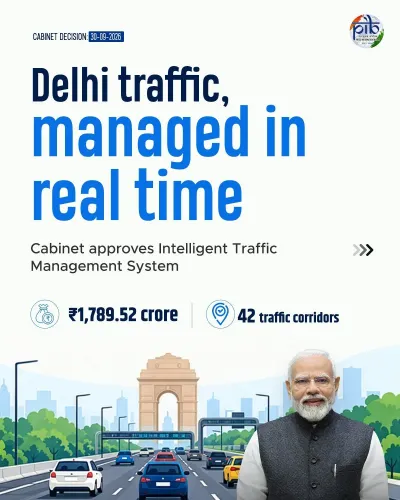
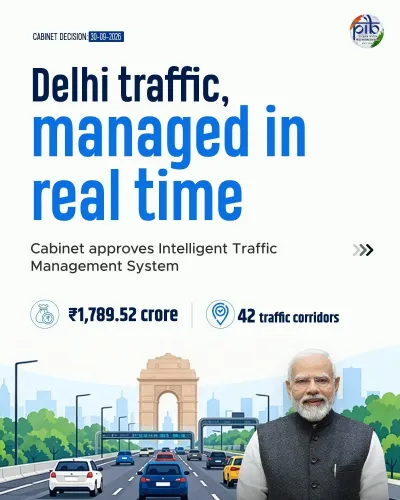
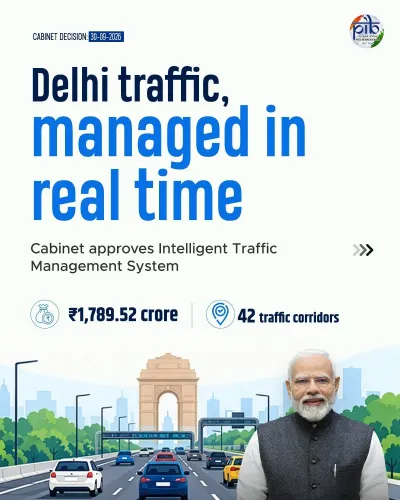
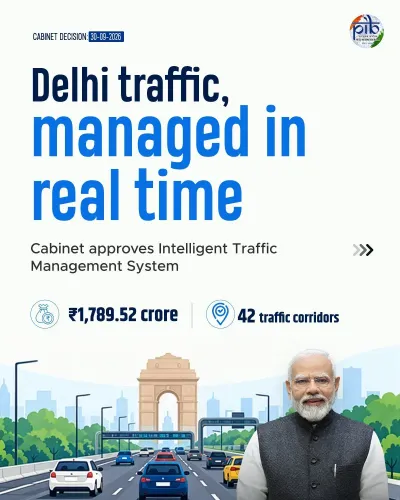
The Union Cabinet has approved the Intelligent Traffic Management System (ITMS) for 42 traffic corridors, to be implemented in three phases over 24 months with five years of operations and maintenance — extending India's decade-long smart-city mobility push to a larger national scale.
Key Takeaways
The Union Cabinet approved the Intelligent Traffic Management System (ITMS) on September 30, 2026 .
Deployment will cover 42 traffic corridors across three phases completed within 24 months .
A dedicated five-year operations-and-maintenance period follows the build-out.
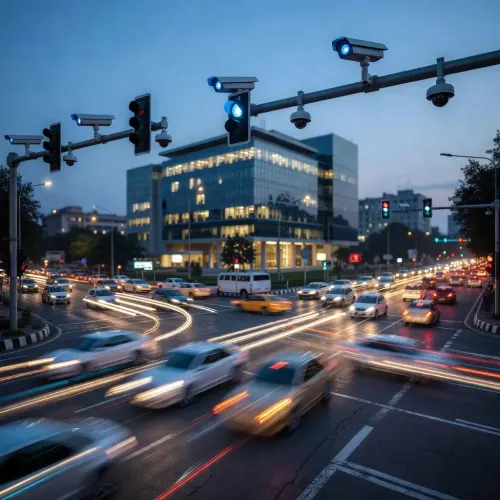
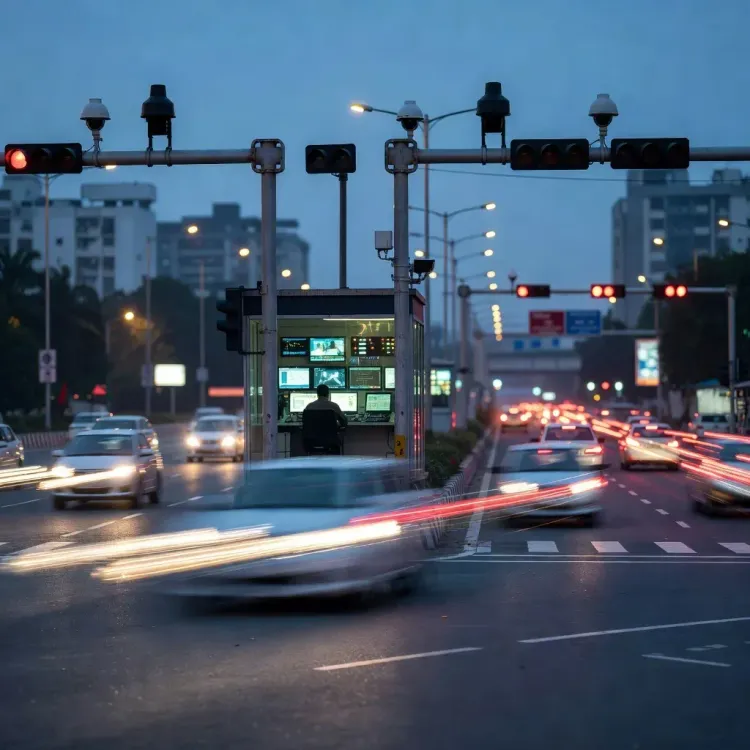
ITMS uses sensors, cameras and data analytics for adaptive traffic signal control and violation detection.
The scheme extends the technology-enabled urban mobility push initiated under the Smart Cities Mission of 2015 .
Urban commuters and municipal authorities are the primary beneficiaries of the phased rollout.
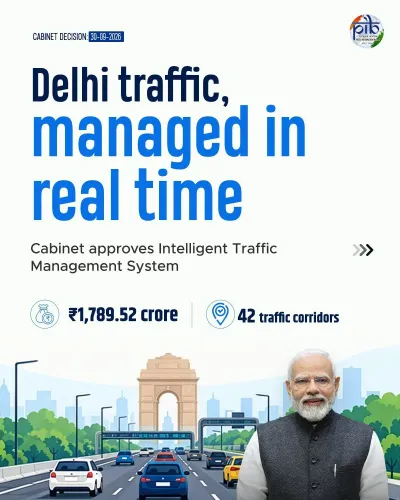
India's roads are about to get a technological upgrade. The Union Cabinet has approved an Intelligent Traffic Management System (ITMS) that will be rolled out across 42 traffic corridors in three phases over 24 months, followed by five years of operation and maintenance — a move Union Textiles Minister Giriraj Singh flagged as a major step toward safer, smoother urban mobility on Wednesday, September 30, 2026.
What the Cabinet approved — and what it means on the ground
Singh shared the announcement on X, writing in Hindi: 'यातायात व्यवस्था को अधिक सुरक्षित और सुगम बनाने की दिशा में बड़ा कदम' — 'A major step toward making traffic management safer and more convenient.' The Cabinet's green light covers ITMS deployment in three structured phases across 42 corridors, with a dedicated five-year operations-and-maintenance window once the build-out is complete.
ITMS platforms typically integrate sensors, high-resolution cameras, and real-time data analytics to monitor traffic flow, detect violations, and enable adaptive signal control. The idea is straightforward: replace human guesswork at busy intersections with continuous machine intelligence.
Smart Cities lineage — a decade-long push now scaling up
The approval does not come out of nowhere. India's Smart Cities Mission, launched in 2015, embedded early pilots of intelligent traffic technology into selected urban areas as part of integrated command-and-control centres. What the Cabinet has now cleared appears to be a significantly larger, corridor-level extension of that logic — moving from isolated city experiments to a standardised, multi-corridor framework.
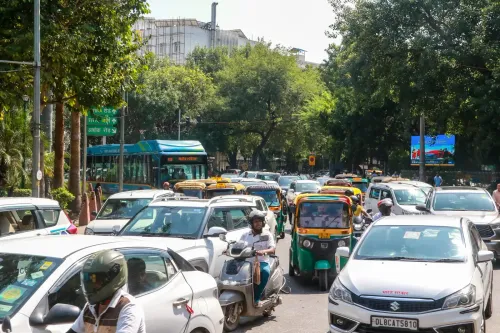
Urban congestion has a direct economic cost: lost productivity, elevated accident rates, fuel burn, and pollution. A technology layer that smooths intersections and feeds municipal authorities live data can chip away at all four simultaneously. That dual promise — safety and efficiency — is why governments worldwide have backed ITMS investments over the past decade.
Three phases, 42 corridors, five years of upkeep
The phased structure is deliberate. Splitting the rollout into three tranches over 24 months lets implementers absorb lessons from early corridors before scaling to the full network. The long-tail five-year maintenance commitment signals that the government intends this as infrastructure, not a one-time pilot — and it places accountability squarely with the central framework rather than leaving upkeep to cash-strapped municipal bodies.
Urban commuters and city administrations are the immediate stakeholders. For the millions of Indians who navigate gridlocked roads daily, the proof will arrive at the first intersection where a sensor-driven signal actually cuts a queue. The phased timeline gives the public — and policymakers — clear milestones to watch.
Forty-two corridors. Three phases. Five years to make it stick. The Cabinet has drawn the blueprint; the next 24 months will test whether execution matches ambition.
Point of View
Scaling what the Smart Cities Mission piloted into a standardised, multi-city corridor programme. The three-phase structure and five-year maintenance lock-in are politically notable: they shift accountability from municipal bodies — perennially underfunded — to the central framework, reducing the risk of half-built infrastructure. For the BJP, a visible and measurable improvement in daily commutes ahead of the urban-voter calculus is precisely the kind of ground-level governance win the party has sought to project. The real test, however, is execution fidelity across 42 diverse corridors and whether state governments align their own infrastructure spending with the new system.
NationPress
30 Sept 2026
Frequently Asked Questions
What is the Intelligent Traffic Management System (ITMS) approved by the Cabinet?
ITMS is a technology-driven system using sensors, cameras and data analytics to monitor and manage traffic flow in real time. The Union Cabinet approved its deployment across 42 traffic corridors in three phases over 24 months, followed by five years of operation and maintenance.
Which corridors will get ITMS and when will work begin?
The Cabinet approval covers 42 traffic corridors to be developed in three phases within 24 months. Specific corridor names have not yet been officially announced in the public domain.
How is ITMS connected to India's Smart Cities Mission?
India's Smart Cities Mission, launched in 2015, included early pilots of intelligent traffic management in select urban centres. The new ITMS approval scales that approach to a standardised, corridor-based national framework.
What does the five-year maintenance clause mean for Indian cities?
The five-year operations and maintenance commitment means the central government will retain responsibility for keeping the ITMS functional after deployment, reducing dependence on often under-resourced municipal budgets.
Who announced the Cabinet's ITMS approval?
Union Textiles Minister Giriraj Singh, a senior BJP leader and Lok Sabha MP from Begusarai, Bihar, shared the Cabinet's ITMS approval on X on September 30, 2026, calling it a major step toward safer and more convenient traffic management.