Rijiju: Cabinet clears ₹1,789 cr AI traffic system for Delhi
Synopsis
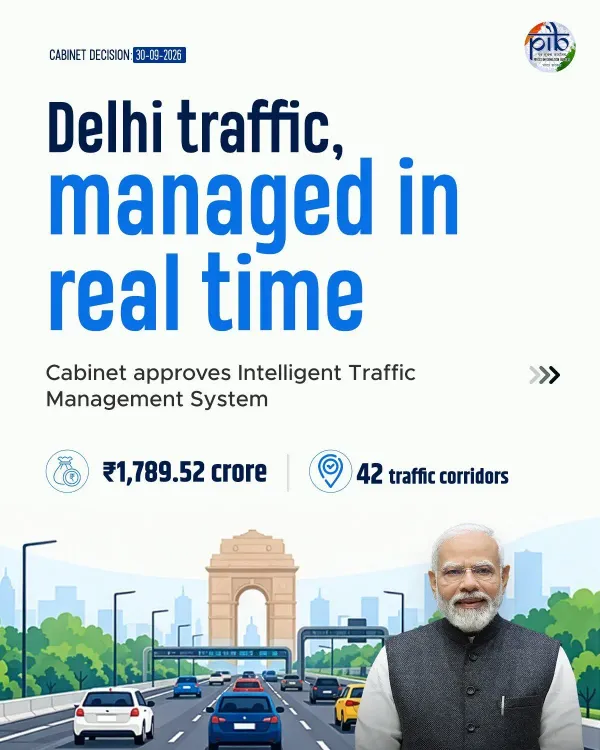
The Union Cabinet has approved ₹1,789.52 crore for an AI-enabled Intelligent Traffic Management System across 42 key Delhi corridors. The ITMS will deploy adaptive signals, real-time congestion management, ambulance priority movement, and technology-based enforcement — marking the most ambitious single-city intelligent traffic deployment under India's urban modernisation push.
Key Takeaways
The Union Cabinet approved ₹1,789.52 crore for an AI-enabled Intelligent Traffic Management System (ITMS) for Delhi.
The system will cover 42 key traffic corridors across the national capital.
Features include adaptive traffic signals , real-time congestion management, ambulance priority movement , and technology-based enforcement.
The approval builds on the Smart Cities Mission (launched 2015) and extends a central government pattern of AI-sensor deployments in major metros.
Key next steps include the tendering process , corridor-by-corridor implementation timelines, and integration with Delhi Traffic Police systems.
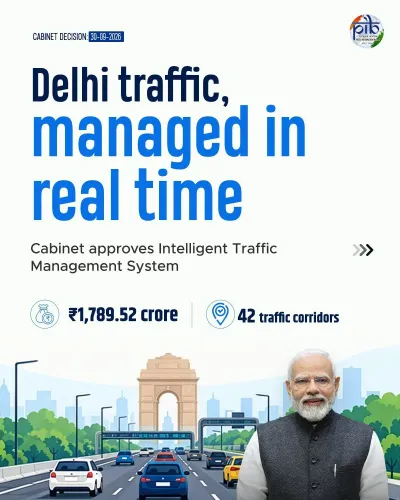
Delhi's gridlocked arteries are about to meet their match. Union Parliamentary Affairs Minister Kiren Rijiju announced on Wednesday, 30 September 2026 that the Union Cabinet, led by Prime Minister Narendra Modi, has approved ₹1,789.52 crore for an AI-enabled Intelligent Traffic Management System (ITMS) covering 42 key traffic corridors across the national capital.
What the ₹1,789.52 crore ITMS will actually do on Delhi's roads
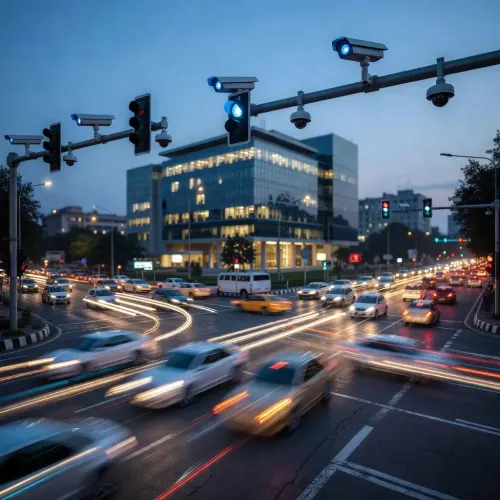
The system is far more than a signal upgrade. At its core, ITMS deploys adaptive traffic signals that read live vehicle density and adjust green-light durations in real time — cutting the stop-and-wait cycles that bleed minutes from every Delhi commute. Real-time congestion management feeds data across the 42 corridors simultaneously, allowing the network to reroute pressure before jams calcify. Two features stand out for immediate public impact. First, ambulance priority movement: the system detects emergency vehicles and clears signal sequences ahead of them — a capability that can directly translate into lives saved in a city where response-time delays have long been a documented problem. Second, technology-based enforcement replaces the inconsistency of manual policing with camera and sensor-driven violation detection, making rule-following the path of least resistance.The Smart Cities lineage behind this Cabinet call
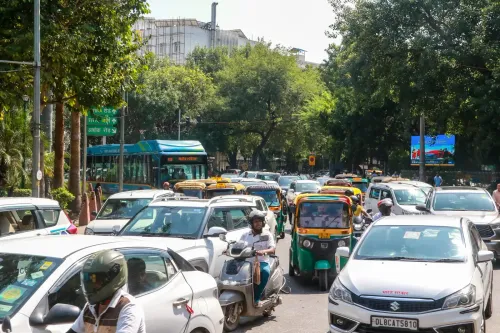
This approval does not arrive in a vacuum. The Smart Cities Mission, launched in 2015, seeded technology-enabled traffic management components in selected urban centres and built the institutional appetite — and the vendor ecosystem — for exactly this kind of AI-sensor deployment. Comparable intelligent traffic projects have since been sanctioned or rolled out in other major metros under central urban development frameworks. Delhi, as the National Capital Region's nerve centre, represents the highest-stakes test case: a city of tens of millions of daily commuters, a dense overlay of state and central jurisdiction over roads and policing, and chronic congestion that costs the economy measurable hours every day. Bringing 42 corridors under a single AI-managed umbrella is the most ambitious single-city ITMS footprint announced under this policy arc.Tendering, timelines and the Delhi Traffic Police integration question
The Cabinet approval is the starting gun, not the finish line. The immediate watch-points are the tendering process — which will determine which technology partners build and operate the system — and the implementation timeline corridor by corridor. Crucially, how the new ITMS integrates with Delhi Traffic Police's existing command-and-control infrastructure will define whether the system performs as a unified intelligent network or as parallel, siloed layers. For Delhi's commuters, emergency responders, and the central government's urban mobility ambitions, the answer to that integration question will matter more than the headline figure. An AI system that talks to itself but not to the officers on the ground is an expensive dashboard. The real test begins at the first adaptive signal that actually moves an ambulance through.Point of View
But a 42-corridor commitment with a four-figure crore price tag. It signals that the centre is willing to fund hard technology deployments in Delhi even as jurisdictional tensions with the city administration persist, using Cabinet-level clearance to drive the agenda. The ambulance-priority feature is politically smart: it frames a technocratic project in life-saving terms, broadening its public legitimacy beyond commuter convenience. Whether the system delivers on that promise will hinge on implementation quality and inter-agency coordination — the perennial gap between Indian infrastructure announcements and outcomes.
NationPress
30 Sept 2026
Frequently Asked Questions
What is the Intelligent Traffic Management System approved for Delhi?
The ITMS is an AI-enabled system approved by the Union Cabinet for ₹1,789.52 crore that will cover 42 key traffic corridors in Delhi, deploying adaptive signals, real-time congestion management, ambulance priority movement, and technology-based enforcement.
How much money has the Cabinet approved for Delhi's ITMS?
The Union Cabinet has approved ₹1,789.52 crore for the AI-enabled Intelligent Traffic Management System for Delhi.
How many corridors will Delhi's new traffic management system cover?
The ITMS will cover 42 key traffic corridors across Delhi.
Will the new Delhi traffic system help ambulances reach faster?
Yes. One of the ITMS's core features is ambulance priority movement, where the system detects emergency vehicles and clears signal sequences ahead of them to reduce response times.
How does Delhi's ITMS relate to the Smart Cities Mission?
The Smart Cities Mission, launched in 2015, promoted technology-enabled traffic management in selected cities and built the policy and vendor ecosystem that underpins large-scale ITMS deployments like the one now approved for Delhi.