CM Rekha Gupta Hails ₹1,789 Cr AI Traffic Overhaul for Delhi
Synopsis
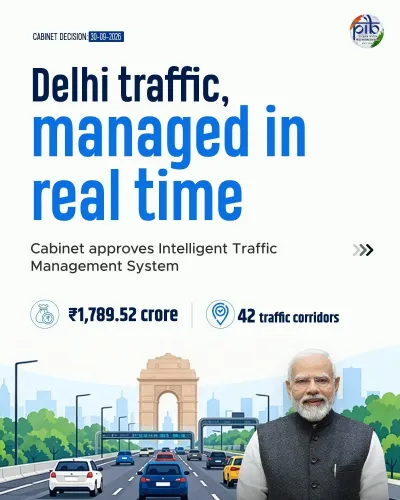
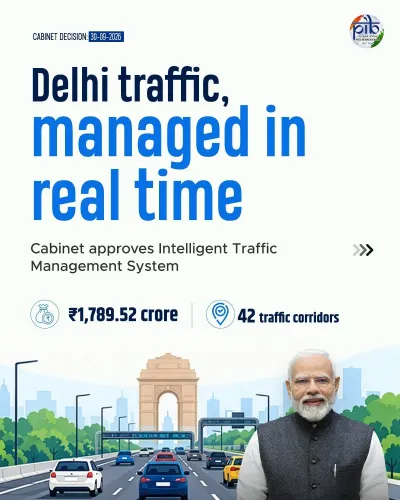
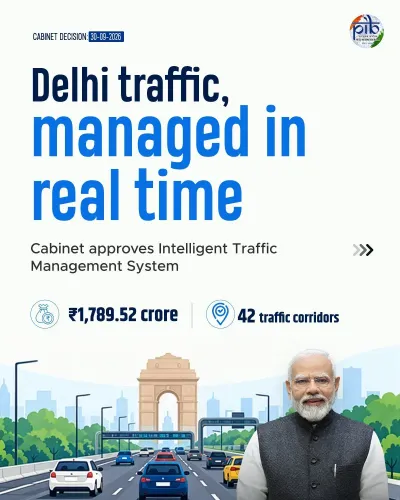
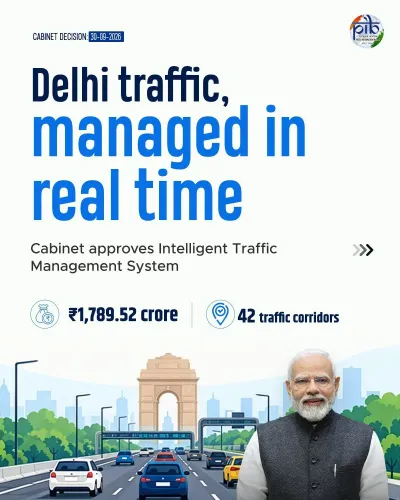
The Union Cabinet, chaired by PM Narendra Modi, has approved ₹1,789.52 crore for an AI-powered Intelligent Traffic Management System across 42 major Delhi corridors. Delhi CM Rekha Gupta hailed the decision, highlighting benefits for daily commuters and emergency vehicle response times.
Key Takeaways
₹1,789.52 crore approved by the Union Cabinet for Delhi's AI-powered Intelligent Traffic Management System.
The system will cover 42 major corridors across the national capital.
Key features include real-time congestion reduction, smoother commutes, faster incident response, and priority passage for ambulances .
The approval was made at a Cabinet meeting chaired by Prime Minister Narendra Modi .
The project extends a decade-long arc of central government investment in Delhi's transport infrastructure, rooted in the Smart Cities Mission (2015) .
Successful implementation could serve as a replication model for other major Indian cities.
A single Cabinet decision could soon change the daily calculus of millions of Delhi commuters — and potentially save lives in the process. Delhi Chief Minister Rekha Gupta on Wednesday, 30 September 2026 welcomed the Union Cabinet's approval of ₹1,789.52 crore for an AI-powered Intelligent Traffic Management System (ITMS) covering 42 major corridors across the national capital.
What ₹1,789 crore buys Delhi's roads
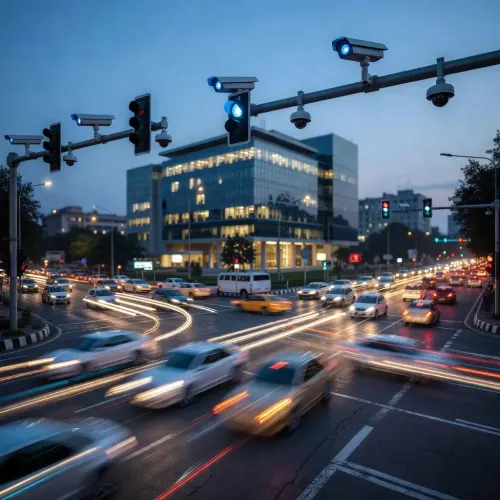
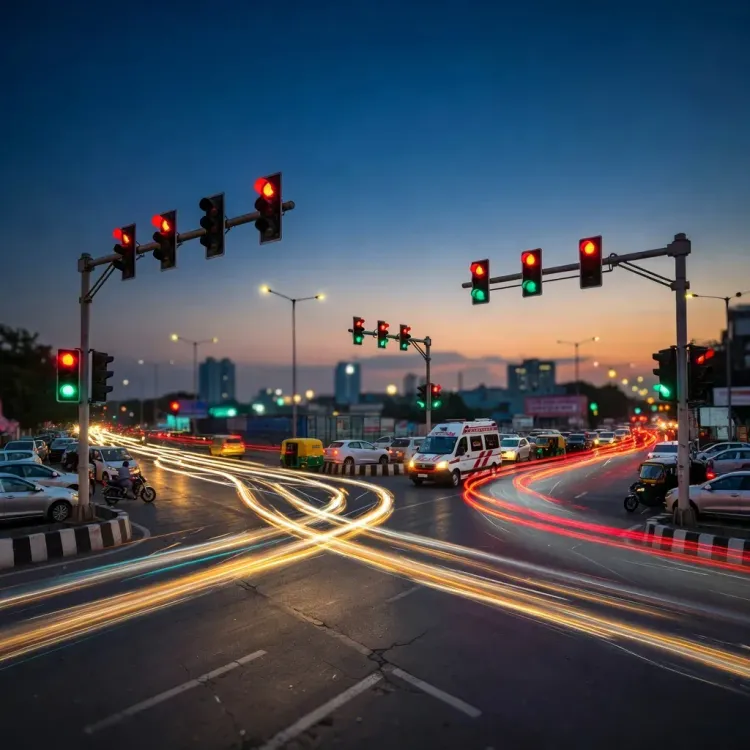
The approved system is not a cosmetic upgrade. According to CM Gupta's post, the ITMS is designed to reduce congestion across the city's busiest arterial corridors, smooth out daily commutes, and — critically — guarantee priority passage for ambulances. In a city where peak-hour gridlock can stretch emergency response times by critical minutes, that last feature alone carries enormous weight.
The Cabinet meeting was chaired by Prime Minister Narendra Modi, whose government has positioned AI-led urban infrastructure as a pillar of India's smart-city ambitions. Gupta offered 'heartfelt gratitude' to the Prime Minister, calling the investment 'significant' for Delhi's future and pledging that it would make the capital's roads 'smarter, journeys safer and precious time more secure.'
From Smart Cities to AI corridors — a decade-long arc
The approval lands on a foundation built over the past decade. India's Smart Cities Mission, launched in 2015, seeded technology-based traffic solutions in select urban centres. Central funding for Delhi's transport network has followed a consistent pattern since — each tranche targeting measurable gains in commute efficiency or public-safety response. The ITMS approval represents the most ambitious single-project investment in that lineage for the capital.
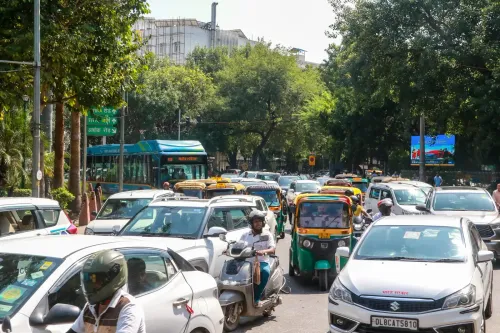
Delhi's chronic congestion is not a new story — the city routinely ranks among the world's most traffic-clogged capitals. What changes with AI-driven management is the system's ability to respond dynamically: adjusting signal cycles in real time, detecting incidents faster, and routing emergency vehicles through the noise. The 42-corridor footprint suggests the project is designed for city-wide impact, not a pilot-scale experiment.
What comes next — implementation and the replication question
The immediate watch point is the phased rollout and how seamlessly the new system integrates with Delhi's existing traffic infrastructure — cameras, signals, and command centres already in place. Urban planners and commuters alike will be tracking whether the promised gains in journey times and emergency response actually materialise on the ground.
Beyond Delhi, the project carries a template question: if AI traffic management delivers at scale in the national capital, the pressure to replicate it in Mumbai, Bengaluru, Chennai, and other gridlocked metros will be hard to resist. A ₹1,789.52 crore proof-of-concept in Delhi could quietly set the blueprint for how India's cities manage movement in the years ahead.
For now, the signal is green — and the clock is running.
Point of View
800 crore for Delhi's AI traffic system is both a governance signal and a political one — the BJP-led Centre and BJP-led Delhi government are visibly aligned on a high-visibility urban infrastructure push ahead of what remains a competitive political landscape in the capital. The ambulance-priority feature is a smart framing choice: it transforms a technocratic project into a life-and-death narrative that resonates across voter demographics. More broadly, this fits a Modi-era pattern of deploying AI and digital infrastructure as proof-points of 'new India' governance — with Delhi, as the national showcase city, always first in line. The real test will be execution speed and measurable commute-time data, which will determine whether this becomes a replicable model or another ambitious announcement.
NationPress
30 Sept 2026
Frequently Asked Questions
What is the AI Intelligent Traffic Management System approved for Delhi?
It is an AI-powered traffic management project approved by the Union Cabinet with a budget of ₹1,789.52 crore , designed to cover 42 major corridors in Delhi to reduce congestion, improve commute times, and prioritise emergency vehicles like ambulances.
How much money has been approved for Delhi's traffic management system?
The Union Cabinet has approved ₹1,789.52 crore for the AI-powered Intelligent Traffic Management System in Delhi.
Who approved the Delhi AI traffic system and when?
The Union Cabinet , chaired by Prime Minister Narendra Modi , approved the project. Delhi CM Rekha Gupta announced the decision on 30 September 2026 .
How will the Delhi AI traffic system help ambulances?
The system is designed to provide priority passage for ambulances by dynamically managing signal cycles and traffic flow, potentially reducing emergency response times in the capital.
Will Delhi's AI traffic management system be replicated in other cities?
There is no formal announcement yet, but urban planners are watching Delhi's implementation closely. A successful rollout could serve as a blueprint for similarly congested cities like Mumbai , Bengaluru , and Chennai .