Cabinet Clears AI Traffic System for 42 Delhi Corridors
Synopsis
The Union Cabinet has approved an Intelligent Traffic Management System for Delhi, deploying AI-based adaptive signals, real-time monitoring, and tech-driven enforcement across 42 major traffic corridors — a significant step in India's urban technology push.
Key Takeaways
The Union Cabinet approved the Intelligent Traffic Management System (ITMS) for Delhi on 30 September 2026 .
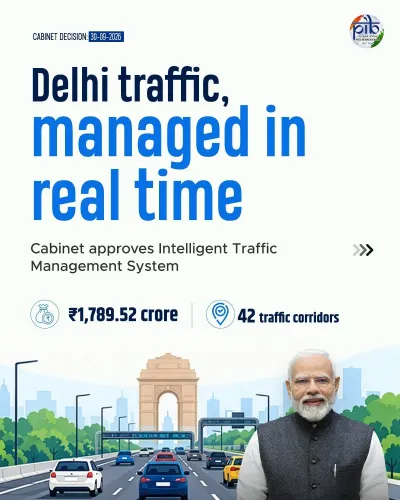
42 major traffic corridors across Delhi will be covered under the system.
The ITMS includes AI-based adaptive traffic signals , real-time traffic monitoring , and technology-driven enforcement .
The initiative aims to make Delhi's traffic flow more smooth, safe, and efficient.
Successful deployment could serve as a replicable model for other Indian metros.
Coordination with Delhi Traffic Police and a phased corridor rollout will be critical to on-ground impact.
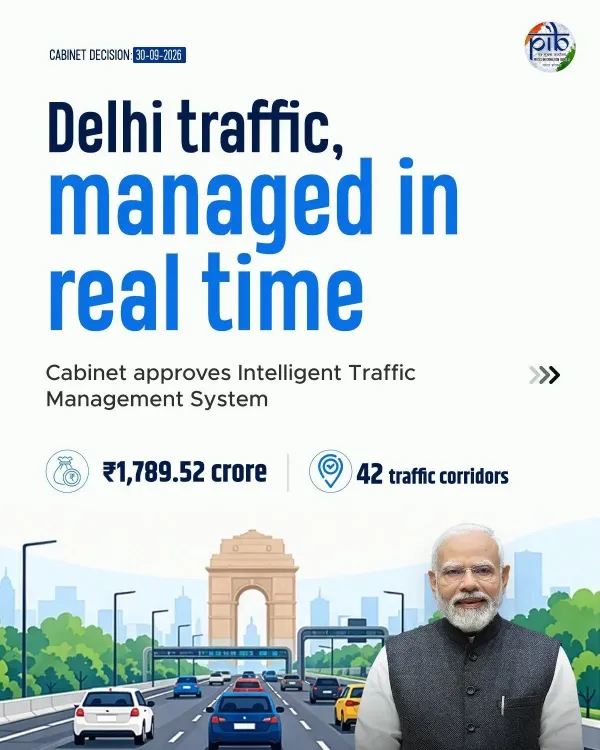
Delhi's gridlocked streets just got a high-tech reckoning. Union Agriculture Minister Shivraj Singh Chouhan announced on Wednesday, 30 September 2026 that the Union Cabinet, under Prime Minister Narendra Modi, has approved the rollout of an Intelligent Traffic Management System (ITMS) across the national capital — a sweeping AI-first overhaul targeting 42 major traffic corridors.
Chouhan shared the decision on X, writing: 'आदरणीय प्रधानमंत्री श्री नरेन्द्र मोदी जी के नेतृत्व में आज केंद्रीय कैबिनेट ने दिल्ली में इंटेलिजेंट ट्रैफिक मैनेजमेंट सिस्टम (ITMS) लागू करने को मंजूरी दी है' — 'Under the leadership of respected Prime Minister Shri Narendra Modi, the Union Cabinet today approved the implementation of an Intelligent Traffic Management System (ITMS) in Delhi.'
What the ITMS will actually do across Delhi's 42 corridors
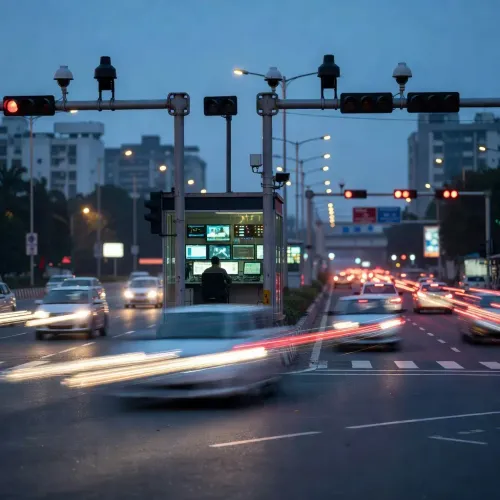
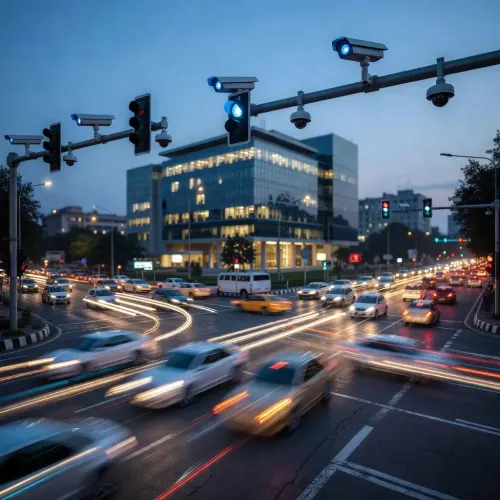
The system rests on three pillars: AI-based adaptive traffic signals, real-time traffic monitoring, and technology-driven enforcement. Unlike conventional fixed-timer signals, AI-adaptive signals read live vehicle density and adjust green-red cycles on the fly — cutting unnecessary wait times and easing arterial congestion.
Real-time monitoring means traffic control rooms can spot pile-ups, accidents, or signal failures the moment they happen and reroute flows before small jams compound into city-wide snarls. The enforcement layer — likely camera-based detection of red-light violations, wrong-side driving, and overspeeding — closes the gap between rule-making and rule-following that has long plagued Delhi's roads.
Delhi's congestion problem, and why 42 corridors matter
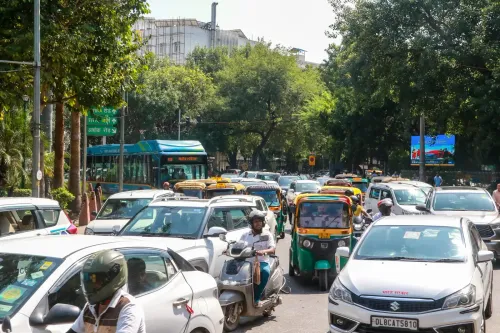
Delhi consistently ranks among the world's most congested cities. Its traffic load is compounded by a sprawling road network, multiple entry highways, and inter-state commuter pressure from the National Capital Region. Targeting 42 key corridors is a surgical play — these are the arteries whose free flow (or failure) sets the tempo for the entire city's movement.
The central government has steadily pushed technology integration into urban services — from smart city missions to digital public infrastructure — and this cabinet decision extends that arc directly into daily commuter experience. A phased rollout across the corridors, and seamless coordination with Delhi Traffic Police, will be the operational test that determines whether the approval translates into tangible relief on the ground.
The bigger picture: AI in India's urban infrastructure push
This is not an isolated signal upgrade. It reflects a deliberate central-government posture: deploy AI where it can reduce human-error-driven inefficiency at scale. Traffic management is a high-visibility, daily-life domain — the kind where citizen experience either validates or undercuts governance narratives. Getting 42 corridors right in Delhi would create a replicable template for other metros watching closely.
The watch items now are the phased deployment timeline, the agencies responsible for maintenance and data governance, and how the system integrates with Delhi's existing traffic infrastructure. A cabinet approval is the starting gun — what follows the green light will define the race.
Point of View
Measurable relief to Delhi commuters carries outsized significance given the capital's political weight. The real test, however, lies in execution: India's smart city initiatives have often stalled at the approval-to-implementation gap. How quickly the 42 corridors go live — and how robustly they perform — will determine whether this becomes a policy success story or another ambitious blueprint awaiting ground truth.
NationPress
30 Sept 2026
Frequently Asked Questions
What is the Intelligent Traffic Management System (ITMS) approved for Delhi?
The ITMS is an AI-enabled traffic system approved by the Union Cabinet for Delhi, covering 42 major corridors with adaptive traffic signals, real-time monitoring, and technology-based enforcement to reduce congestion and improve road safety.
How many traffic corridors will be covered under Delhi's ITMS?
The system will cover 42 major traffic corridors across Delhi.
How do AI-based adaptive traffic signals work?
AI-based adaptive signals use live vehicle density data to dynamically adjust signal timings — extending green phases where traffic is heavy and shortening them where roads are clear — instead of running on fixed pre-set timers.
Who announced the Delhi ITMS cabinet approval?
Union Agriculture Minister Shivraj Singh Chouhan announced the cabinet decision on X, attributing the approval to the leadership of Prime Minister Narendra Modi .
When was the ITMS for Delhi approved by the Union Cabinet?
The Union Cabinet approved the ITMS for Delhi on 30 September 2026 .