CM Bhajan Lal walks Jawahar Circle, pushes Fit Rajasthan
Synopsis
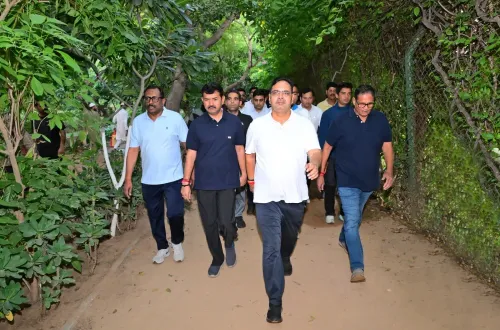
Rajasthan Chief Minister Bhajan Lal Sharma joined citizens at Jaipur's Jawahar Circle for a morning walk on 14 November 2026, championing PM Modi's Fit India Movement and calling on residents to adopt a healthy lifestyle under the state's own 'Fit Rajasthan' pledge.
Key Takeaways
Rajasthan CM Bhajan Lal Sharma conducted a morning walk at Jawahar Circle, Jaipur on 14 November 2026 .
Prem Bairwa accompanied the Chief Minister at the event.
Sharma encouraged youth, women, senior citizens, and skating children, connecting the outing to PM Modi's Fit India Movement (launched 29 August 2019 ).
The Chief Minister urged citizens to include yoga, exercise, and sports in their daily routines.
Sharma invoked the state-level 'Fit Rajasthan' goal, mirroring Fit India branding adopted by other BJP-governed states.
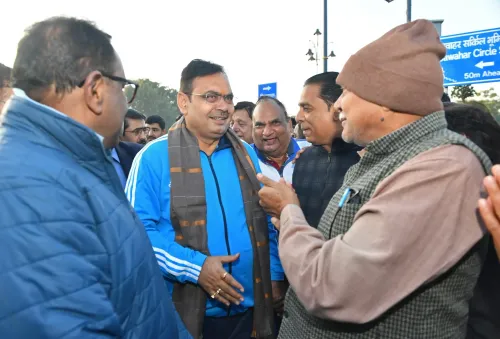
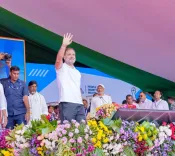
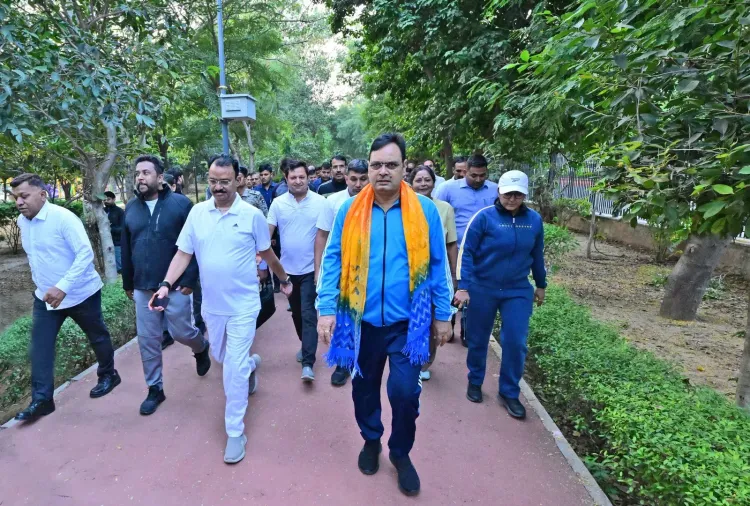
Before the city of Jaipur had fully woken up on Saturday, 14 November 2026, Rajasthan Chief Minister Bhajan Lal Sharma was already at Jawahar Circle — cheering on skating children, trading old memories with long-time morning-walk companions, and carrying a simple, pointed message: get moving, stay healthy.
Sharma shared warmth with youth, women, and senior citizens during the early-morning outing, posting photographs of the interaction on X. Deputy Chief Minister Dr. Prem Bairwa was at his side throughout the event, lending the occasion a touch of governmental weight without turning it into a formal ceremony.
Fit India reaches Jaipur's most-loved park
Jawahar Circle — a sprawling, garden-ringed roundabout in south Jaipur that doubles as one of the city's most popular public promenades — provided an apt backdrop. Sharma used the gathering to amplify Prime Minister Narendra Modi's Fit India Movement, the flagship national fitness campaign launched on 29 August 2019 to make exercise, yoga, and sports a daily habit for every Indian.
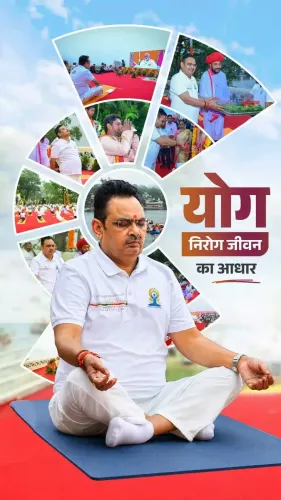
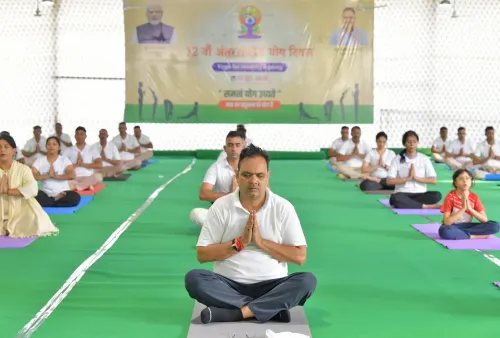
Urging citizens to take charge of their own health, the Chief Minister called on residents to weave 'yog, vyayam evam khelkood' (yoga, exercise, and sports) into their daily routines. 'A healthy body and a positive mind are the foundation of a healthy and empowered society,' he said.
'Fit Rajasthan' — the state's own fitness compact
The morning walk was more than a photo opportunity. Sharma explicitly framed the outing around a state-level commitment he is calling 'Fit Rajasthan' — a local adaptation of the national Fit India template that the Rajasthan BJP government has been weaving into its public-health messaging. Other BJP-governed states have pursued similar branding exercises, but Rajasthan's version draws directly on the state's large youth population and an expanding network of public parks and sports facilities.
The appeal to senior citizens at the event was equally deliberate. With India's older population growing rapidly, integrating them into mainstream fitness culture — rather than treating exercise as a youth-only pursuit — signals a broader public-health intent.
Children skating in the background were not incidental; Sharma paused to encourage them directly, a small but visible moment of the state's top leader connecting fitness culture to the youngest generation in real time. That image — a Chief Minister cheering on a child on skates at dawn — is precisely the kind of soft-power outreach that travels fast on social media and even faster in a neighbourhood.
With the Fit Rajasthan banner now firmly planted, the question is what institutional shape it takes next — and whether dedicated state programmes, yoga camps, or community sports leagues emerge to give the slogan lasting legs.
Point of View
High-visibility piece of public-health soft power — the kind of on-ground engagement that lets a government claim active ownership of a central scheme while building a distinct state identity around it. Branding the moment as 'Fit Rajasthan' is tactically astute: it aligns Jaipur with New Delhi's flagship Fit India narrative while giving the state BJP a deliverable it can amplify on its own terms. With Deputy CM Bairwa present, the optics also signal internal cohesion ahead of what could be a busy legislative calendar. The real test, however, is whether the slogan outlasts the morning walk and finds expression in funded programmes, infrastructure, or measurable state health outcomes.
NationPress
14 Nov 2026
Frequently Asked Questions
What is the Fit India Movement?
The Fit India Movement is a national fitness campaign launched by Prime Minister Narendra Modi on 29 August 2019 to encourage every Indian to make physical activity, yoga, and sports a part of daily life.
What is 'Fit Rajasthan'?
'Fit Rajasthan' is a state-level health and fitness initiative championed by CM Bhajan Lal Sharma , aligning Rajasthan's public-health messaging with the central government's Fit India Movement.
Where is Jawahar Circle in Jaipur?
Jawahar Circle is a large, garden-ringed roundabout in south Jaipur and one of the city's most popular spots for morning walks and community recreation.
What did CM Bhajan Lal Sharma say at Jawahar Circle?
Sharma urged citizens to incorporate yoga, exercise, and sports into their daily routines, stating that 'a healthy body and a positive mind are the foundation of a healthy and empowered society,' and called on everyone to participate in building a 'Fit Rajasthan'.