Cabinet Clears ITMS for 42 Delhi Traffic Corridors
Synopsis
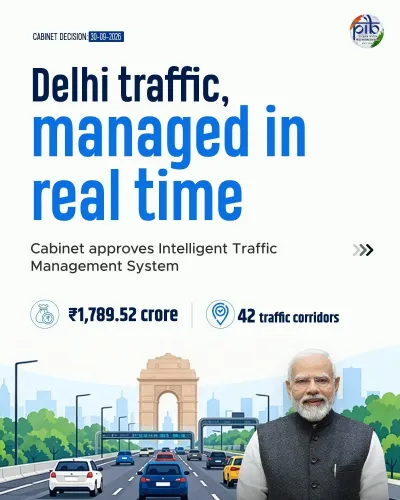
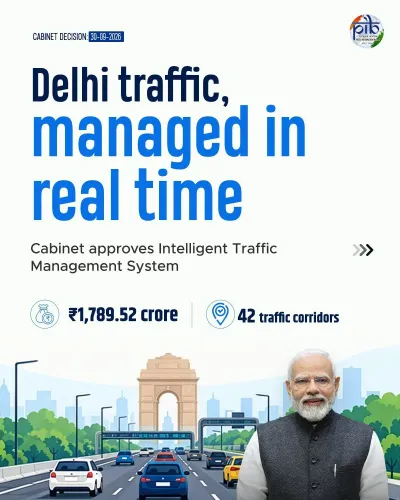
The Union Cabinet has approved the Intelligent Traffic Management System for 42 identified corridors in Delhi, enabling real-time traffic, route, and parking information for commuters while prioritising emergency vehicle movement through coordinated signal control.
Key Takeaways
The Union Cabinet has approved implementation of an Intelligent Traffic Management System (ITMS) for Delhi.
The system will cover 42 identified traffic corridors across the national capital.
Commuters will receive real-time information on traffic conditions, route diversions, and parking availability.
Emergency vehicles will be given signal priority for faster clearance through corridors.
The decision builds on India's broader push for digital urban mobility solutions, connected to the Smart Cities Mission launched in 2015.
Effective rollout across all 42 corridors and measurable impact on emergency response times remain the key milestones to watch.
Delhi's gridlocked roads are about to get a technological overhaul. Union Petroleum Minister Hardeep Singh Puri announced on Wednesday, September 30, 2026 that the Union Cabinet has approved the implementation of an Intelligent Traffic Management System (ITMS) across 42 identified traffic corridors in the national capital — promising real-time information for commuters and faster clearance for emergency vehicles.
Posting in Hindi on X, Puri described it as 'another major decision of the Union Cabinet,' noting that modern technology would be deployed to improve traffic management across the designated stretches. The system will give commuters riyaल-taim jaankari (real-time information) on traffic conditions, route diversions, and parking availability. Crucially, it will also give emergency vehicles — ambulances, fire trucks, police — priority clearance through the corridors.What ITMS Will Actually Do on Delhi's Roads
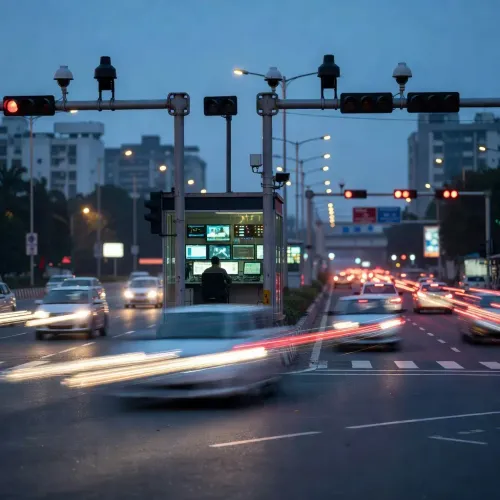
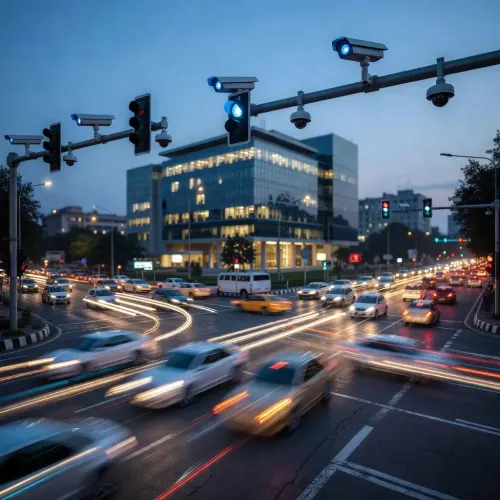
The Intelligent Traffic Management System is not a single gadget — it is a networked platform that integrates sensors, cameras, and data analytics to monitor and direct traffic flow in real time. For a Delhi commuter, that means knowing before you leave home whether the stretch ahead is moving or choked, and getting a live alternate route suggestion rather than discovering the jam at the intersection.
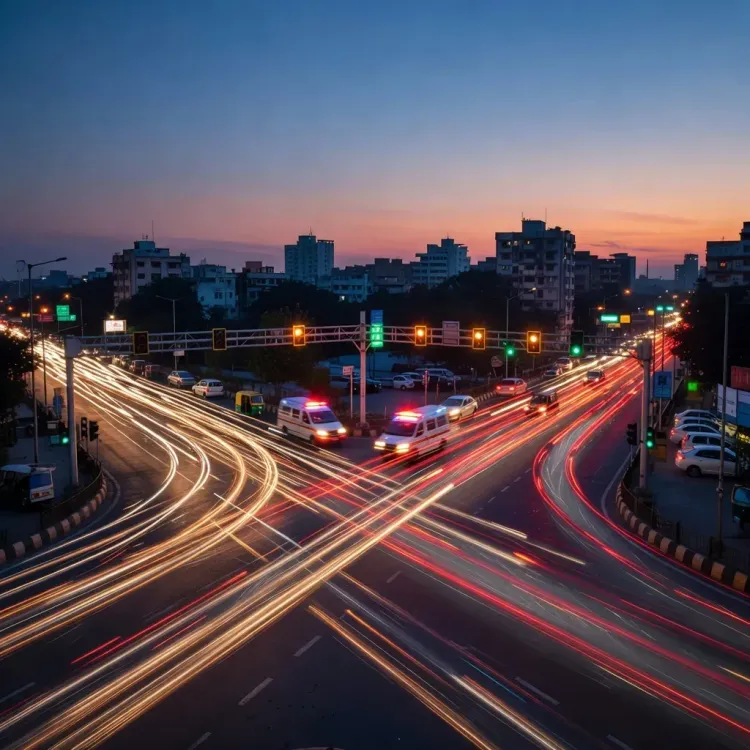
For emergency services, the stakes are higher still. Every minute lost in traffic is a minute lost to a patient or a fire. ITMS can trigger coordinated signal changes along a corridor to create a green corridor for an ambulance — a capability that modern cities from Singapore to Stockholm treat as baseline infrastructure, not an upgrade.
Delhi's Congestion Problem and the Smart Cities Thread
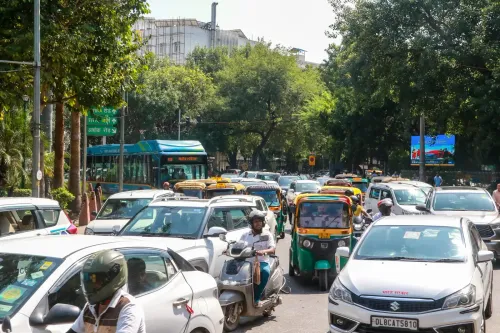
Delhi's traffic is a numbers problem with human consequences. The city consistently ranks among the world's most congested capitals, with daily commute delays that compound into economic and health costs. Intelligent traffic management was part of the Smart Cities Mission framework launched in 2015, which seeded similar technology pilots in select cities. This Cabinet decision marks a significant push to scale that approach specifically for the national capital's arterial network.
The decision also fits India's broader pattern of deploying digital systems to solve legacy urban infrastructure problems — from unified payment rails to urban surveillance networks. 42 corridors is a substantial footprint; if implemented effectively, the data generated will itself become a planning asset for Delhi's transport authorities.
The Watch: From Approval to Asphalt
Cabinet approvals are the starting gun, not the finish line. The real test will be the pace and quality of rollout across all 42 corridors, the integration with existing traffic police operations, and whether the system's real-time data actually reaches commuters through accessible interfaces. The measured impact on emergency response times will be the most consequential metric to watch.
Delhi has seen technology promises outpace delivery before. But with Cabinet-level endorsement and a defined corridor map, the scaffolding for accountability is at least now in place.
Point of View
A visible technology upgrade in the national capital carries political salience, particularly as Delhi residents continue to rank traffic and pollution among their sharpest daily grievances. The emergency vehicle priority feature is the most defensible pillar of the project, since its impact is both measurable and difficult to oppose. The harder question — whether implementation will match the announcement — will define whether this becomes a genuine governance win or another stalled smart-city pledge.
NationPress
30 Sept 2026
Frequently Asked Questions
What is the Intelligent Traffic Management System approved for Delhi?
The ITMS is a networked platform using sensors, cameras, and data analytics to manage traffic flow in real time across 42 identified corridors in Delhi. It will provide commuters with live updates on traffic, route diversions, and parking, and give emergency vehicles signal priority.
How many traffic corridors will be covered under Delhi's ITMS?
The Cabinet has approved ITMS implementation across 42 identified traffic corridors in Delhi.
How will ITMS help ambulances and emergency vehicles in Delhi?
The system will grant priority clearance to emergency vehicles by coordinating traffic signals along a corridor to create a green passage, reducing response time for ambulances, fire trucks, and police.
Who announced the Cabinet decision on Delhi ITMS?
Union Minister Hardeep Singh Puri announced the Cabinet approval on X on September 30, 2026, under the hashtag #CabinetDecisions.
Is Delhi's ITMS connected to the Smart Cities Mission?
Yes, intelligent traffic management was a component of the Smart Cities Mission launched in 2015. The Delhi ITMS approval represents a scaled-up, dedicated push for the national capital's corridor network.