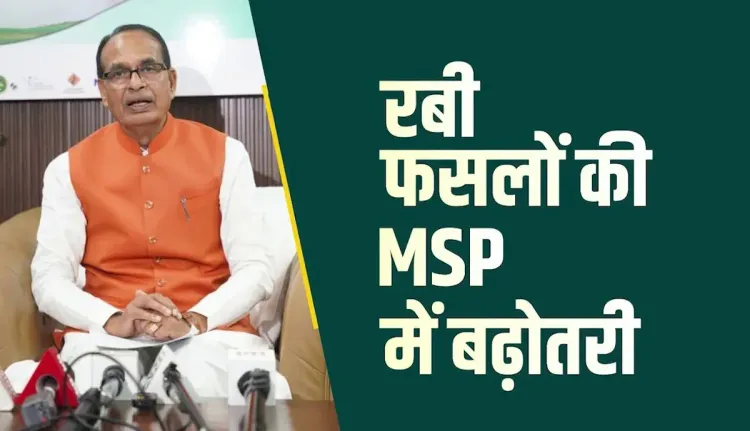
Shivraj Singh Chouhan announces MSP hike for Rabi crops
Synopsis
Union Agriculture Minister Shivraj Singh Chouhan announced on 30 September 2026 that MSP for Rabi crops has been raised under the government's farmer-friendly policy, aiming to guarantee fair prices to producers ahead of the sowing season.
Key Takeaways
Union Agriculture Minister Shivraj Singh Chouhan announced a hike in MSP for Rabi crops on 30 September 2026 .
The move is framed under the government's farmer-welfare policy to ensure fair prices at harvest.
MSP (Minimum Support Price) is a government-guaranteed floor price set seasonally by the Cabinet Committee on Economic Affairs .
Since 2018 , the government has committed to fixing MSP at a minimum of 1.5 times the cost of production for major crops.
Rabi crops — including wheat, mustard, gram, and lentils — are sown in October-November and harvested in spring.
Crop-wise rates and exact percentage increases are yet to be officially notified and will be watched closely by farmers, mandis, and state procurement agencies.
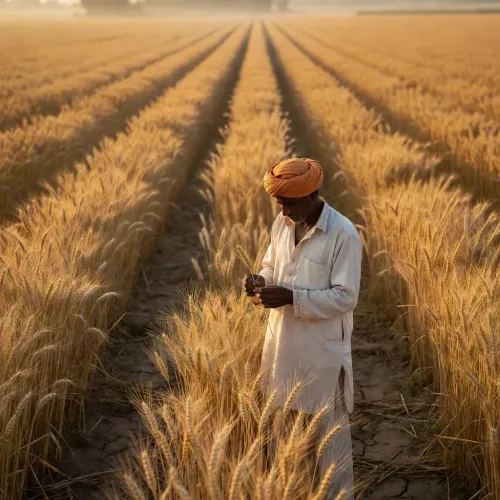
Every season, millions of Indian farmers plant their Rabi crops — wheat, mustard, gram — and wait. What they get paid at harvest can mean the difference between dignity and debt. Union Agriculture Minister Shivraj Singh Chouhan on Wednesday, 30 September 2026 announced that the government has raised the Minimum Support Price for Rabi crops under its farmer-welfare policy framework, posting the update on X.
In his post, Chouhan wrote: 'Kisan hitaishi niti ke tahat kisanon ko theek daam dilane ke liye Rabi faslon ki MSP badhai gayi hai' — 'Under the farmer-friendly policy, MSP for Rabi crops has been increased to ensure farmers receive fair prices.' The announcement signals the government's seasonal commitment to price support ahead of the Rabi sowing window.
What MSP means for a Rabi farmer
The Minimum Support Price is a government-guaranteed floor price for specified crops, announced each season by the Cabinet Committee on Economic Affairs. It is the single most consequential number in a smallholder farmer's annual calendar — the price below which the government, in principle, will not let the market fall. Without it, price crashes at harvest time can wipe out an entire season's labour.
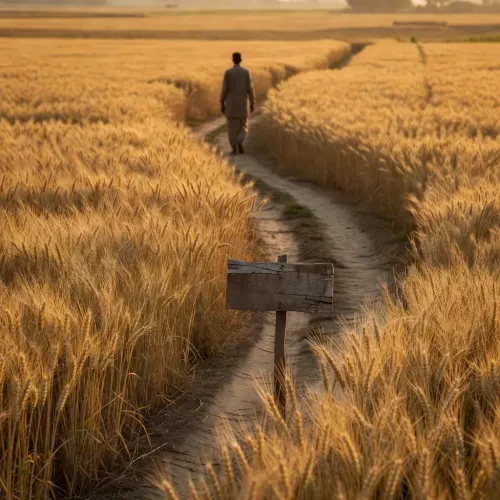
Rabi crops — sown in October-November and harvested in spring — include staples like wheat, mustard, gram, and lentils. A hike in their MSP directly affects tens of millions of farming households across states like Madhya Pradesh, Punjab, Haryana, Rajasthan, and Uttar Pradesh.
A policy promise rooted in 2018
The political backdrop matters. In 2018, the central government committed to fixing MSP at a minimum of 1.5 times the cost of production for major crops — a benchmark that has since anchored every annual revision. Successive governments have used seasonal MSP announcements as both an economic instrument and a political signal to the farm sector.
Chouhan, a four-term former Chief Minister of Madhya Pradesh, has built his political identity around agrarian outreach. His tenure in Madhya Pradesh was marked by flagship farmer-support schemes, and he carries that brand into his current portfolio as Union Minister of Agriculture and Rural Development.
What the announcement does not yet tell us
The post does not specify crop-wise rates or the exact percentage of increase — details that typically emerge from the official Cabinet Committee notification. Those granular figures are what procurement agencies, mandis, and state governments will be watching closely. Until the full rate-card is public, farmers and traders will be calculating in the dark.
The announcement, however, sets the political tone: the government is framing the MSP revision as a pro-farmer act of policy, not merely a routine bureaucratic update. For Rabi sowing season 2026-27, that framing will matter as much as the numbers themselves.
The harvest will come. The real test is whether the declared MSP translates into actual procurement on the ground — and that story begins now.
Point of View
However, is the absence of crop-wise rate details: without those numbers, the announcement functions more as a political signal than an actionable policy update. Analysts will be watching whether the declared MSP translates into real procurement on the ground, which has historically been the weakest link in India's price-support architecture.
NationPress
30 Sept 2026
Frequently Asked Questions
What is MSP and why does it matter for farmers?
MSP, or Minimum Support Price, is a government-guaranteed floor price for specified crops. It protects farmers from market price crashes at harvest time and is announced seasonally by the Cabinet Committee on Economic Affairs.
Which crops are covered under Rabi MSP?
Rabi crops typically covered under MSP include wheat, mustard, gram (chickpea), lentils, and barley. These are sown in October-November and harvested in the spring months.
What did Shivraj Singh Chouhan announce on 30 September 2026?
Union Agriculture Minister Shivraj Singh Chouhan announced that the government has raised the Minimum Support Price for Rabi crops under its farmer-welfare policy, to ensure farmers receive fair prices at harvest.
What is the government's formula for calculating MSP?
Since 2018, the central government has committed to fixing MSP at a minimum of 1.5 times the cost of production for major crops, a benchmark that anchors every annual revision.
Where can farmers find the exact crop-wise MSP rates for Rabi 2026-27?
Detailed crop-wise MSP rates are officially notified by the Cabinet Committee on Economic Affairs. Farmers and traders should watch for the official government notification, which will carry the precise figures for each Rabi crop.