Pradhan writes to Odisha CM on highway truck parking menace
Synopsis
Union Education Minister Dharmendra Pradhan has written to Odisha CM Mohan Majhi demanding strict enforcement against illegal parking of heavy vehicles on mining-belt highways, invoking Supreme Court directives and the Odisha State Highways Authority Act, 2025, and recommending corporate liability and District Road Safety Task Forces.
Key Takeaways
Union Education Minister Dharmendra Pradhan wrote to Odisha CM Mohan Majhi on October 15, 2026 over rising highway accidents.
The letter targets illegal parking of commercial and heavy vehicles on national and state highways in Odisha's mining and industrial belts.
Pradhan cited Supreme Court directives and the Odisha State Highways Authority Act, 2025 as existing legal tools the state can deploy immediately.
He recommended strict fines and imprisonment for drivers, transporters, and mining companies, plus corporate liability for logistical mismanagement.
Regular review through District Road Safety Task Forces was specifically proposed as an enforcement mechanism.
Both Pradhan and CM Majhi are BJP leaders, making the inter-governmental channel cooperative and direct.
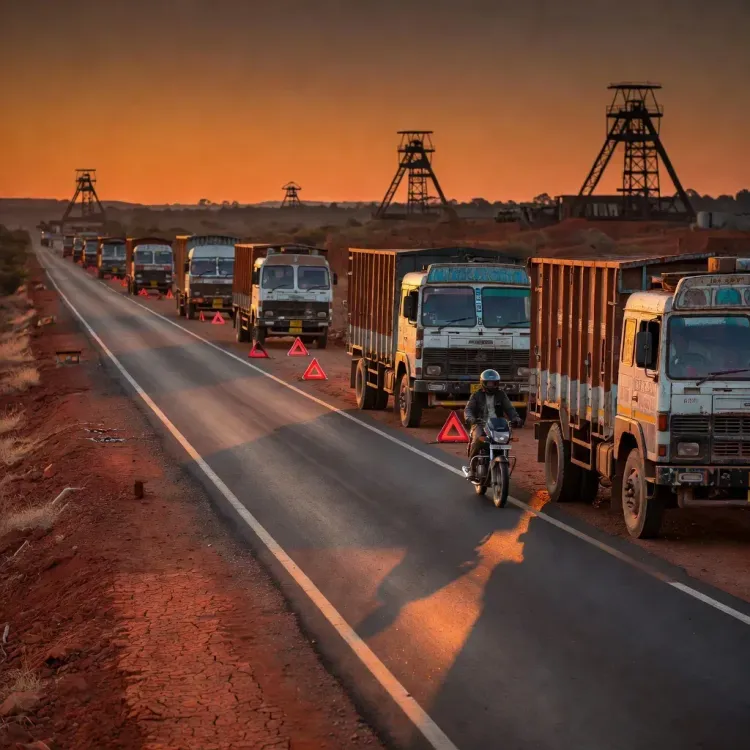
Every year, mineral-rich Odisha's national and state highways turn lethal — not just from speed, but from darkness and a stationary hazard: illegally parked commercial trucks and heavy vehicles outside mine gates and industrial zones. Union Education Minister Dharmendra Pradhan has written to Odisha Chief Minister Mohan Majhi on Thursday, October 15, 2026, urging immediate enforcement action to arrest the rising toll of road accidents caused by this unchecked practice.
What Pradhan flagged — and what he's asking the state to do
In his letter, Pradhan specifically called out illegal parking of commercial and heavy vehicles on national and state highways running through Odisha's key mining and industrial belts. The problem, he argued, is not a regulatory gap — the tools already exist. He cited Supreme Court directives on traffic enforcement and the 'Odisha State Highways Authority Act, 2025' as giving the state government 'firm legal powers' to act decisively.
His recommendations are concrete and multi-pronged. First, strict enforcement of fines and imprisonment provisions against mining and industrial companies, transporters, and drivers found in violation. Second, imposition of corporate liability on firms whose logistical failures push vehicles onto highway shoulders. Third, regular review of enforcement through District Road Safety Task Forces — a mechanism Pradhan wants activated systematically across the affected districts.
Why Odisha's mining corridors are a highway hazard hotspot
Odisha sits atop a vast mineral wealth — iron ore, coal, bauxite, manganese — and the heavy freight traffic that feeds its steel and aluminium industries is enormous. Districts like Keonjhar, Sundargarh, Jharsuguda, and Angul see constant movement of overloaded trucks on two-lane and four-lane highways that were not always designed for this volume. When these vehicles park overnight or during shift changes along the highway shoulder — often without reflectors or tail lights — they become near-invisible collision traps, particularly in fog-prone winters.
Road accident fatalities in India's mineral belt highways have been a recurring concern in state road safety data, and the pattern of corporate logistics mismanagement — where companies schedule more trips than their dedicated parking and loading bays can handle — effectively offloads the risk onto public roads.
The corporate liability push: a sharper edge to the demand
The most pointed element of Pradhan's letter is the push for corporate liability. Rather than treating illegal parking as purely a driver or transporter offence, he is asking the state to hold the mining and industrial companies themselves accountable when their logistics operations overflow onto highways. This is a meaningful escalation: it moves the enforcement lever from individuals, who are often daily-wage workers, to the boardrooms that control fleet management decisions.
Pradhan's position as a senior BJP leader from Odisha — he has been MP from Sambalpur and has deep roots in the state's western industrial districts — gives this letter both political weight and local specificity. The letter goes to a BJP Chief Minister in Mohan Majhi, elected in 2024, which means the political channel is cooperative rather than adversarial. The question is whether the state machinery translates the recommendation into enforcement on the ground.
If Majhi's government activates the District Road Safety Task Forces and invokes the 2025 Highways Authority Act's penalty provisions, Odisha's mining corridors could become a national test case for corporate accountability in road safety. The legal scaffolding, Pradhan says, is already in place — it just needs to be used.
Point of View
He insulates the demand from easy deflection: the legal infrastructure already exists, making inaction a political choice rather than a capacity gap. For CM Majhi, responding visibly would demonstrate early governance credibility in the state's economically critical mining districts. More broadly, the corporate liability push signals a potential shift in how India's mineral-corridor states frame the relationship between industrial logistics and public road safety.
NationPress
15 Oct 2026
Frequently Asked Questions
Why did Dharmendra Pradhan write to Odisha CM Mohan Majhi?
Pradhan wrote to flag rising road accidents caused by illegal parking of heavy commercial vehicles on national and state highways in Odisha's mining and industrial zones, and to recommend specific enforcement actions the state government should take.
What law did Pradhan cite for taking action on illegal truck parking in Odisha?
Pradhan cited the 'Odisha State Highways Authority Act, 2025' and Supreme Court directives as giving the Odisha government firm legal powers to penalise violators with fines and imprisonment.
What is corporate liability in the context of Odisha highway road safety?
Pradhan's letter recommends holding mining and industrial companies — not just individual drivers — financially and legally liable when their logistics mismanagement forces vehicles to park illegally on public highways.
Which districts in Odisha are most affected by heavy vehicle highway accidents?
Mineral-rich districts such as Keonjhar, Sundargarh, Jharsuguda, and Angul, which handle large volumes of iron ore, coal, and bauxite freight, are typically most affected by heavy-vehicle traffic hazards on highways.
What is a District Road Safety Task Force and why did Pradhan recommend it?
District Road Safety Task Forces are district-level bodies that can conduct regular reviews and enforcement drives on highway safety. Pradhan recommended activating them systematically to provide ongoing oversight rather than one-time crackdowns.