Goyal: Indo-Canadian cultural ties key to economic partnership
Synopsis
Commerce Minister Piyush Goyal highlighted Indo-Canadian cultural ties as a key driver of economic partnership, signalling renewed diplomatic intent around long-stalled CEPA negotiations and India's diaspora-led trade strategy with Canada.
Key Takeaways
Piyush Goyal on October 15, 2026 stated that Indo-Canadian cultural ties will play a 'huge role' in strengthening the bilateral economic partnership.
India and Canada launched Comprehensive Economic Partnership Agreement (CEPA) negotiations in 2010 ; talks have periodically advanced and stalled since.
Canada hosts one of the world's largest Indian-origin diaspora communities, a strategic asset in India's economic diplomacy.
India's broader foreign economic policy consistently pairs cultural and diaspora outreach with formal trade negotiations.
Key stakeholders watching for progress include Indian exporters seeking Canadian market access and Canadian investors targeting India's growing economy.
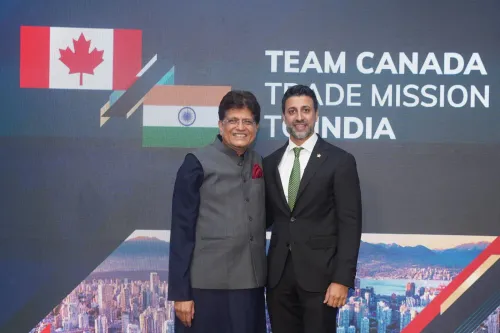
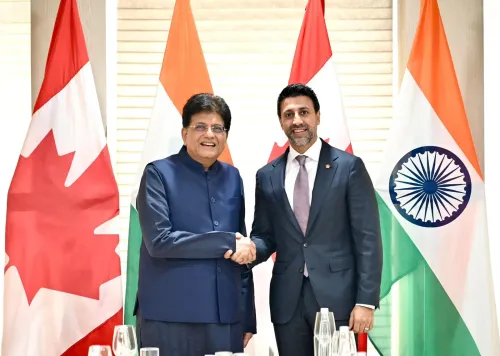
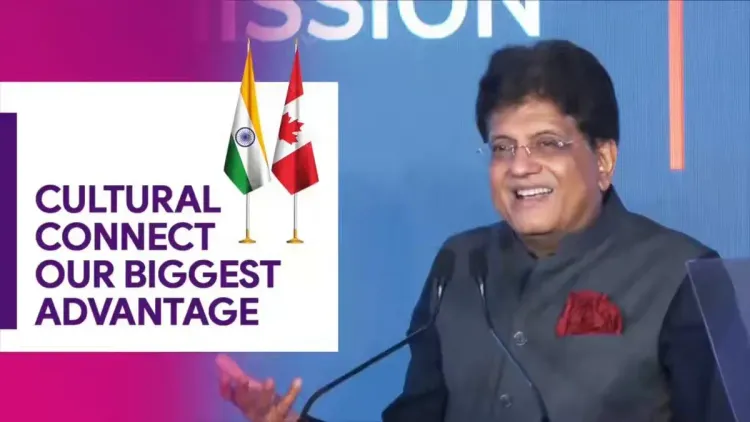
Culture is the new commerce — and Union Commerce and Industry Minister Piyush Goyal is betting on it. On Thursday, October 15, 2026, Goyal posted on X that Indo-Canadian cultural ties will play 'a huge role in strengthening our economic partnership,' pairing the message with a video that underscores the depth of people-to-people connections between the two nations.
Diaspora as a diplomatic bridge
India and Canada share one of the world's most consequential diaspora links. Canada is home to one of the largest Indian-origin populations outside South Asia, a community that has long served as an organic connector — channelling investment, trade intelligence, and goodwill across the Pacific. Minister Goyal's framing puts that human network front and centre as an economic asset, not merely a social statistic.
This is deliberate strategy, not sentiment. India has increasingly deployed cultural and diaspora linkages as soft-power instruments to advance commercial diplomacy, particularly with nations where Indian-origin communities hold significant economic and political influence. Canada fits that template precisely.
The CEPA clock and what cultural warmth could unlock
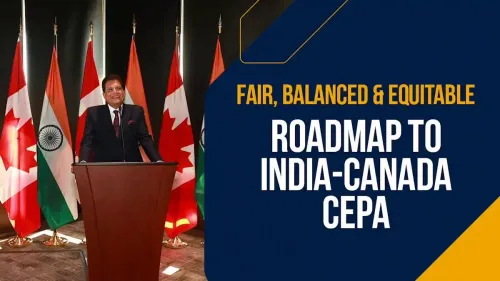
India and Canada launched negotiations for a Comprehensive Economic Partnership Agreement (CEPA) as far back as 2010, a deal designed to liberalise bilateral trade and investment at scale. Those talks have advanced and stalled in cycles, buffeted by shifting political dynamics on both sides. A warmer people-to-people environment — anchored in shared cultural identity — could provide the diplomatic oxygen that formal negotiating rounds sometimes lack.
Indian exporters eyeing the Canadian market and Canadian investors seeking a foothold in India's fast-growing economy both stand to gain if cultural proximity translates into a renewed push for the long-pending agreement. The Minister's signal, however brief, points the compass in that direction.
India's wider playbook: soft power, hard economics
India's broader economic diplomacy under the current government has consistently paired trade negotiations with people-to-people and cultural outreach — from Pravasi Bharatiya Divas conventions to diaspora investment summits. Goyal, as the minister who oversees India's international trade architecture, is one of the principal architects of that twin-track approach. Flagging cultural ties in the context of Canada signals that bilateral economic engagement remains a live priority, even as the geopolitical temperature between the two countries has, at various points, run hot.
The road from cultural warmth to signed trade chapters is rarely straight. But history shows that in India's economic diplomacy, the diaspora dividend is real — and ministers who name it publicly are usually signalling something more than goodwill.
Point of View
He reframes the bilateral relationship around its most durable and electorally resonant asset — the diaspora. This fits a wider pattern in which New Delhi uses people-to-people bridges to keep trade channels open even when political temperatures spike. The longer read is that any revival of CEPA talks will need exactly this kind of top-ministerial credibility signalling before formal negotiating rounds can restart. Whether cultural warmth translates into treaty text is the real test ahead.
NationPress
15 Oct 2026
Frequently Asked Questions
What did Piyush Goyal say about India and Canada?
On October 15, 2026, Commerce and Industry Minister Piyush Goyal stated that Indo-Canadian cultural ties will play a 'huge role in strengthening our economic partnership,' signalling India's intent to use diaspora and cultural linkages to advance bilateral trade.
What is the India-Canada CEPA?
The India-Canada Comprehensive Economic Partnership Agreement (CEPA) is a proposed bilateral deal to liberalise trade and investment between the two countries. Negotiations were launched in 2010 but have progressed slowly due to shifting political dynamics on both sides.
Why does the Indian diaspora in Canada matter for trade?
Canada hosts one of the largest Indian-origin communities in the world, which serves as a natural bridge for business relationships, investment flows, and diplomatic goodwill — making diaspora ties a core pillar of India's economic diplomacy strategy.
What is Piyush Goyal's role in India's trade policy?
Piyush Goyal is India's Union Minister of Commerce and Industry and Leader of the House in the Rajya Sabha. He is the principal minister responsible for India's international trade negotiations, export promotion, and bilateral economic agreements.
What should we watch for in India-Canada relations after this statement?
Watch for any resumption of CEPA negotiating rounds, high-level bilateral meetings between Indian and Canadian trade officials, or ministerial visits — all of which would indicate that Goyal's cultural-diplomacy framing has translated into concrete negotiating momentum.