Goyal: India-Canada can lead next-gen innovation
Synopsis
Union Commerce Minister Piyush Goyal has publicly declared that India and Canada together can lead next-generation innovation globally. The statement reinforces New Delhi's push for deeper technology and trade ties with G7 partners, with a proposed India-Canada CEPA and cooperation on AI, critical minerals and clean energy in focus.
Key Takeaways
Piyush Goyal on 28 May 2026 said India and Canada can jointly provide 'next-generation innovation to the world.' India-Canada CEPA negotiations, launched in 2010 , were revived in 2022 with expanded scope covering critical minerals and digital technology.
Canada is a leading hub for AI research , quantum computing and critical minerals, aligning with India's technology-driven growth strategy.
The Indian diaspora in Canada numbers over 18 lakh , making skilled-mobility provisions a key bilateral interest.
India has pursued similar innovation pacts across G7 economies to secure supply chains in semiconductors, clean energy and AI.
The statement signals a cooperative diplomatic register at a time when India-Canada ties have faced periodic friction.
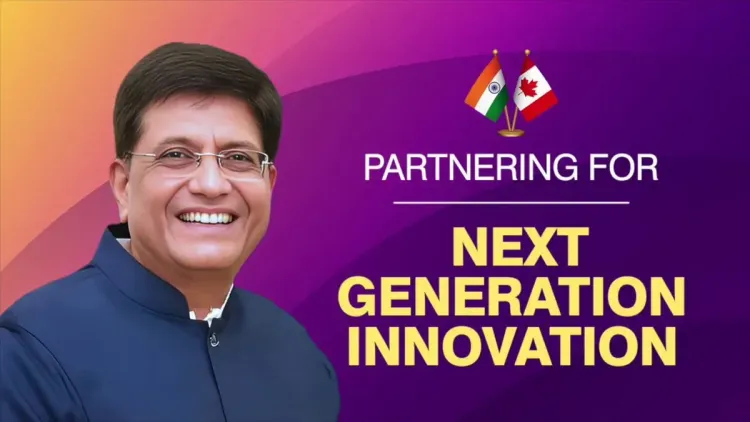
Union Commerce and Industry Minister Piyush Goyal on Thursday, 28 May 2026 declared that India and Canada together hold the potential to deliver next-generation innovation to the world, signalling fresh momentum in bilateral technology and trade engagement between the two nations.
Context
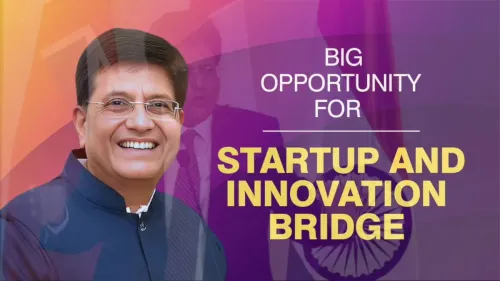
Goyal's post — carrying the flags of both nations — stated plainly: 'India and Canada together can provide next-generation innovation to the world.' The message is a pointed signal of goodwill and strategic alignment at a moment when New Delhi has been methodically deepening technology-focused partnerships with G7 economies. Canada, as a leading hub for artificial intelligence research, quantum computing and critical minerals, occupies a natural place in that architecture.
The statement comes against the backdrop of periodic diplomatic friction between the two countries, making a senior minister's public affirmation of shared innovation potential all the more significant in tone and timing.
Policy Backdrop
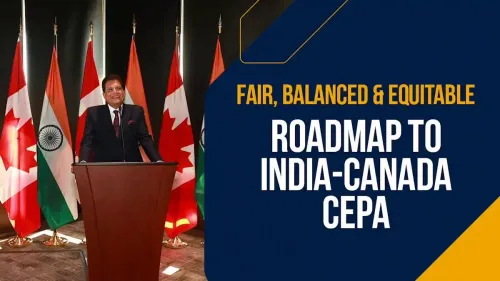
The bilateral economic relationship has long been anchored to a proposed Comprehensive Economic Partnership Agreement (CEPA), negotiations for which were formally launched in 2010. After 11 rounds of talks and a prolonged pause, both governments agreed in 2022 to resume and accelerate the process, expanding its scope to include cooperation on critical minerals, digital technology and skilled-worker mobility.
India's broader strategic posture has involved locking in supply-chain security and co-development arrangements with like-minded partners across semiconductors, clean energy and AI governance. Canada's strengths in each of these domains — from its world-ranked AI research clusters to its vast reserves of lithium and cobalt — make it a structurally important partner for India's technology-driven growth ambitions.
Stakeholders and Impact
The constituencies most directly affected by deeper India-Canada innovation ties include technology startups and research institutions in both countries. Indian firms seeking access to frontier AI and quantum research ecosystems stand to benefit from formalised collaboration frameworks, while Canadian companies gain a gateway to one of the world's fastest-growing digital economies.
A stronger bilateral innovation compact could also accelerate movement of skilled professionals between the two nations — a long-standing demand from the Indian diaspora in Canada, which numbers over 18 lakh people and forms one of the largest Indian communities abroad. Critical-minerals supply chains, essential for India's electric-vehicle and renewable-energy targets, represent another high-stakes dimension of the partnership.
What's Next
Attention will now turn to the next round of India-Canada CEPA negotiations and any joint ministerial announcements on AI or quantum research collaboration. Goyal, as Leader of the House in the Rajya Sabha and the minister responsible for trade policy, is well-positioned to translate such public signals into negotiating mandates. Whether this statement precedes a formal bilateral meeting or a joint innovation initiative remains to be confirmed, but it clearly sets a cooperative register for the relationship going forward.
Point of View
Not a casual remark — senior ministers rarely invoke bilateral flags without diplomatic intent. It fits a well-established pattern of India using ministerial social-media statements to set the tone ahead of formal engagements, particularly with partners where the relationship requires periodic recalibration. The explicit invocation of 'next-generation innovation' is telling: it frames the partnership in forward-looking, technology terms rather than the traditional trade-deficit or diaspora lens, suggesting New Delhi wants to elevate the Canada relationship onto the same strategic plane as its tech partnerships with the US, Japan and the EU. The timing, coming amid resumed CEPA talks, makes this a marker worth watching for concrete follow-through.
NationPress
11 Oct 2026
Frequently Asked Questions
What did Piyush Goyal say about India and Canada?
Piyush Goyal posted on 28 May 2026 that India and Canada together can provide next-generation innovation to the world, signalling stronger bilateral technology and trade engagement.
What is the India-Canada CEPA?
The India-Canada Comprehensive Economic Partnership Agreement (CEPA) is a proposed free-trade and investment pact whose negotiations were launched in 2010 . After a pause, both sides agreed in 2022 to resume talks with expanded coverage including critical minerals and digital technology.
Why is Canada important for India's technology strategy?
Canada has world-leading capabilities in artificial intelligence , quantum research and critical minerals such as lithium and cobalt, all of which are central to India's semiconductor, clean-energy and digital-economy goals.
How large is the Indian community in Canada?
The Indian diaspora in Canada numbers over 18 lakh people, making it one of the largest Indian communities abroad and a key constituency in bilateral skilled-mobility discussions.
What areas could India-Canada innovation cooperation cover?
Likely areas include artificial intelligence , quantum computing, critical minerals supply chains, clean energy technology and skilled-professional mobility, all of which feature in the resumed CEPA framework.