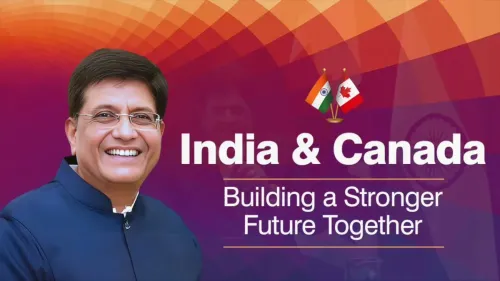
Piyush Goyal calls for India-Canada Startup Bridge
Synopsis
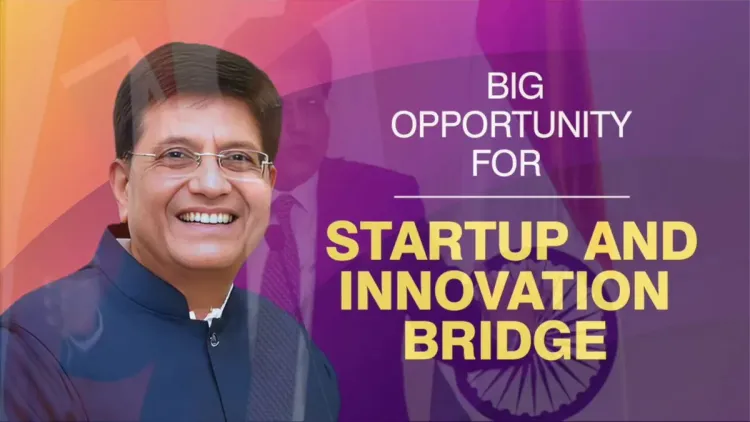
Commerce Minister Piyush Goyal on 28 May 2026 declared the time is ripe to launch a Startup Bridge between India and Canada, signalling New Delhi's intent to formalise bilateral innovation and entrepreneurship cooperation with the G7 nation.
Key Takeaways
Commerce and Industry Minister Piyush Goyal publicly called for a Startup Bridge between India and Canada on 28 May 2026 .
India's Startup India initiative, launched in 2016 , already underpins similar bilateral bridges with the UK, Japan, and South Korea.
Canada is a G7 economy with its own Startup Visa Programme and a large, economically active Indian diaspora.
Negotiations on an India-Canada CEPA have been ongoing since 2010 , providing an existing framework into which a Startup Bridge could be integrated.
Key beneficiaries would be Indian startups seeking Canadian venture capital and Canadian investors seeking exposure to India's high-growth tech market.
Follow-up action is expected through DPIIT and Canadian federal counterparts, potentially via a bilateral MoU or innovation forum.
Union Commerce and Industry Minister Piyush Goyal on Thursday, 28 May 2026 called for the launch of a dedicated Startup Bridge between India and Canada, saying the time is ripe to formalise bilateral cooperation between the two countries' entrepreneurship ecosystems.
Context
In a post on X, the minister stated: 'Time is ripe to initiate a Startup Bridge between India and Canada.' The remark signals that New Delhi is actively exploring structured bilateral mechanisms to connect Indian and Canadian startup ecosystems beyond existing trade and people-to-people frameworks.
A Startup Bridge, as pursued by India with other partner nations, typically involves mutual recognition of startups, facilitated access to each other's markets, investor networks, and regulatory sandboxes — creating a formal corridor for founders and funders on both sides.
Policy Backdrop
India's Startup India initiative, launched in 2016, has been the cornerstone of the country's push to build a nationally recognised innovation ecosystem, offering tax incentives, funding support, and regulatory easing to new ventures. The programme has since become a template for bilateral startup diplomacy with partner economies.
Canada, a G7 member, runs its own Startup Visa Programme that has attracted a significant number of Indian founders and technology professionals. Negotiations on an India-Canada Comprehensive Economic Partnership Agreement (CEPA) were initiated in 2010, and the two countries have periodically sought to deepen commercial and innovation ties within that broader framework.
India has already operationalised startup bridges with countries including the United Kingdom, Japan, and South Korea, making a Canada edition a logical extension of that economic diplomacy strategy.
Stakeholders and Impact
The primary beneficiaries of such a bridge would be Indian startups seeking access to Canadian venture capital, research institutions, and a skilled diaspora community, as well as Canadian investors looking to deploy capital into one of the world's fastest-growing startup markets.
Canada hosts a large and economically active Indian diaspora, which has historically served as a conduit for knowledge transfer, co-investment, and market entry for Indian technology firms. A formal Startup Bridge could institutionalise these organic links, giving them policy backing and predictability.
Indian deep-tech, agri-tech, and fintech ventures are among the sectors likely to benefit most from Canadian partnerships, given Canada's strengths in artificial intelligence, clean energy, and financial services — areas that complement India's own startup growth corridors.
What's Next
Goyal's statement is likely to be followed by engagement at the level of bilateral trade talks or innovation forums, where a formal Startup Bridge framework could be tabled. Any such agreement would require coordination between India's Department for Promotion of Industry and Internal Trade (DPIIT) and Canadian federal counterparts.
Observers will watch whether the proposal advances to a formal memorandum of understanding or is incorporated into ongoing CEPA negotiations, which have seen renewed momentum in recent years. The minister's public statement raises the political salience of the proposal and could accelerate bureaucratic groundwork on both sides.
Point of View
Extending India's well-established playbook of formalising innovation corridors with major economies. The timing is notable given that India-Canada relations have navigated turbulence in recent years, and a commerce-led startup initiative offers a relatively low-friction pathway to re-engage on a positive bilateral agenda. The proposal also serves a domestic signalling function, reinforcing the government's narrative of internationalising the Startup India ecosystem. Whether it translates into a binding agreement will depend on political will in Ottawa and the pace of the broader CEPA process.
NationPress
12 Oct 2026
Frequently Asked Questions
What is the India-Canada Startup Bridge proposed by Piyush Goyal?
It is a proposed bilateral mechanism to formally connect India's and Canada's startup ecosystems, likely covering mutual recognition of startups, investor access, and regulatory facilitation — similar to bridges India has established with the UK, Japan, and South Korea.
What is the Startup India initiative?
Startup India is a flagship government programme launched in 2016 that offers Indian startups tax incentives, funding support, and regulatory easing to encourage innovation and entrepreneurship across the country.
Does India already have startup bridges with other countries?
Yes. India has operationalised startup bridges with countries including the United Kingdom , Japan , and South Korea , making a similar arrangement with Canada a natural extension of this economic diplomacy strategy.
What is the India-Canada CEPA?
The Comprehensive Economic Partnership Agreement between India and Canada is a broad trade and investment pact whose negotiations were initiated in 2010 . It provides an existing framework into which a Startup Bridge could potentially be integrated.
Who would benefit from an India-Canada Startup Bridge?
The primary beneficiaries would be Indian startups seeking access to Canadian venture capital and research networks, and Canadian investors looking for exposure to India's fast-growing technology and innovation market.