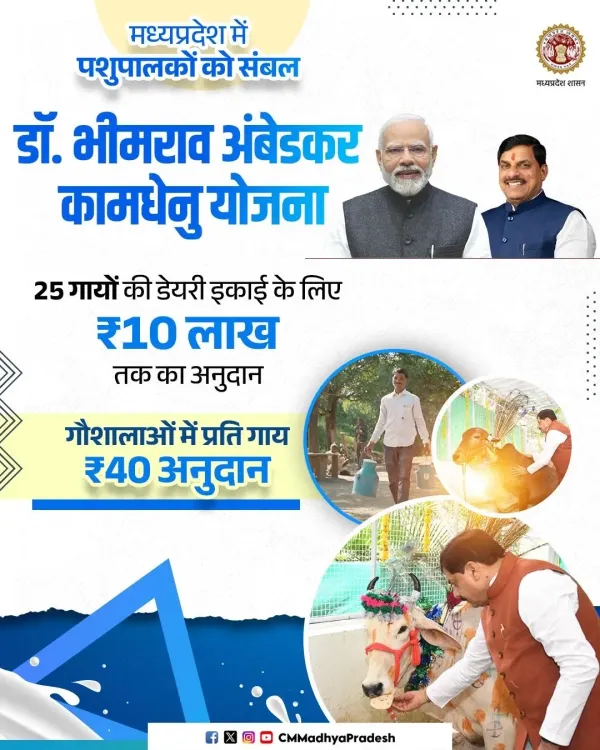
MP CMO Announces ₹10 Lakh Grant for 25-Cow Dairy Units
Synopsis
The Chief Minister's Office of Madhya Pradesh announced a subsidy of up to ₹10 lakh for establishing a 25-cow dairy unit, targeting livestock farmers and linking economic support with cow-breed conservation under CM Dr. Mohan Yadav's rural livelihood push.
Key Takeaways
The Chief Minister's Office of Madhya Pradesh announced a grant of up to ₹10 lakh for setting up a 25-cow dairy unit on 15 October 2026 .
The scheme carries a dual mandate: economic support for livestock farmers and strengthening of cow-breed conservation .
The announcement is tagged to CM Dr.
Mohan Yadav and the MP Department of Animal Husbandry , which is the implementing agency.
Detailed eligibility criteria, application procedures, and disbursement timelines are yet to be officially published by the department.
The initiative continues Madhya Pradesh's history of state-backed dairy expansion programmes dating to the 2010s.
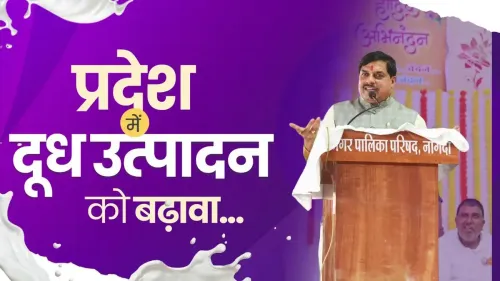
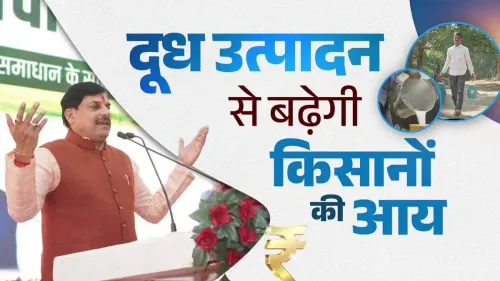
Cattle farmers across Madhya Pradesh got a concrete financial lifeline on Thursday, 15 October 2026, when the Chief Minister's Office of Madhya Pradesh announced a grant of up to ₹10 lakh for setting up a 25-cow dairy unit — a move that simultaneously addresses rural income and the state's long-standing emphasis on cow protection.
What the grant covers — and who it targets
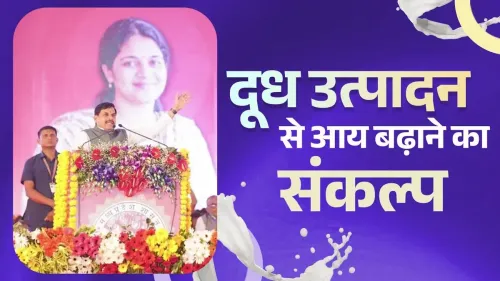
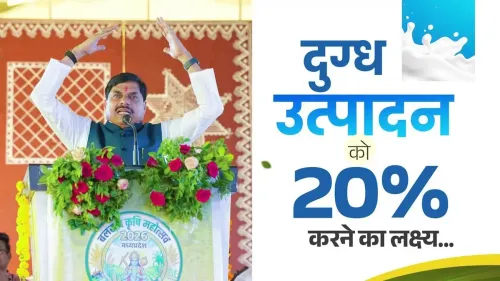
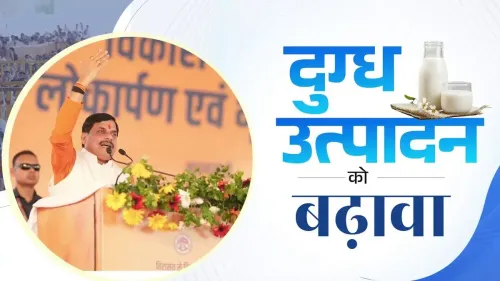
The announcement, posted by the CMO and tagged to Chief Minister Dr. Mohan Yadav and the Madhya Pradesh Department of Animal Husbandry, frames the subsidy around two explicit goals: aarthik sambal (economic support) for livestock farmers and the strengthening of gauvans sanrakshan (cow-breed conservation). The ₹10 lakh ceiling is specifically tied to a 25-head dairy unit — a scale suited to small and marginal farmers looking to professionalise their operations without industrial capital.
The state's Department of Animal Husbandry is the implementing arm. Detailed scheme guidelines, eligibility conditions, and disbursement timelines are expected from the department; farmers and dairy entrepreneurs should watch for official notifications before applying.
Dr. Mohan Yadav's rural-economy push since 2023
Dr. Mohan Yadav, who has led Madhya Pradesh since December 2023, has made rural livelihoods and livestock welfare recurring pillars of his administration. Madhya Pradesh has run successive dairy and livestock support programmes since the 2010s, progressively expanding the scale of state-backed dairy units under animal husbandry plans. The new ₹10 lakh grant fits that lineage — but the explicit cow-conservation framing signals the dual intent the state government wants to communicate to its constituencies.
The pattern is visible across BJP-governed states: pairing economic incentives for small dairy operators with a cultural-policy signal on cow protection. For the farmer on the ground, the maths is straightforward — a subsidised dairy unit of this size can anchor a household income and reduce dependence on rain-fed agriculture.
What livestock farmers need to watch next
The announcement establishes intent and headline figures. The critical details — whether the grant is a one-time capital subsidy or a phased disbursement, which farmer categories qualify, and how applications will be routed — remain to be published by the animal husbandry department. Existing dairy entrepreneurs and new entrants alike should monitor official departmental channels for the scheme's operational framework.
For a state where millions of households depend on mixed farming and cattle rearing, ₹10 lakh in grant capital for a 25-cow unit is not a rounding error — it is a potential pivot point for an entire family's economic trajectory.
Point of View
But the cow-conservation framing simultaneously speaks to a broader ideological constituency. For CM Dr. Mohan Yadav, who took office in December 2023, this keeps animal husbandry welfare visible in the policy calendar ahead of any rural outreach cycle. The scheme's impact will ultimately hinge on the department's operational design: whether disbursement is swift and eligibility broad enough to reach marginal farmers, or whether procedural hurdles dilute the headline promise.
NationPress
15 Oct 2026
Frequently Asked Questions
How much grant is available for a dairy unit in Madhya Pradesh?
The Madhya Pradesh government has announced a grant of up to ₹10 lakh for setting up a dairy unit of 25 cows , as announced by the Chief Minister's Office on 15 October 2026.
Who is eligible for the MP dairy unit subsidy?
The scheme targets livestock farmers and dairy entrepreneurs in Madhya Pradesh. Detailed eligibility criteria are expected to be published by the MP Department of Animal Husbandry ; applicants should watch for official notifications.
What is the purpose of the Madhya Pradesh 25-cow dairy grant?
The grant serves two stated goals: providing economic support ( aarthik sambal ) to livestock farmers and strengthening cow-breed conservation ( gauvans sanrakshan ) in the state.
Which department will implement the MP dairy subsidy scheme?
The Madhya Pradesh Department of Animal Husbandry is the implementing agency for the scheme. Official guidelines and disbursement timelines are awaited from the department.
What is CM Dr. Mohan Yadav's focus on animal husbandry?
Dr. Mohan Yadav , Chief Minister of Madhya Pradesh since December 2023 , has emphasised rural livelihoods and livestock welfare, continuing the state's long-running tradition of state-backed dairy and animal husbandry support programmes.