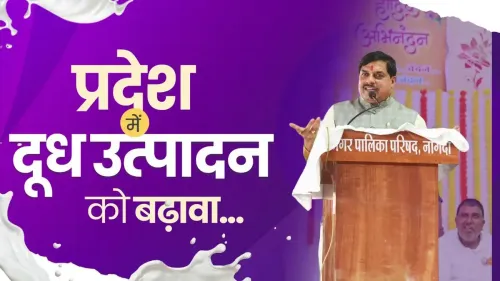
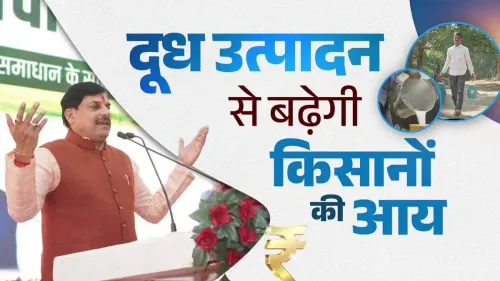
CM Mohan Yadav: MP targets 20% milk production share
Synopsis
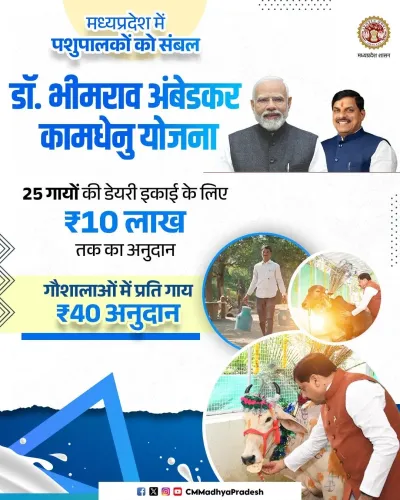
Chief Minister Dr. Mohan Yadav has announced that Madhya Pradesh is targeting a rise in milk production from 12 percent to 20 percent. The push aligns with national dairy programmes and aims to boost rural incomes across the state's large farming population.
Key Takeaways
The Chief Minister's Office of Madhya Pradesh announced the dairy expansion target on 26 July 2026 .
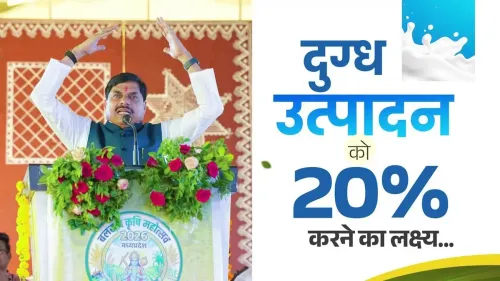
Mohan Yadav set a goal to increase the state's milk production share from 12 percent to 20 percent .
Madhya Pradesh has been part of the National Dairy Plan since 2012 , providing an existing infrastructure base for this push.
The initiative aligns with the Rashtriya Gokul Mission , a national programme for cattle improvement and cooperative dairy development.
Primary beneficiaries include dairy farmers and rural households who depend on animal husbandry for income.
Future budget allocations and annual production data from the Animal Husbandry Department will indicate whether the target is on track.
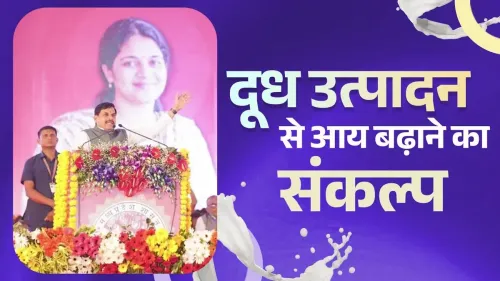
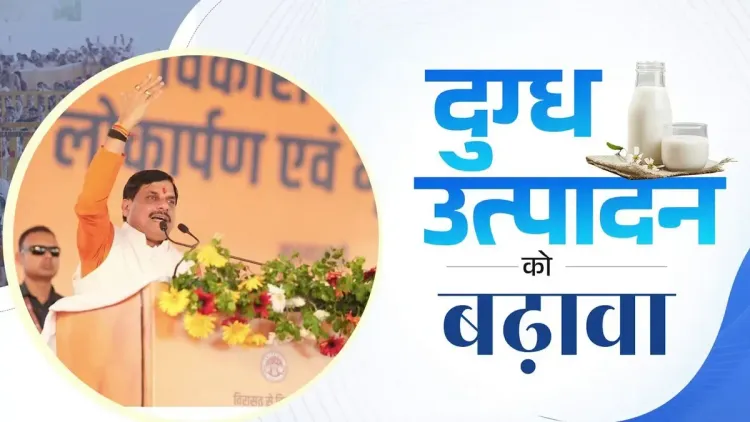
The Chief Minister's Office of Madhya Pradesh announced on Sunday, 26 July 2026 that the state government is actively promoting dairy production, with Chief Minister Dr. Mohan Yadav setting a target to raise the state's milk production contribution from 12 percent to 20 percent.
Context
Posting on X, the Chief Minister's Office quoted CM Dr. Mohan Yadav directly: 'मध्यप्रदेश सरकार दुग्ध उत्पादन को बढ़ावा दे रही है' ('The Madhya Pradesh government is promoting milk production'). The statement signals a formal policy push to nearly double the state's share of milk output, framing dairy expansion as a priority for the current administration.
Madhya Pradesh is a large, predominantly rural state in central India where a significant portion of the population depends on agriculture and animal husbandry for their livelihoods. Dairy farming is deeply embedded in the rural economy, making such targets consequential for millions of households.
Policy Backdrop
Madhya Pradesh has been a participant in the National Dairy Plan since 2012, a central government initiative aimed at strengthening dairy infrastructure, improving cattle breeds, and expanding milk procurement networks across states. The state's ambitions also align with the Rashtriya Gokul Mission, a national programme focused on cattle improvement and the promotion of indigenous breeds to boost productivity.
Multiple Indian states have announced dairy production targets in recent years, driven by rising domestic demand for milk and milk products and the need to increase rural incomes. Madhya Pradesh's stated goal of reaching 20 percent milk production places it among the more ambitious state-level dairy plans in this policy cycle.
Stakeholders and Impact
The primary beneficiaries of an expanded dairy sector would be dairy farmers and rural households across the state. Higher milk output, if matched by procurement infrastructure and fair pricing, can translate into more stable incomes for small and marginal farmers who maintain cattle alongside crop cultivation.
Cooperative dairy networks and private processors operating in Madhya Pradesh would also be affected, as increased supply requires parallel investment in chilling centres, processing plants, and logistics. The state government's ability to mobilise these investments will be a key determinant of whether the target is achievable.
What's Next
Observers will watch for concrete allocations in the state budget directed at dairy schemes, including subsidies for cattle purchase, fodder support, and veterinary services. The Animal Husbandry Department of Madhya Pradesh is expected to release annual milk production data that will serve as the benchmark against which progress toward the 20 percent target is measured.
If the state follows through with structural investments in cooperative infrastructure and breed improvement, the push could position Madhya Pradesh as a significant contributor to India's national dairy output — reinforcing the broader national goal of making India the world's largest and most efficient milk-producing economy.
Point of View
The credibility of such targets ultimately rests on budgetary follow-through — procurement infrastructure, veterinary support, and cooperative network expansion — rather than the announcement alone. The alignment with central schemes like the Rashtriya Gokul Mission suggests the state is positioning itself to draw matching central funds, which would be the real test of how serious this push is.
NationPress
25 Oct 2026
Frequently Asked Questions
What is Madhya Pradesh's milk production target announced by CM Mohan Yadav?
CM Dr. Mohan Yadav announced that Madhya Pradesh aims to increase its milk production share from 12 percent to 20 percent , nearly doubling the state's contribution to national dairy output.
Which national schemes support Madhya Pradesh's dairy push?
Madhya Pradesh participates in the National Dairy Plan , active since 2012 , and the Rashtriya Gokul Mission , which promotes cattle breed improvement and cooperative dairy networks across India.
Who benefits from Madhya Pradesh's dairy production expansion?
The primary beneficiaries are dairy farmers and rural households in Madhya Pradesh who depend on cattle rearing for income, along with cooperative dairy networks and milk processors in the state.
When did CM Mohan Yadav make the dairy production announcement?
The announcement was made on Sunday, 26 July 2026 , via the official Chief Minister's Office of Madhya Pradesh account on X.
How will Madhya Pradesh achieve its 20 percent milk production target?
Progress will depend on state budget allocations for dairy schemes, investments in chilling and processing infrastructure, cattle improvement programmes, and annual data from the Animal Husbandry Department of Madhya Pradesh .