MP Eyes 'Milk Capital' Status as Dairy Sector Gets Stronger

Synopsis
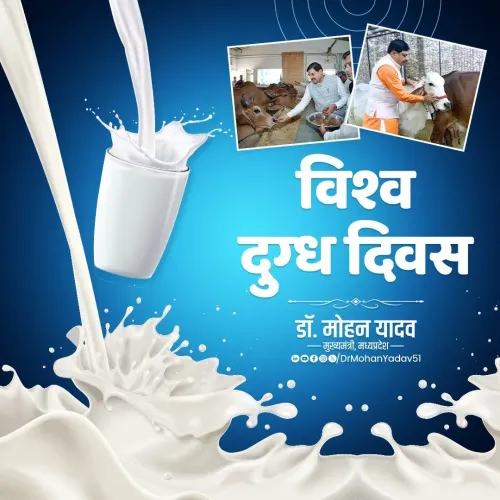
The Chief Minister's Office of Madhya Pradesh announced on 27 May 2026 that the state is moving toward becoming India's 'Milk Capital', with the dairy sector gaining new strength alongside rising milk production — a push rooted in the White Revolution framework and rural income goals.
Key Takeaways
The Chief Minister's Office of Madhya Pradesh declared on 27 May 2026 that the state is advancing toward 'Milk Capital' status.
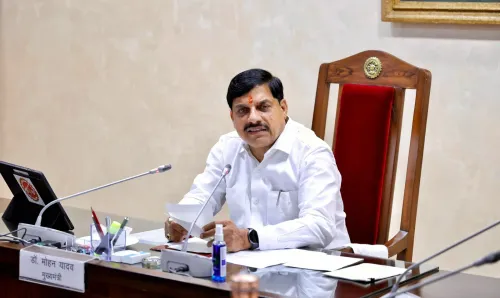
Mohan Yadav , tagged in the post, has prioritised livestock and dairy development since taking office in December 2023 .
The state's dairy push is overseen by the Department of Animal Husbandry, Madhya Pradesh , working through milk cooperatives.
Madhya Pradesh's dairy sector expansion fits within India's broader White Revolution framework, dating to Operation Flood in the 1970s .
Dairy farmers and milk cooperatives are the primary stakeholders, with potential gains in rural incomes and women's economic participation.
Verified production figures and formal 'Milk Capital' targets are yet to be officially released.
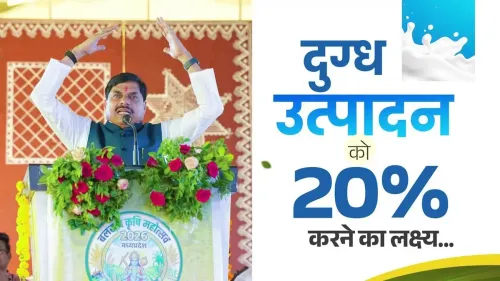
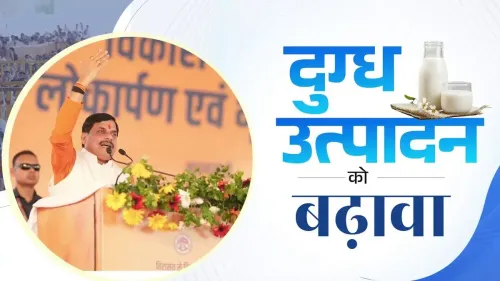
The Chief Minister's Office of Madhya Pradesh declared on Wednesday, 27 May 2026 that the state is advancing steadily toward becoming the 'Milk Capital' of India, citing rising milk production and growing strength in the dairy sector.
Context
The post, shared by the official handle of the Chief Minister's Office and tagging Chief Minister Dr. Mohan Yadav and the Department of Animal Husbandry, Madhya Pradesh, stated in Hindi: 'Milk Capital banane ki disha mein agrasit Madhya Pradesh' ('Madhya Pradesh advancing toward becoming the Milk Capital'). It highlighted that the dairy sector is gaining 'new strength' alongside increased milk production in the state.
Madhya Pradesh is a landlocked central Indian state with a predominantly agrarian economy. Dairy farming forms a significant part of rural livelihoods across its districts, and the state government has in recent years positioned livestock development as a key pillar of rural income growth under Chief Minister Dr. Mohan Yadav, who took office in December 2023.
Policy Backdrop
India's dairy expansion has deep roots in the White Revolution and Operation Flood, the cooperative-led programme launched in the 1970s with support from the National Dairy Development Board (NDDB). Madhya Pradesh participated in that national framework through state-level cooperatives, building procurement and processing infrastructure over decades.
Today, Indian states are engaged in active competition to improve per-animal productivity, cold-chain logistics, and cooperative reach to capture a larger share of the country's dairy output. The state's Department of Animal Husbandry is the nodal body overseeing these efforts, coordinating with milk unions and farmers across districts.
Stakeholders and Impact
Dairy farmers and milk cooperatives across Madhya Pradesh stand to be the primary beneficiaries of any sustained push to expand production capacity. Higher procurement volumes typically translate to better price realisation for farmers, while stronger cooperative networks reduce dependence on private intermediaries.
For rural households, dairy income serves as a critical supplement to crop earnings, providing year-round cash flow. A strengthened dairy sector can therefore have a direct bearing on rural poverty indicators and women's economic participation, since women manage a large share of livestock care in the state.
What's Next
Observers will watch for the release of updated state milk production data that could substantiate the government's 'Milk Capital' ambition with verified figures. Announcements around new dairy processing plants, cooperative expansions, or dedicated budget allocations in the state's annual financial plan will be key markers of how far the stated intent translates into infrastructure investment.
As Indian states race to scale dairy output to meet rising domestic demand, Madhya Pradesh's articulated goal of becoming a milk production leader places it squarely within a larger national economic narrative — one where rural income diversification and food security converge.
Point of View
Aimed at attracting dairy investment and signalling rural-income ambition ahead of future electoral cycles. Chief Minister Dr. Mohan Yadav has consistently used agricultural sector milestones to build a governance identity distinct from his predecessor. The dairy push also aligns with a national pattern where BJP-governed states compete to demonstrate rural development credentials through measurable output targets. Until verified production data is published, however, the claim remains aspirational — a political direction rather than a confirmed achievement.
NationPress
12 Oct 2026
Frequently Asked Questions
Is Madhya Pradesh becoming India's Milk Capital?
The Madhya Pradesh government has declared its intent to make the state India's 'Milk Capital', citing rising milk production and a strengthening dairy sector, but verified production figures and a formal designation have not yet been officially released.
What is Chief Minister Dr. Mohan Yadav's role in MP's dairy sector?
Dr. Mohan Yadav , who became Chief Minister of Madhya Pradesh in December 2023 , has emphasised livestock and agricultural growth as key policy priorities, with the dairy sector featuring prominently in the state's rural economy agenda.
Which government body oversees dairy development in Madhya Pradesh?
The Department of Animal Husbandry, Madhya Pradesh is the state body responsible for livestock development, dairy sector schemes, and coordination with milk cooperatives.
What is Operation Flood and how does it relate to MP's dairy push?
Operation Flood , launched in the 1970s under the National Dairy Development Board (NDDB) , was India's cooperative-led dairy expansion programme — the foundation of the White Revolution. Madhya Pradesh built its cooperative dairy infrastructure through this national framework, which continues to underpin state-level dairy growth efforts.
How does dairy farming benefit rural households in Madhya Pradesh?
Dairy income provides year-round cash flow to rural families, supplementing crop earnings. Women manage a significant share of livestock care, making a stronger dairy sector a direct lever for women's economic participation and rural poverty reduction in the state.