CM Mohan Yadav Vows to Make MP No. 1 Milk Producer
Synopsis
On International Day of Cooperatives, Madhya Pradesh CM Dr. Mohan Yadav reaffirmed his government's resolve to strengthen dairy cooperative societies and make MP the country's top milk-producing state, aligning with PM Modi's 'Sahkar Se Samriddhi' vision.
Key Takeaways
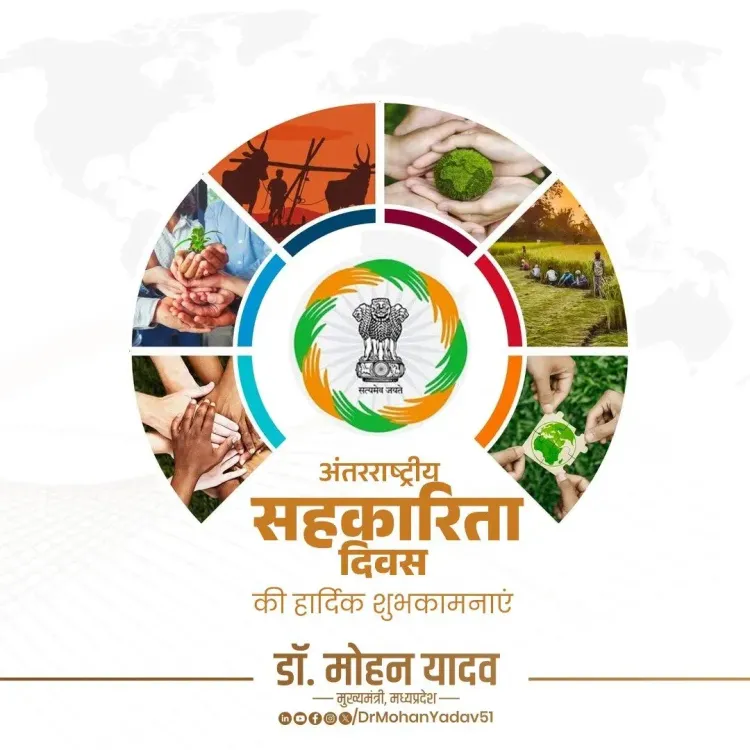
Mohan Yadav greeted citizens on International Day of Cooperatives on 4 July 2026 .
He invoked PM Narendra Modi 's 'Sahkar Se Samriddhi' vision and credited Union Minister Amit Shah 's leadership of the cooperation ministry.
The Madhya Pradesh government has pledged to strengthen milk cooperative societies and improve facilities for livestock farmers.
The state's stated goal is to become India's number-one milk-producing state .
The Ministry of Cooperation was established in July 2021 to give dedicated institutional focus to the cooperative sector.
MP's dairy cooperative push mirrors similar state-level drives in Uttar Pradesh , Rajasthan , and Maharashtra .
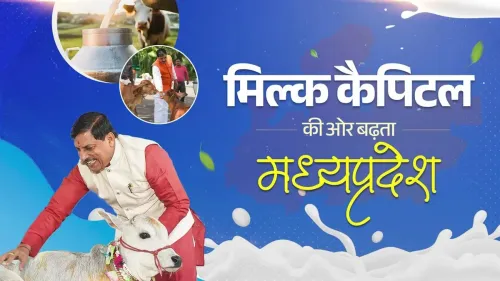
Madhya Pradesh Chief Minister Dr. Mohan Yadav on Saturday, 4 July 2026, greeted citizens on International Day of Cooperatives and reaffirmed his government's commitment to strengthening dairy cooperatives and positioning Madhya Pradesh as the country's top milk-producing state.
Context
Posting in Hindi on the occasion of International Day of Cooperatives, CM Yadav invoked Prime Minister Narendra Modi's vision of 'Sahkar Se Samriddhi' ('Prosperity Through Cooperation') and credited Union Home and Cooperation Minister Amit Shah's leadership for making the cooperative movement a 'primary stream of the country's development.' The post reflects a broader federal alignment in which state governments publicly reinforce the Centre's cooperative policy framework on symbolic occasions.
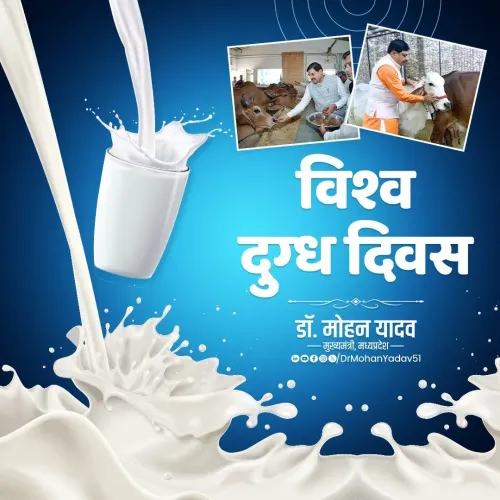
The CM stated that his government is 'continuously working with the resolve to strengthen milk cooperative societies, provide better facilities to livestock farmers, and make the state the number-one milk-producing state in the country.'
Policy Backdrop
The Ministry of Cooperation was carved out as a dedicated Union ministry in July 2021, ending decades of fragmented oversight and signalling the Centre's intent to treat cooperatives as a third pillar alongside public and private enterprise. The 'Sahkar Se Samriddhi' initiative has since sought to integrate cooperative structures into mainstream agricultural and allied-sector policy.
India's dairy cooperative model, pioneered by Amul in 1946, has been repeatedly cited by the Centre as the template for state-level replication. Madhya Pradesh joins states such as Uttar Pradesh, Rajasthan, and Maharashtra in announcing parallel targets for milk procurement infrastructure and farmer-member expansion, mirroring the national vision at the state level.
Stakeholders and Impact
Dairy farmers and milk cooperative societies across Madhya Pradesh stand to be the most direct beneficiaries of the policy push. Strengthening cooperative societies is expected to improve price realisation for livestock farmers by reducing intermediary dependence and expanding cold-chain and procurement infrastructure.
The broader cooperative ecosystem — spanning credit, input supply, and marketing — also stands to gain from the renewed institutional attention that a dedicated Union ministry and aligned state policy together provide.
What's Next
The next round of state budget allocations for dairy infrastructure will be a key indicator of how the Madhya Pradesh government translates this policy commitment into capital expenditure. The annual milk production report from the Department of Animal Husbandry, Dairying and Fisheries will provide the definitive ranking data against which the state's ambition can be measured.
Observers will also watch whether the Centre rolls out additional cooperative-sector incentives ahead of the next agricultural season, which could further accelerate state-level dairy expansion programmes.
Point of View
The BJP government in Bhopal simultaneously signals loyalty to the national leadership and stakes a concrete electoral claim among the state's large livestock-farming community. The dairy sector is increasingly a political battleground in Hindi-heartland states, where milk procurement prices and cooperative access directly affect rural incomes. Madhya Pradesh's aspiration to top the national milk-production rankings puts it in direct competition with established leaders, making the next Department of Animal Husbandry ranking report a politically significant data point. The creation of a dedicated Union Ministry of Cooperation in 2021 has given states a clearer institutional channel — and political incentive — to align rural economy schemes with the Centre's cooperative framework.
NationPress
2 Oct 2026
Frequently Asked Questions
What is 'Sahkar Se Samriddhi' and how does it relate to Madhya Pradesh?
'Sahkar Se Samriddhi' ('Prosperity Through Cooperation') is a Central government initiative championed by PM Narendra Modi that positions cooperatives as a key driver of rural economic growth. Madhya Pradesh CM Dr. Mohan Yadav has aligned the state's dairy cooperative expansion programme with this national vision.
Why did CM Mohan Yadav post about cooperatives on 4 July 2026?
4 July 2026 is celebrated as International Day of Cooperatives, an annual occasion observed globally. CM Yadav used the day to reaffirm the Madhya Pradesh government's commitment to dairy cooperatives and its goal of becoming India's top milk-producing state.
What is Madhya Pradesh's goal for dairy production?
The Madhya Pradesh government has stated its resolve to make the state the number-one milk-producing state in India by strengthening milk cooperative societies and improving facilities for livestock farmers.
When was India's Ministry of Cooperation created and why?
The Ministry of Cooperation was created in July 2021 under Union Minister Amit Shah to provide dedicated institutional focus to India's cooperative sector, ending decades of fragmented oversight across multiple ministries.
How do dairy cooperatives benefit farmers in Madhya Pradesh?
Dairy cooperatives help livestock farmers by improving price realisation, reducing dependence on intermediaries, and expanding access to cold-chain and milk procurement infrastructure, all of which the MP government says it is working to strengthen.