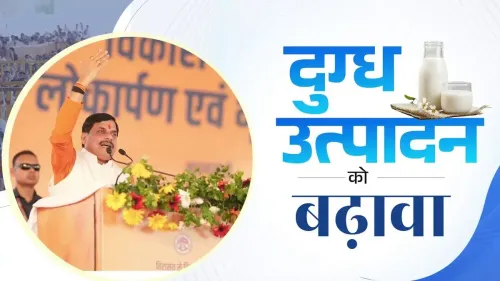
CM Mohan Yadav Vows to Make MP 'Milk Capital' on World Milk Day
Synopsis
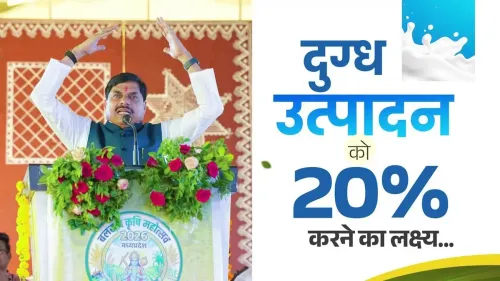
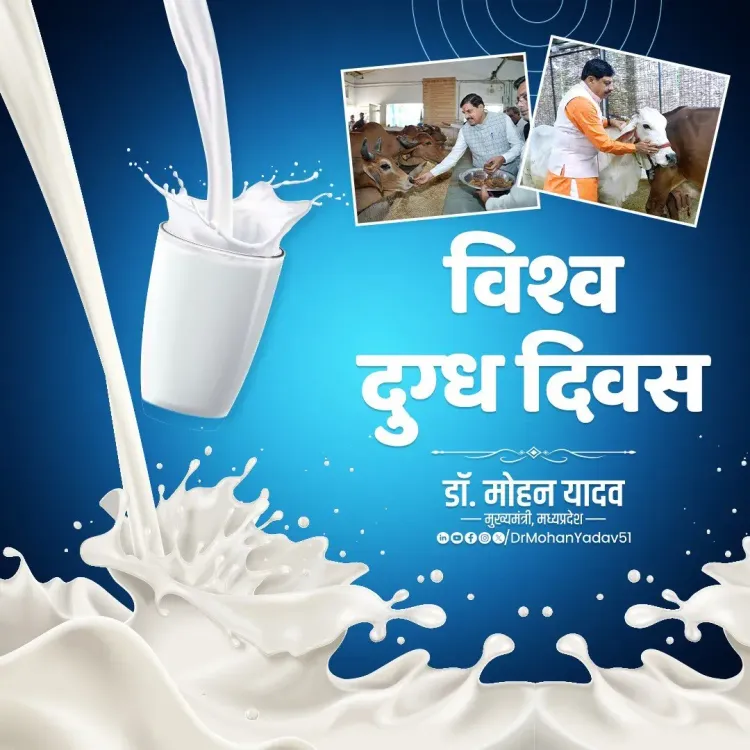
On World Milk Day, 1 June 2026, Madhya Pradesh CM Dr. Mohan Yadav credited the state's livestock farmers for making MP a leading milk producer and vowed to pursue 'Milk Capital' status through dairy sector investment and gaushala expansion.
Key Takeaways
Mohan Yadav greeted Madhya Pradesh residents on World Milk Day, 1 June 2026 .
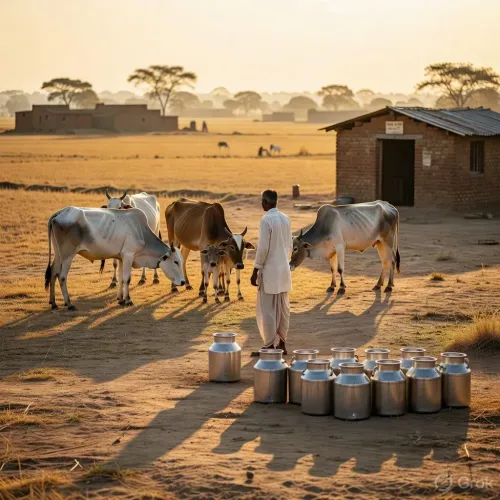
He credited the state's livestock farmers for establishing Madhya Pradesh as a leading milk-producing state in India.
The government is actively working on gau-sanrakshan , gaushala construction, and dairy sector empowerment as linked policy goals.
CM Yadav expressed confidence that MP will soon achieve the status of 'Milk Capital' of India.
World Milk Day was established by the FAO in 2001 and is observed globally on 1 June each year.
India is the world's largest milk producer, with growth driven by states combining cooperative procurement and supportive state policy.
Madhya Pradesh Chief Minister Dr. Mohan Yadav on 1 June 2026 greeted citizens across the state on World Milk Day, crediting hardworking livestock farmers for positioning Madhya Pradesh among India's leading milk-producing states and pledging to accelerate dairy sector growth until the state earns the title of 'Milk Capital' of the country.
Context
World Milk Day is observed every year on 1 June, a date established by the Food and Agriculture Organisation (FAO) in 2001 to recognise the dairy sector's contribution to nutrition and rural livelihoods. CM Yadav used the occasion to both honour the state's dairy farming community and restate his government's commitment to the sector. In his post, he wrote: 'हमारे परिश्रमी पशुपालक भाई-बहनों ने मध्यप्रदेश को दुग्ध उत्पादन के क्षेत्र में देश का अग्रणी राज्य बना दिया है' — 'Our hardworking livestock-keeper brothers and sisters have made Madhya Pradesh a leading state in milk production.'
He added that he holds 'full confidence' that through the 'hard work' (purusharth) of farmers and livestock keepers, the state will soon become the 'Milk Capital' of the nation.
Policy Backdrop
India is the world's largest milk producer, a position built on the cooperative infrastructure created by Operation Flood, launched in 1970 by the National Dairy Development Board (NDDB). That framework enabled states with strong livestock bases to scale procurement and processing rapidly. Madhya Pradesh has in recent years expanded its dairy infrastructure alongside a parallel push for cow protection, including state-supported gaushalas — cow shelters linked to local milk collection networks.
CM Yadav's government has framed gau-sanrakshan (cow protection), gaushala construction, and dairy sector empowerment as interconnected policy pillars, a pattern visible across several BJP-governed states seeking to raise rural incomes through animal husbandry. The 'Milk Capital' aspiration places Madhya Pradesh in direct inter-state competition for higher milk procurement and processing capacity.
Stakeholders and Impact
The primary beneficiaries of the state's dairy push are its dairy farmers and livestock keepers — communities that depend on milk procurement prices, veterinary support, and cooperative access for their incomes. Stronger state investment in the dairy supply chain, from cattle breed improvement to cold-chain logistics, directly affects the viability of small and marginal livestock holders.
Gaushalas, while framed as animal welfare institutions, also feed into local milk supply networks, creating an overlap between religious-cultural policy and economic outcomes. Observers note that sustained growth will require coordinated action between the Madhya Pradesh Cooperative Dairy Federation and national bodies such as the NDDB.
What's Next
Attention will now turn to whether the state's upcoming budget allocations reflect the 'Milk Capital' ambition in concrete dairy infrastructure spending — cold storage, processing plants, and cooperative expansion. Any new tie-ups between the Madhya Pradesh Cooperative Dairy Federation and national dairy bodies would signal that the aspiration is moving from rhetoric to policy. The scale and pace of gaushala-linked procurement integration will also be a key indicator of how the state intends to operationalise its dairy growth targets.
Point of View
A combination that has become a defining feature of BJP-governed state governance. By invoking the 'Milk Capital' label, Yadav is staking a competitive claim against established dairy states, signalling that MP's livestock expansion is a long-term political priority, not just a ceremonial talking point. The move also ties rural income generation to an ideologically resonant framework, broadening the appeal of dairy policy to both farmers and the party's core constituency. Whether the ambition translates into measurable procurement and processing gains will be the real test of the government's follow-through.
NationPress
23 Sept 2026
Frequently Asked Questions
What is World Milk Day and why is it celebrated on 1 June?
World Milk Day is an annual observance on 1 June established by the FAO in 2001 to highlight the importance of milk and the dairy sector to global nutrition and rural economies.
What did MP CM Mohan Yadav say on World Milk Day 2026?
CM Dr. Mohan Yadav greeted citizens, credited livestock farmers for making Madhya Pradesh a leading milk producer, and expressed confidence that the state will soon become the 'Milk Capital' of India.
What is the 'Milk Capital' goal for Madhya Pradesh?
The 'Milk Capital' aspiration refers to CM Yadav's stated goal of making Madhya Pradesh the foremost milk-producing and dairy-processing state in India through investment in cooperative infrastructure, cattle improvement, and gaushala networks.
What are gaushalas and how do they relate to dairy policy in MP?
Gaushalas are state-supported cow shelters promoted in Madhya Pradesh for animal welfare. They are also linked to local milk collection networks, creating an overlap between cow-protection policy and dairy sector development.
Is India the largest milk producer in the world?
Yes, India is the world's largest milk producer. This position was built on the cooperative framework established by Operation Flood , launched in 1970 by the National Dairy Development Board .