Shekhawat: 400 Tribal Homes in Chakdaha Get Power First Time
Synopsis
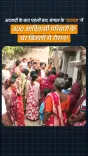
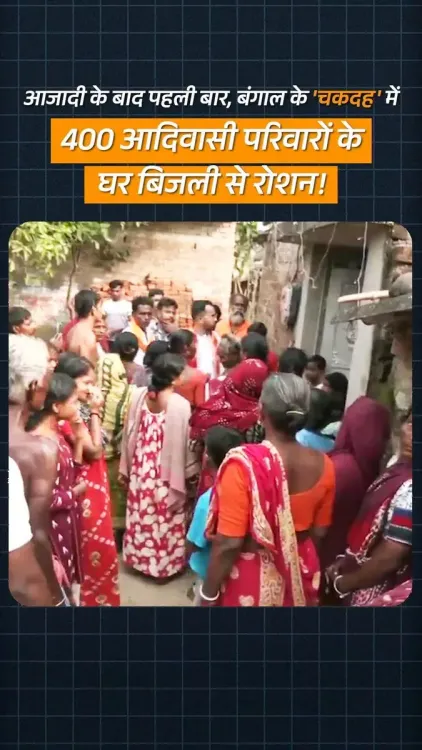
Union Minister Gajendra Singh Shekhawat announced that 400 tribal families in Chakdaha, West Bengal, have received electricity for the first time since Independence, crediting PM Modi's welfare schemes including the Saubhagya Yojana for the last-mile achievement.
Key Takeaways
400 tribal families in Chakdaha, Nadia district, West Bengal have reportedly received electricity connections for the first time since Independence.
Union Minister Gajendra Singh Shekhawat posted about the development on November 7, 2026 , attributing it to PM Narendra Modi's welfare schemes.
The Pradhan Mantri Sahaj Bijli Har Ghar Yojana (Saubhagya) , launched in September 2017 , is the central scheme driving last-mile electrification for tribal and rural households.
The 'first time since Independence' claim for the specific Chakdaha households has not been independently verified.
The announcement carries political weight in West Bengal , an opposition-governed state where the BJP has sought to expand its footprint by highlighting centrally delivered welfare.
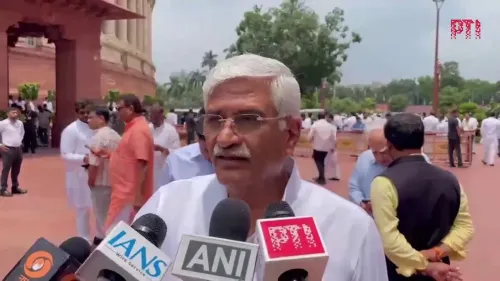
For the first time since Independence, the lights are on — and in Chakdaha, West Bengal, 400 tribal families are experiencing electricity in their homes for what Union Culture and Tourism Minister Gajendra Singh Shekhawat says is the very first time. The minister took to X on Saturday, November 7, 2026, to mark the moment, calling it a direct result of welfare schemes under Prime Minister Narendra Modi.
What Shekhawat said — and what it means
Posting in Hindi, Shekhawat wrote: 'Aazadi ke baad pehli baar Paschim Bangal ke Chakdah mein 400 aadiwasi parivaron ke ghar bijli se hue roshan!' — 'For the first time after Independence, 400 tribal families in Chakdaha, West Bengal, have had their homes lit up with electricity!' He attributed the achievement to 'the resolve for development and the impact of public welfare schemes under Prime Minister Narendra Modi's leadership.'
The minister framed it as more than a local event: 'The BJP government's resolve is that the light of development should reach the last person in society, and no family should be deprived of basic facilities.' His closing line — 'Modi sarkar mein vikas sirf vaada nahin, balki har ghar tak pahunchta badlaav hai' — 'Under the Modi government, development is not merely a promise but a change that reaches every home' — signals a wider political message, particularly pointed at West Bengal, a state governed by an opposition party.
Saubhagya Yojana and the last-mile electrification push
Pradhan Mantri Sahaj Bijli Har Ghar Yojana, better known as Saubhagya, was launched in September 2017 to achieve universal household electrification across India — with a specific focus on remote, rural, and tribal communities that had remained off the grid long after urban areas were covered. The scheme provided free electricity connections to Below Poverty Line households and subsidised connections to others, targeting precisely the kind of last-mile gaps that formal grid expansion had historically missed.
Chakdaha is a town in Nadia district, West Bengal. The central government has consistently used centrally sponsored schemes like Saubhagya to extend power access in states governed by opposition parties — a pattern that serves a dual purpose: delivering a welfare benefit to citizens while underlining the Centre's reach even where state governments differ politically.
The politics of a lit-up home in West Bengal
Shekhawat's post is not just an infrastructure update — it is a pointed reminder, aimed squarely at the BJP's electoral calculus in West Bengal. Highlighting tribal household electrification in a state the party has long sought to deepen its presence in carries obvious strategic weight. The 'first time since Independence' framing, if verified, is a powerful piece of political communication — it places the credit for a seven-decade gap being closed firmly at the Centre's door.
It is worth noting that the specific claim — 400 families in Chakdaha going without power since 1947 — has not been independently confirmed. What is documented is that tribal and forest-fringe communities across several states, including West Bengal, have historically had lower electrification rates than urban areas, and that central schemes have been the primary vehicle for closing those gaps in recent years.
The bigger picture: when a senior BJP minister from Rajasthan points to a village in Bengal and says 'we got there', the message travels well beyond Nadia district — it is a campaign argument, delivered one lit home at a time.
Point of View
If it holds, is especially potent because it inverts the usual incumbent's disadvantage — it turns a historical failure into a present-day triumph. Watch whether the West Bengal government responds, and whether central agencies publish verifiable electrification data for Nadia district to substantiate or complicate the claim.
NationPress
7 Nov 2026
Frequently Asked Questions
What is Saubhagya Yojana and how does it help tribal families?
Saubhagya, or Pradhan Mantri Sahaj Bijli Har Ghar Yojana, was launched in September 2017 to provide electricity connections to every unelectrified household in India, with free connections for Below Poverty Line families. It specifically targets remote tribal and rural communities that standard grid expansion had historically missed.
Where is Chakdaha and why is it in the news?
Chakdaha is a town in Nadia district, West Bengal. It is in the news after Union Minister Gajendra Singh Shekhawat claimed that 400 tribal families there received electricity for the first time since Independence under PM Modi's welfare schemes.
Is the claim that Chakdaha tribal families had no electricity since Independence verified?
The specific claim has not been independently verified. While it is documented that tribal and forest-fringe communities across West Bengal have historically had lower electrification rates, the precise assertion about 400 families in Chakdaha going without power since 1947 remains unconfirmed by official data in the public domain.
Why is Gajendra Singh Shekhawat talking about West Bengal electrification?
Shekhawat is a senior BJP leader and Union Minister. Highlighting welfare delivery in West Bengal — an opposition-governed state — is a consistent BJP strategy to demonstrate that central government schemes reach citizens regardless of which party rules the state, and to build political credibility ahead of future elections.
How many tribal households has the Modi government electrified across India?
The Saubhagya scheme targeted universal household electrification and covered millions of households across rural and tribal areas since 2017. Specific all-India numbers for tribal households electrified under the scheme require official government data; Shekhawat's post cites 400 families in Chakdaha as one recent example of last-mile delivery.