Shekhawat Credits Modi Govt for 4 Crore Pucca Homes
Synopsis
Union Minister Gajendra Singh Shekhawat on 28 May 2026 highlighted that over 4 crore pucca homes have been built since 2014 under PM Modi's watch, contrasting BJP's housing delivery with decades of Congress-era 'Garibi Hatao' sloganeering that left the poor without permanent shelter.
Key Takeaways
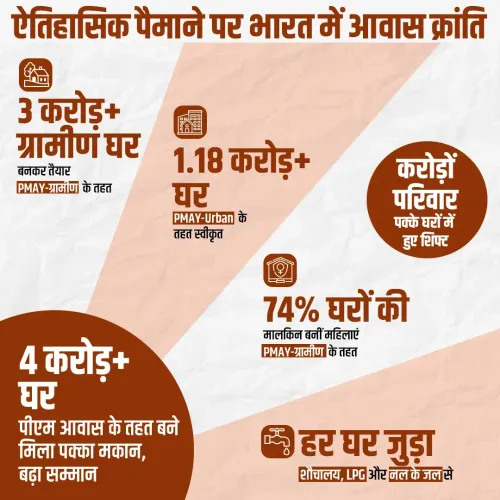
Union Minister Gajendra Singh Shekhawat posted on 28 May 2026 crediting the BJP government with building more than 4 crore pucca homes since 2014 .
The post contrasts the post-2014 housing push with the 'Garibi Hatao' slogan era, arguing that earlier governments failed to deliver tangible shelter despite repeated promises.
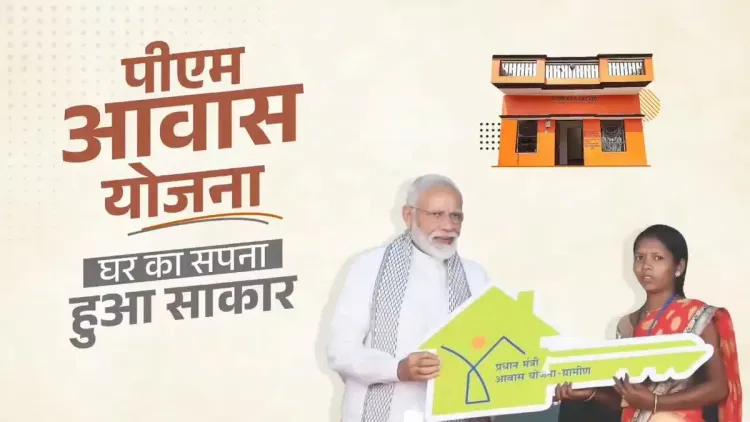
The flagship vehicle for this delivery is the Pradhan Mantri Awas Yojana (PMAY) , launched in 2015 with rural and urban components.
Shekhawat described PM Modi as someone who 'lived poverty' rather than merely observed it, framing the housing mission as a personal commitment.
The next phase of PMAY-Gramin targets and upcoming Union Budget allocations will be key indicators of whether the programme's momentum is sustained.
Union Culture and Tourism Minister Gajendra Singh Shekhawat on Thursday, 28 May 2026, invoked decades of unfulfilled housing promises to argue that only the BJP-led government since 2014 has delivered tangible shelter to India's poorest families, citing a figure of more than 4 crore homes built over the past twelve years.
Context
Posting in Hindi on X, Shekhawat opened with a pointed reference to the 'Garibi Hatao' ('Remove Poverty') slogan that echoed through Indian politics for decades after Independence, arguing that slogans, announcements, and speeches left the poor without a permanent roof over their heads. He then contrasted that era with the post-2014 period, writing that a man who had 'not merely seen poverty but lived it' took charge as Prime Minister and converted a pledge made from the ramparts of the Red Fort into ground-level reality.
The minister's post directly references Prime Minister Narendra Modi, describing him as someone who rose from a poor family and therefore understood — and could genuinely address — the pain of poverty. The framing is a recurring BJP electoral and governance narrative that positions welfare delivery as a personal mission rather than a bureaucratic exercise.
Policy Backdrop
The housing push Shekhawat refers to is anchored in the Pradhan Mantri Awas Yojana (PMAY), launched in 2015 with initial targets covering rural and urban poor households. The scheme has been extended and its targets revised upward through successive Union Budgets, with rural and urban components running in parallel under separate implementation frameworks. PMAY is complemented by allied programmes such as the Swachh Bharat Mission and Ujjwala Yojana, which together form the central government's 'saturation delivery' approach to basic amenities.
The 'Garibi Hatao' slogan was first popularised by Indira Gandhi during the 1971 general elections and was subsequently attached to poverty-alleviation programmes under the Fifth Five Year Plan. Critics across the political spectrum have long argued that the programmes of that era failed to produce commensurate outcomes for the rural and urban poor, a charge the BJP has consistently leveraged in its own political messaging.
Stakeholders and Impact
The primary beneficiaries of PMAY are rural and urban poor households, including landless labourers, marginal farmers, and low-income urban workers who previously lived in kutcha or semi-permanent structures. A pucca house under the scheme comes with financial assistance, a toilet under Swachh Bharat norms, and, in many cases, an LPG connection under Ujjwala — making each unit a composite welfare delivery point rather than shelter alone.
Shekhawat's post frames the 4 crore families as having received, for the first time, 'their own roof, their own courtyard, and the right to live with dignity' — 'अपनी छत, अपना आंगन और सम्मान से जीने का अधिकार'. The political significance of this constituency — first-generation homeowners who are also first-time formal beneficiaries — is considerable ahead of any future electoral cycle.
What's Next
Attention will now turn to the next phase of PMAY-Gramin target completion reports and any fresh budgetary allocations expected in the upcoming Union Budget. Parliamentary questions on rural housing coverage gaps and the pace of construction in lagging states are likely to intensify scrutiny of the cumulative figures cited by the government. Whether the administration tables an updated official dashboard confirming the 4 crore milestone will be closely watched by opposition benches and independent policy analysts alike.
Point of View
Reinforcing a voter-connect strategy the party has deployed consistently since 2014. With PMAY's next phase and budget allocations on the horizon, posts like this also serve as political ground-preparation for defending the scheme's continuity and scale.
NationPress
12 Oct 2026
Frequently Asked Questions
What is Pradhan Mantri Awas Yojana and how many houses have been built?
Pradhan Mantri Awas Yojana (PMAY) is the central government's flagship housing scheme launched in 2015 to provide pucca homes to rural and urban poor families. Minister Shekhawat's post cites more than 4 crore homes built over the past twelve years, though official dashboards remain the authoritative source for verified cumulative figures.
What did Gajendra Singh Shekhawat say about Garibi Hatao?
Shekhawat argued that the 'Garibi Hatao' slogan, popularised since 1971, produced decades of announcements and speeches but failed to give the poor a permanent roof, contrasting it with what he called the BJP government's ground-level delivery after 2014.
How does PMAY work for rural beneficiaries?
Under PMAY-Gramin, eligible rural households receive direct financial assistance to construct a pucca house, typically bundled with a toilet under Swachh Bharat Mission and an LPG connection under Ujjwala Yojana, making it a composite welfare package.
Why does the BJP link PM Modi's personal background to the housing scheme?
The BJP consistently frames Modi's origins from a poor family as evidence that his government's welfare policies are driven by lived experience rather than political calculation, a narrative Shekhawat reinforced by writing that only someone who 'lived poverty' can truly understand and eliminate it.
What should we watch for next on PMAY?
Key indicators include the next phase of PMAY-Gramin target completion reports, fresh budgetary allocations in the upcoming Union Budget, and parliamentary scrutiny of coverage gaps in lagging states.