Giriraj Singh Cites PMAY Progress, Sets 3-Crore Housing Target
Synopsis
Union Textiles Minister Giriraj Singh on June 16, 2026, cited PMAY milestones on X, claiming over 4 crore poor families have received permanent homes under PM Modi's government and announcing a target of 3 crore additional houses.
Key Takeaways
Union Textiles Minister Giriraj Singh posted on X on June 16, 2026 , highlighting housing delivery under PM Narendra Modi .
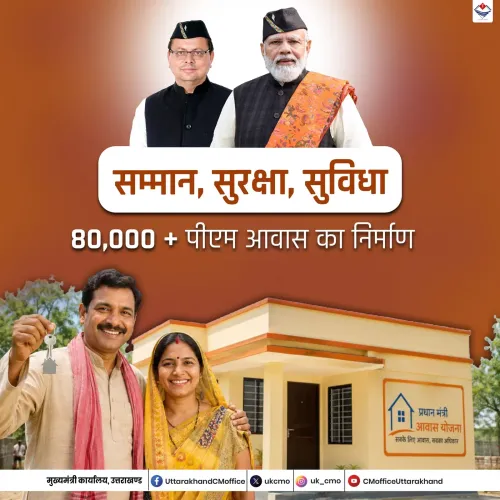
Singh claimed more than 4 crore families have received permanent (pucca) homes under the government.
The government is targeting construction of 3 crore additional houses going forward.
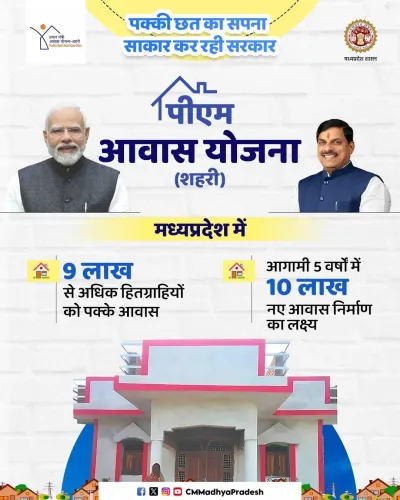
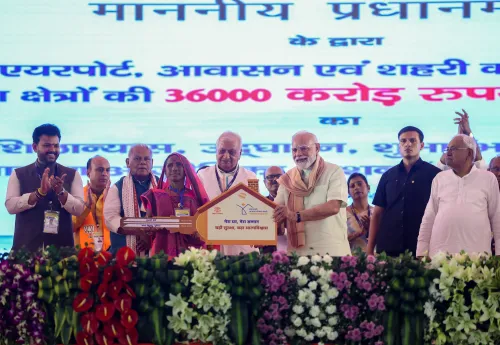
PMAY (Pradhan Mantri Awas Yojana) , launched in June 2015 , is the flagship scheme behind these deliveries, with both rural and urban verticals.
The post is part of the #12YearsOfSeva and #GaribKalyan messaging campaign, framing housing as a core welfare achievement.
Opposition parties have historically contested official figures on pace and quality of PMAY construction.
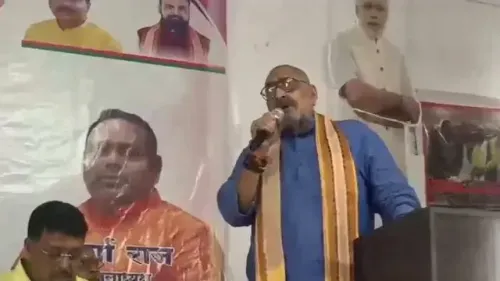
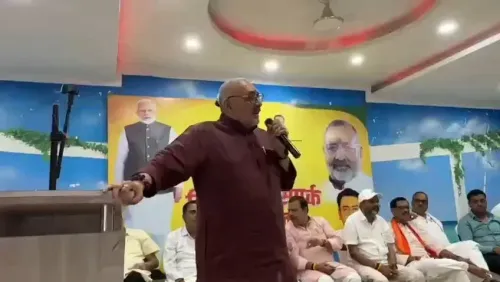
Union Textiles Minister Giriraj Singh on Tuesday, June 16, 2026, took to X to assert that the Narendra Modi-led government has delivered tangible welfare gains for crores of poor families, pointing specifically to housing construction milestones under the Pradhan Mantri Awas Yojana (PMAY).
Context
In his post, Singh stated — 'विपक्ष चाहे जितने सवाल उठाए, लेकिन सच्चाई यह है...' ('No matter how many questions the opposition raises, the truth is...') — that Prime Minister Modi's leadership has brought positive change to the lives of crores of poor families. He cited that more than 4 crore families have received permanent (pucca) homes and that the government is now working towards constructing 3 crore additional houses. The post was tagged with hashtags including #PMAY, #HousingForAll, #GaribKalyan, and #12YearsOfSeva, signalling the ruling party's broader anniversary messaging around a decade-plus of governance.
Policy Backdrop
PMAY was launched in June 2015 with the stated objective of 'Housing for All,' initially targeting 2022 as its completion year. The scheme has two verticals — PMAY-Gramin (rural), administered by the Ministry of Rural Development, and PMAY-Urban, under the Ministry of Housing and Urban Affairs — both providing central financial assistance supplemented by state governments and beneficiary contributions. Over the years, the programme has absorbed and replaced earlier rural housing schemes, scaling up both targets and central allocations across successive budgets.
Housing delivery has been a central plank of the ruling party's Garib Kalyan (welfare for the poor) narrative, positioned alongside schemes such as Ujjwala (cooking gas) and Jan Dhan (financial inclusion). Political messaging around completed housing units is a recurring feature of BJP communication, and opposition parties have periodically contested both the pace of construction and the quality of completed homes.
Stakeholders and Impact
The primary beneficiaries of PMAY are low-income and economically weaker households across rural and urban India, many of whom previously lived in kutcha (non-permanent) structures. If the figures cited by Singh are borne out by official records, the scale of delivery would represent one of the largest public housing programmes in the world. Beneficiary families receive direct financial assistance transferred to their bank accounts, reducing intermediary leakage — a design feature the government has highlighted as a key reform over earlier housing schemes.
The announcement of a 3-crore additional homes target signals continued budgetary commitment and is likely to have implications for the construction sector, building-materials supply chains, and rural employment, given that much of the labour-intensive construction work takes place in semi-urban and rural areas.
What's Next
Periodic progress reports from the Ministry of Housing and Urban Affairs and the Ministry of Rural Development will be closely watched to validate the completion figures cited. Any revision to financial allocations for PMAY in forthcoming Union Budgets will be a key indicator of the government's commitment to the 3-crore additional homes target. Opposition parties are expected to scrutinise the data on construction quality, beneficiary identification, and actual occupancy rates as political contestation around welfare delivery continues ahead of state and national electoral cycles.
Point of View
Suggesting the party anticipates continued scrutiny over PMAY delivery data. The 3-crore additional homes target, if backed by fresh budgetary allocation, would represent a significant fiscal commitment and a signal that housing remains central to the ruling coalition's electoral calculus. The real test will come when official completion and occupancy audits are published and subjected to independent verification.
NationPress
16 Sept 2026
Frequently Asked Questions
What is PMAY and who benefits from it?
PMAY, or Pradhan Mantri Awas Yojana, is India's flagship central government housing scheme launched in June 2015, providing financial assistance to low-income and economically weaker households to build or upgrade permanent homes in both rural and urban areas.
What did Giriraj Singh say about PMAY on June 16, 2026?
Giriraj Singh posted on X claiming that more than 4 crore families have received permanent homes under PM Modi's government and that the government is now targeting 3 crore additional houses.
How many houses have been built under PMAY?
According to Giriraj Singh's post of June 16, 2026, over 4 crore families have received pucca homes; however, these figures are yet to be independently verified through official government reports.
What is the '12 Years of Seva' campaign the BJP is running?
'#12YearsOfSeva' refers to BJP's political messaging campaign marking over 12 years of the party's governance at the Centre since 2014, highlighting welfare and infrastructure achievements including housing, cooking gas, and financial inclusion schemes.
Has the opposition questioned PMAY's progress?
Yes, opposition parties have periodically raised concerns about the pace of PMAY construction, quality of completed homes, and the accuracy of official completion figures, making housing delivery a recurring point of political contestation.