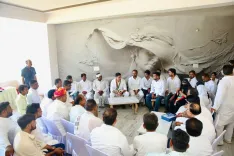
Shivraj sanctions 11 lakh homes for Bihar's rural poor
Synopsis
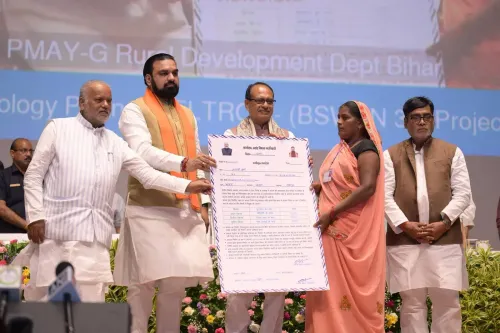
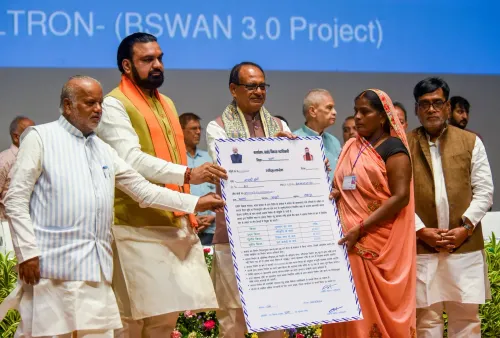
Union Minister Shivraj Singh Chouhan announced the sanction of over 11.18 lakh pucca houses for Bihar's rural poor under PMAY-G during a visit to the state on 20 August 2026, crediting PM Modi's guidance and CM Samrat Choudhary's leadership for the allocation.
Key Takeaways
11,18,937 rural houses sanctioned for Bihar under the Pradhan Mantri Awas Yojana-Gramin scheme.
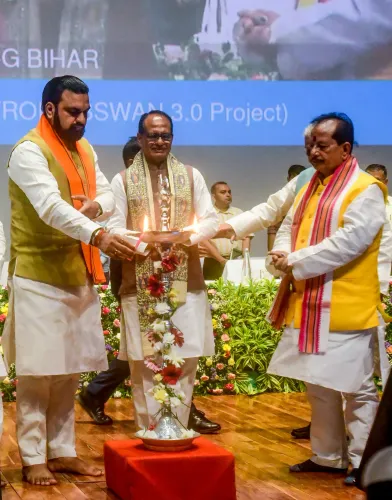
The announcement was made in person by Union Minister Shivraj Singh Chouhan during a visit to Bihar on 20 August 2026 .
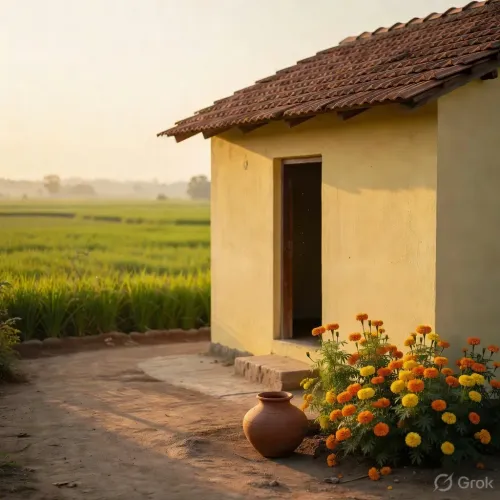
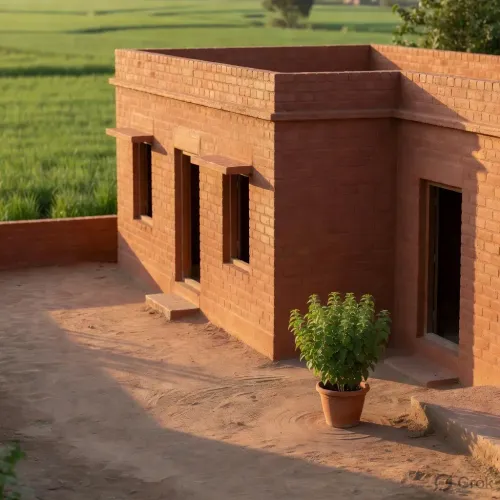
Beneficiaries are families currently living in kachche makaan — structurally vulnerable kutcha homes — across rural Bihar.
PMAY-G was launched in 2016 with a 'Housing for All' target, later extended with revised timelines and funding.
Chouhan credited both PM Narendra Modi and Bihar CM Samrat Choudhary for the joint Centre-state push.
Actual impact will depend on construction completion rates following the sanction.
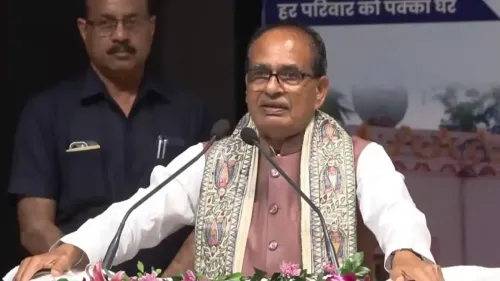
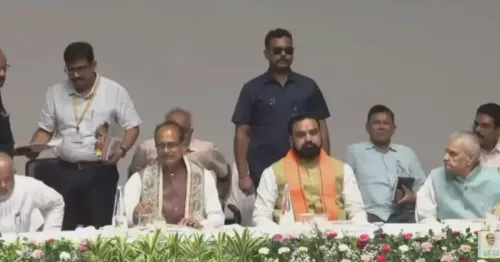
Over 11 lakh families living in mud-and-thatch homes across Bihar moved a significant step closer to a pucca roof on Thursday, 20 August 2026, as Union Agriculture and Rural Development Minister Shivraj Singh Chouhan announced the sanction of 11,18,937 houses for the state under the central rural housing programme — one of the largest single-state allocations in recent memory.
Posting from Bihar, Chouhan wrote: 'आज बिहार की पवित्र धरा पर आकर मन आनंद और गर्व से भरा हुआ है' — 'Coming to the sacred land of Bihar today, my heart is filled with joy and pride.' He framed the sanction as a fulfilment of a core pledge: 'Our resolve — a pucca house for every poor person.'
11,18,937 houses: what the number means for Bihar
The sanction covers families currently living in kachche makaan — kutcha, structurally vulnerable homes — across rural Bihar. Under the Pradhan Mantri Awas Yojana-Gramin (PMAY-G), beneficiaries receive direct financial assistance to construct a permanent dwelling, with funds transferred directly to bank accounts to minimise leakage.
Bihar has historically carried one of India's largest rural housing deficits, making it a priority state for successive PMAY-G tranches. A sanction of this scale — crossing the 11 lakh mark in a single announcement — signals both the size of the unmet need and the political weight the Centre is placing on the state ahead of its electoral calendar.
Central push, state execution — the PMAY-G model
Launched in 2016 with a target of 'Housing for All' by 2022, PMAY-G has since been extended with revised targets and enhanced funding as states worked through implementation backlogs. The scheme operates on a cost-sharing model between the Centre and state governments, with the Centre bearing the larger share for most states including Bihar.
Chouhan specifically credited Prime Minister Narendra Modi's guidance and Bihar Chief Minister Samrat Choudhary's leadership for what he called a continuing 'wave of development' in the state — framing the housing push as a joint Centre-state delivery, a standard but politically significant formulation that ties the BJP's national and state units to a visible welfare outcome.
Why rural housing is back at the centre of the political conversation
Housing has emerged as one of the most trackable welfare metrics in Indian politics — unlike subsidy transfers, a completed house is visible, photographable, and attributable. For the BJP, PMAY-G completions serve as concrete proof-points of governance in states like Bihar where rural poverty remains acute and voter turnout is high.
The minister's choice to make this announcement in person, on Bihar soil, rather than from Delhi, underscores the performative dimension of welfare delivery: presence signals commitment, and a union minister's visit amplifies the message locally in ways a press release cannot.
Over 11 lakh families now have an approved allocation. Whether those homes are built on schedule — and how quickly construction completion rates follow the sanction — will be the real measure of this moment.
Point of View
Reinforcing the party's grip on a state that is both electorally pivotal and acutely poor. Chouhan's dual portfolio — Agriculture and Rural Development — makes him the natural face of ground-level welfare outreach, and his presence in Bihar rather than a Delhi press conference signals that the Centre sees rural housing as a live political asset, not a bureaucratic formality. The scale of the sanction, over 11 lakh homes in a single tranche, also reflects the persistent depth of Bihar's rural housing deficit and the political urgency of closing it visibly. The real test, as with every PMAY-G cycle, is whether sanction figures translate into completed homes at comparable speed.
NationPress
5 Oct 2026
Frequently Asked Questions
How many houses were sanctioned for Bihar under PMAY-G in August 2026?
11,18,937 houses were sanctioned for Bihar's rural poor under the Pradhan Mantri Awas Yojana-Gramin scheme, as announced by Union Minister Shivraj Singh Chouhan on 20 August 2026 .
What is Pradhan Mantri Awas Yojana-Gramin (PMAY-G)?
PMAY-G is a central government scheme launched in 2016 that provides financial assistance to rural poor families to construct a permanent pucca house, with funds transferred directly to beneficiary bank accounts.
Who announced the Bihar housing sanction?
Union Agriculture and Rural Development Minister Shivraj Singh Chouhan made the announcement during a visit to Bihar, crediting PM Narendra Modi and Bihar CM Samrat Choudhary.
Who is eligible for houses under PMAY-G in Bihar?
Families currently living in kachche makaan — kutcha or structurally vulnerable homes — in rural Bihar are the primary beneficiaries of this sanction.
What happens after houses are sanctioned under PMAY-G?
After sanction, beneficiaries receive direct financial transfers to their bank accounts in instalments tied to construction progress. Actual completion rates and timelines vary by state and district-level implementation.