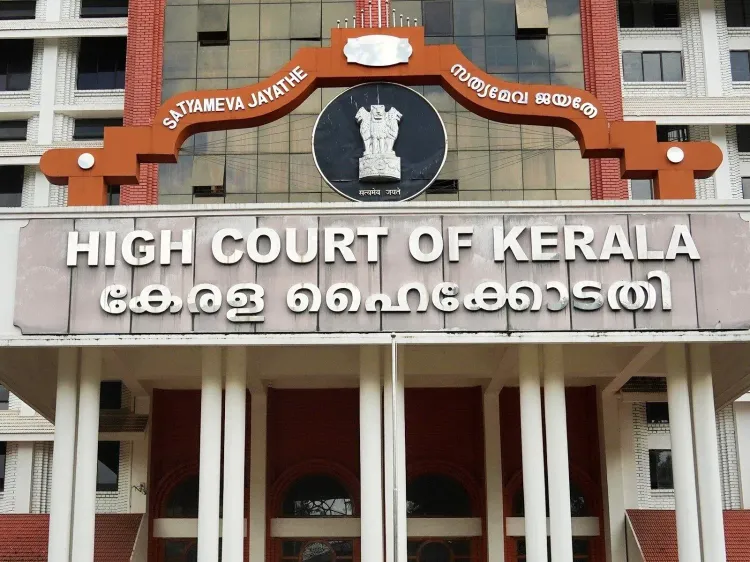
Kerala HC quashes 2015 Assembly ruckus case against four UDF MLAs
Synopsis
The Kerala High Court has quashed the 2015 counter-case against four former UDF MLAs, collapsing the LDF's key legal leverage in the decade-old Assembly ruckus controversy. With six LDF leaders still facing trial in the principal property-destruction case and their counter-case now judicially dismantled, the political and legal scales have tilted sharply against the ruling front.
Key Takeaways
The Kerala High Court on 18 August quashed the criminal case against four former UDF MLAs — K.
Sivadasan Nair , M.A.
Wahid , Dominic Presentation , and A.T.
The case arose from the 13 March 2015 Kerala Assembly ruckus, when LDF members allegedly destroyed public property to block the Budget presentation.
The High Court held that the charge of insulting the dignity of women MLAs K.K.
Lathika and Jameela Prakasham could not be legally sustained.
Six LDF leaders — including V.
Jayarajan — continue to face trial in the principal public-property destruction case.
The Supreme Court had earlier rejected the LDF government's plea to withdraw the case against its own leaders.
The ruling removes the LDF's primary legal counterweight against the UDF in the Assembly ruckus controversy.
The Kerala High Court on Tuesday, 18 August quashed the criminal case against four former United Democratic Front (UDF) MLAs who had been accused of assaulting Left Democratic Front (LDF) legislators during the violent 2015 Kerala Assembly ruckus. The ruling delivers a significant setback to the Communist Party of India (Marxist) (CPI(M))-led LDF, which had pursued the counter-case even as its own senior leaders continue to face trial in the principal public-property destruction case.
Who Was Acquitted and on What Charges
The High Court acquitted former MLAs K. Sivadasan Nair, M.A. Wahid, Dominic Presentation, and A.T. George, setting aside a Thiruvananthapuram magistrate court order that had directed them to stand trial. The police had booked the four under Sections 341, 323, and 34 of the Indian Penal Code, with Sivadasan Nair named as the first accused.
The charges stemmed from allegations that then LDF women MLAs K.K. Lathika and Jameela Prakasham were wrongfully restrained, manhandled, and had their dignity as women insulted during the Assembly uproar. The High Court held that the charge of insulting the dignity of women could not be legally sustained and found insufficient basis to proceed with the case.
Origins of the 2015 Assembly Confrontation
The underlying incident dates to 13 March 2015, when LDF members launched a large-scale protest inside the Kerala Assembly in an attempt to prevent then Finance Minister K.M. Mani from presenting the Budget. The Speaker's dais was damaged, and computers, chairs, microphones, and other equipment were allegedly destroyed, causing substantial damage to public property.
Six prominent LDF leaders — V. Sivankutty, E.P. Jayarajan, K.T. Jaleel, K. Ajith, K. Kunhammed Master, and C.K. Sadasivan — remain accused in that principal public-property destruction case. The LDF government had approached the Supreme Court seeking withdrawal of the case against its leaders; the apex court rejected that plea with strong observations.
The Political Counter-Case and Its Collapse
After the LDF came to power, the Crime Branch pursued the case against the four UDF leaders — a move widely perceived as a political counter-move to the continuing trial against the LDF leadership. The UDF leaders had consistently maintained they were being made scapegoats to dilute the gravity of allegations against the ruling front's own leaders.
Notably, the counter-case had emerged only after LDF leaders became the primary accused in the property-destruction case, lending it the character of a tactical legal manoeuvre rather than an independent complaint. The High Court's ruling has effectively dismantled that counterweight.
What This Means for the Political Equation
With the UDF leaders now cleared of the counter-case, the legal and political asymmetry has sharpened considerably. The LDF's six accused leaders continue to face the principal trial, while the front's attempt to use a parallel case as leverage has been judicially struck down. Critics argue this ruling exposes the selective use of law enforcement in politically charged cases.
The Assembly ruckus case — nearly a decade old — remains one of Kerala's most politically charged legal battles, and Tuesday's ruling is likely to intensify scrutiny of the LDF's conduct both inside and outside the House.
Point of View
In effect, unwinding what critics characterised as a retaliatory legal strategy. With six LDF leaders still in the dock and their tactical counter-case collapsed, the political cost to the ruling front is real. The deeper question is whether Kerala's political class will draw any lessons about using criminal law as a proxy for parliamentary disputes — or whether the next Assembly confrontation will simply generate a new round of cross-FIRs.
NationPress
2 Oct 2026
Frequently Asked Questions
What did the Kerala High Court rule in the 2015 Assembly ruckus case?
The Kerala High Court quashed the criminal case against four former UDF MLAs — K. Sivadasan Nair, M.A. Wahid, Dominic Presentation, and A.T. George — who had been accused of assaulting Left women MLAs during the 2015 Assembly ruckus. The court held that the charge of insulting the dignity of women could not be legally sustained and set aside the Thiruvananthapuram magistrate court order directing them to face trial.
What happened during the 2015 Kerala Assembly ruckus?
On 13 March 2015, LDF members staged a large protest inside the Kerala Assembly to prevent then Finance Minister K.M. Mani from presenting the Budget. The Speaker's dais was damaged, and computers, chairs, microphones, and other equipment were allegedly destroyed. Six LDF leaders remain accused in that principal public-property destruction case.
Why is this ruling politically significant?
The counter-case against the four UDF leaders had been filed after LDF leaders became the primary accused in the Assembly property-destruction case, and was widely seen as a political move to create legal equivalence. With the counter-case now quashed, the LDF loses its key leverage, while its own six leaders continue to face trial.
Who are the LDF leaders still facing trial in the Assembly case?
Six LDF leaders — V. Sivankutty, E.P. Jayarajan, K.T. Jaleel, K. Ajith, K. Kunhammed Master, and C.K. Sadasivan — remain accused in the principal public-property destruction case stemming from the 2015 Assembly confrontation.
Did the Supreme Court intervene in the Assembly ruckus case?
Yes. The LDF government had approached the Supreme Court seeking withdrawal of the case against its own leaders, but the apex court rejected that plea with strong observations, allowing the principal trial to continue.