Kerala's Assembly Elections: How Local Poll Trends Influence Outcomes
Synopsis
As Kerala heads to the polls on April 9, the political arena is heating up with the three main alliances—LDF, UDF, and NDA—vying for power. Will local body election outcomes shape the Assembly results once more?
Key Takeaways
Kerala Assembly elections set for April 9.
Three main alliances: LDF , UDF , and NDA .
Local body election results can influence Assembly outcomes.
Political dynamics indicate potential shifts in government.
Focus on grassroots sentiment is crucial for all parties.
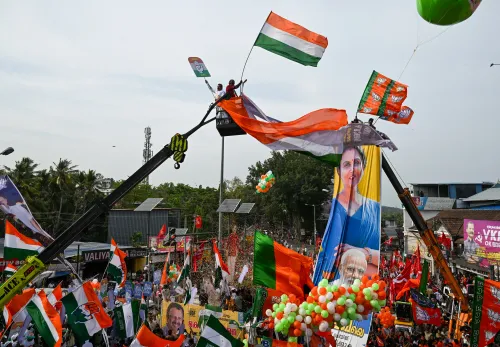
Thiruvananthapuram, March 15 (NationPress) As Kerala prepares for elections on April 9, the political landscape is set to be dominated by three prominent alliances: the ruling Left Democratic Front (LDF), led by the Communist Party of India-Marxist, the opposition United Democratic Front (UDF), spearheaded by the Congress, and the National Democratic Alliance (NDA), led by the Bharatiya Janata Party (BJP).
Kerala's Assembly comprises 140 seats. In the previous election of 2021, the LDF secured a commanding 99 seats, while the UDF managed 41 seats, and the BJP failed to win any, losing its inaugural seat gained in 2016.
Political analysts observe that the outcomes of local body elections held a few months prior often influence the Assembly election results in the state.
If this trend persists, the UDF finds itself in a strong position, having achieved a significant number of seats, which pushed the LDF to the second position. The BJP, while winning the Thiruvananthapuram Corporation, experienced a decline in vote share compared to earlier elections.
Over the past two decades, the performance of these three political fronts in Assembly elections has closely mirrored their success in local self-governance elections, generally conducted about four months before the announcement of Assembly elections.
The prevailing trend indicates that whichever of the two major political groups, the LDF or the UDF, gains supremacy in local body elections typically carries that momentum into the Assembly elections, leading to government formation.
This pattern has been consistent across multiple election cycles, with the results at the panchayat, municipality, and corporation levels serving as a reliable indicator of public sentiment ahead of the Assembly elections.
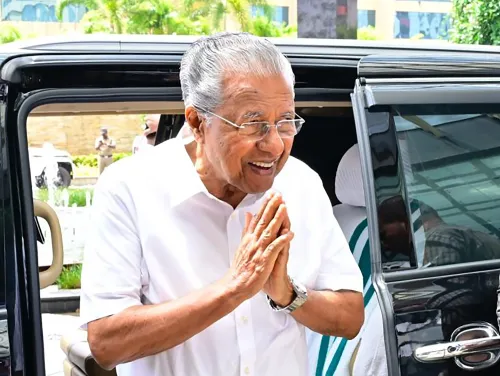
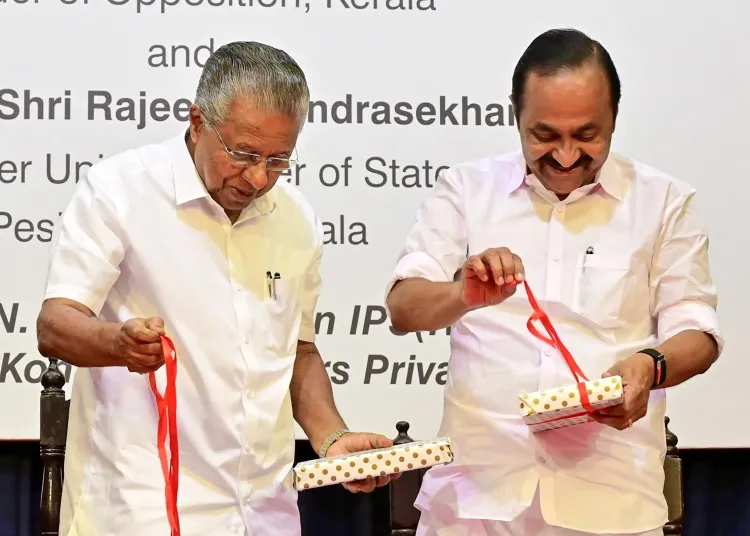
For the ruling LDF, under the leadership of Chief Minister Pinarayi Vijayan, this election is a pivotal challenge to see if it can secure a third consecutive term—an unprecedented achievement in Kerala's electoral history.
The LDF regained power in 2021, breaking the long-standing tradition of alternating governments.
The UDF, led by Leader of the Opposition V. D. Satheesan, is poised to leverage anti-incumbency sentiments against the Left government, which has been in power for nearly a decade.
Congress leaders are optimistic that the political climate, as reflected in grassroots elections, may favor a shift in government.
For the BJP-led NDA, this election presents an opportunity to enhance its presence in a state where it has struggled to convert vote share into assembly seats.
The alliance is banking on its enhanced visibility following the 2024 Lok Sabha election victory in Thrissur by Suresh Gopi, which could position it as a more formidable contender in triangular contests.
As the campaigning intensifies, the dynamics among these three alliances and the political insights derived from local electoral trends could ultimately dictate which coalition assumes power in the state.
Point of View
The upcoming Assembly elections in Kerala present a critical juncture for the state's political landscape, marked by the competition between the LDF, UDF, and NDA. The interplay between local body election results and Assembly outcomes highlights the significance of grassroots sentiment in shaping governance.
NationPress
29 Sept 2026
Frequently Asked Questions
When are the Kerala Assembly elections scheduled?
The Kerala Assembly elections are set to take place on April 9.
What are the major political alliances contesting in Kerala?
The main alliances are the Left Democratic Front (LDF), the United Democratic Front (UDF), and the National Democratic Alliance (NDA).
How many Assembly seats does Kerala have?
Kerala has a total of 140 Assembly seats.
What was the outcome of the previous Assembly elections in 2021?
In the 2021 elections, the LDF won 99 seats, the UDF secured 41 seats, while the BJP did not win any.
How do local body elections affect Assembly elections in Kerala?
The outcomes of local body elections often reflect public sentiment and can influence the results of subsequent Assembly elections.